A new Sadiq Khan-style vehicle ban is set to come into force across a major region as part of new pedestrianising plans impacting thousands of drivers.
Glasgow City Council is set to introduce sweeping restrictions on private vehicles in the city centre as part of a new “People First Zone” trial launching in early 2026.
The scheme will target Queen Street and Ingram Street, where bus and authorised vehicle gates will operate between 7am and 7pm daily.
Under the new rules, only buses, taxis, cyclists, commercial vehicles and other permitted traffic will be allowed to make right turns between the two streets during operating hours, marking a similar scheme to the pedestrianisation of Oxford Street.
The London shopping district is set to become predominantly people-only this year as part of ambitious plans to remove vehicles from the region and increase footfall to shops.
The Mayor of London said: “A reimagined Oxford Street can bring the world to London and showcase the best of London to the world, and I’m pleased that we’re now moving ahead with our exciting plans to regenerate this iconic area, backed by the vast majority of Londoners and businesses.
“These new proposals map out the potential next steps with Transport for London to make our vision of a thriving, greener Oxford Street a reality.”
Similarly, under the new Scottish plans, motorists will effectively be barred from using key shopping routes as through roads during the day.
The move by the council follows similar measures in London, which sees drivers banned from Oxford Street
|
GETTY
Construction work on the first phase begins next month, with the council aiming to create what it describes as a calmer walking environment by eliminating non-essential traffic from the area.
The physical transformation of the streets will include widened pavements constructed from durable, high-quality materials designed to withstand heavy pedestrian use and Scottish weather conditions.
A redesigned junction where Queen Street meets Ingram Street will be raised to pavement level, creating a fully accessible, step-free crossing point in one of Glasgow’s busiest pedestrian areas.
Work on the junction is scheduled for February, with temporary footway extensions following in March. As part of the plans, 13 new street trees housed in stone planters will be installed throughout the zone to soften the urban landscape.
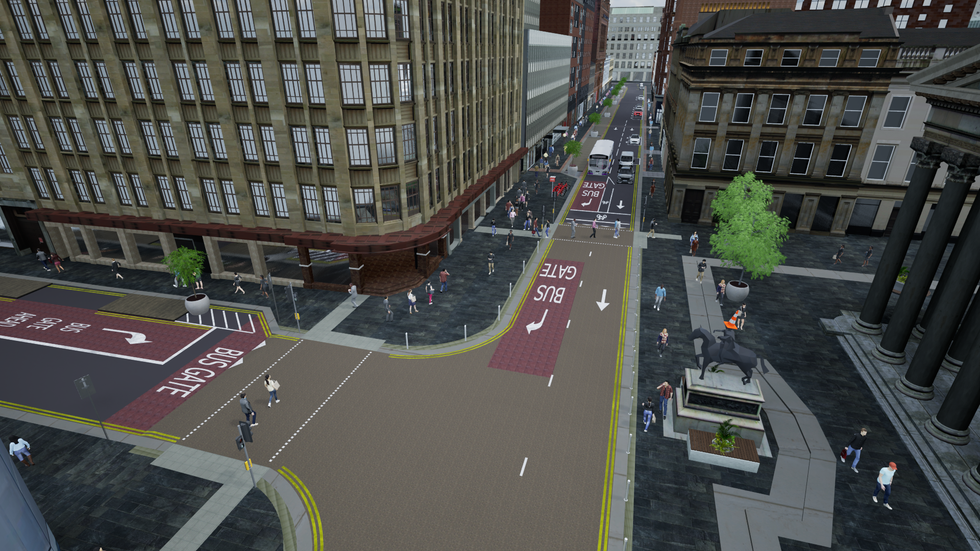
The move hopes to create a calmer shopping district with fewer vehicles
|
GLASGOW CITY COUNCIL
Meanwhile, 10 general parking spaces will be removed to accommodate the changes, though the council has confirmed all five disabled bays on Queen Street will be retained, relocating to the western kerb.
The initiative represents the council’s response to demands for improved pedestrian infrastructure in what officials describe as the highest footfall area in Scotland’s largest city.
By restricting traffic, the council aims to create quieter, cleaner streets where pedestrians have greater priority and shorter crossing distances.
The People First Zone concept emerged from Glasgow’s City Centre Transport Plan and has been designed to encourage walking, wheeling and cycling while maintaining essential access for deliveries and disabled drivers. Future phases are already being planned, with Candleriggs and Wilson Street earmarked for similar treatment.
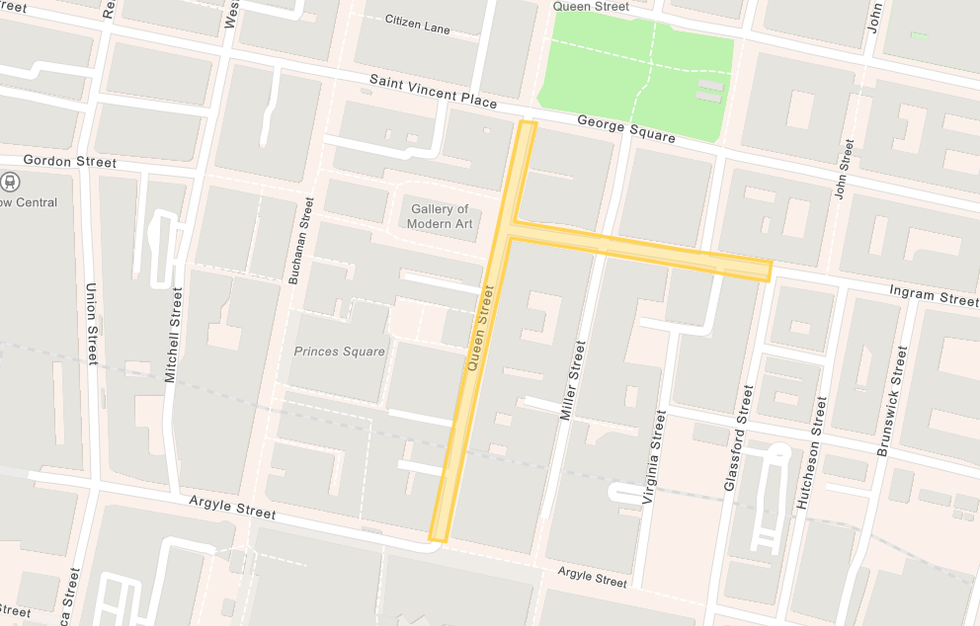
Map of Glasgow’s new People First Zone
|
GLASGOW CITY COUNCIL
Councillor Angus Millar: “This first phase of Glasgow’s People First Zone is an opportunity to demonstrate new ideas and see how they work for the thousands of people who use these streets every day.
“By introducing changes on a trial basis, we can safely explore options that create more space and priority for people on foot to create a lower-traffic city centre environment for pedestrians.”
He added that the council had worked with specialist suppliers to develop robust footway extensions capable of withstanding heavy use and Glasgow’s weather.
Residents, businesses and other interested parties can view the proposals and speak directly with the project team at an information event on Thursday, January 15, at the City Chambers’ Satinwood Suite, running from 2pm to 7pm.
The changes will operate under an Experimental Traffic Regulation Order lasting up to 18 months, during which the council will gather data on pedestrian movements, vehicle behaviour and the overall effectiveness of the measures.