(Credits: Far Out / YouTube Still)
Mon 5 January 2026 10:00, UK
Thanks to Letterboxd’s unprecedented increase in popularity, we all know what our favourite film is. Better still, we can even name our top four.
The Letterboxd marketing team has what appears to be the world’s chillest job: attending red carpet events just to ask their favourite celebrities to name their top four movies. Watch these social media compilations again, and you’ll notice that most celebrities have prepared for the question, or at least shared their appreciation for the app, as Kristen Stewart once said, “You can tell a lot about a person from seeing them in Letterboxd.”
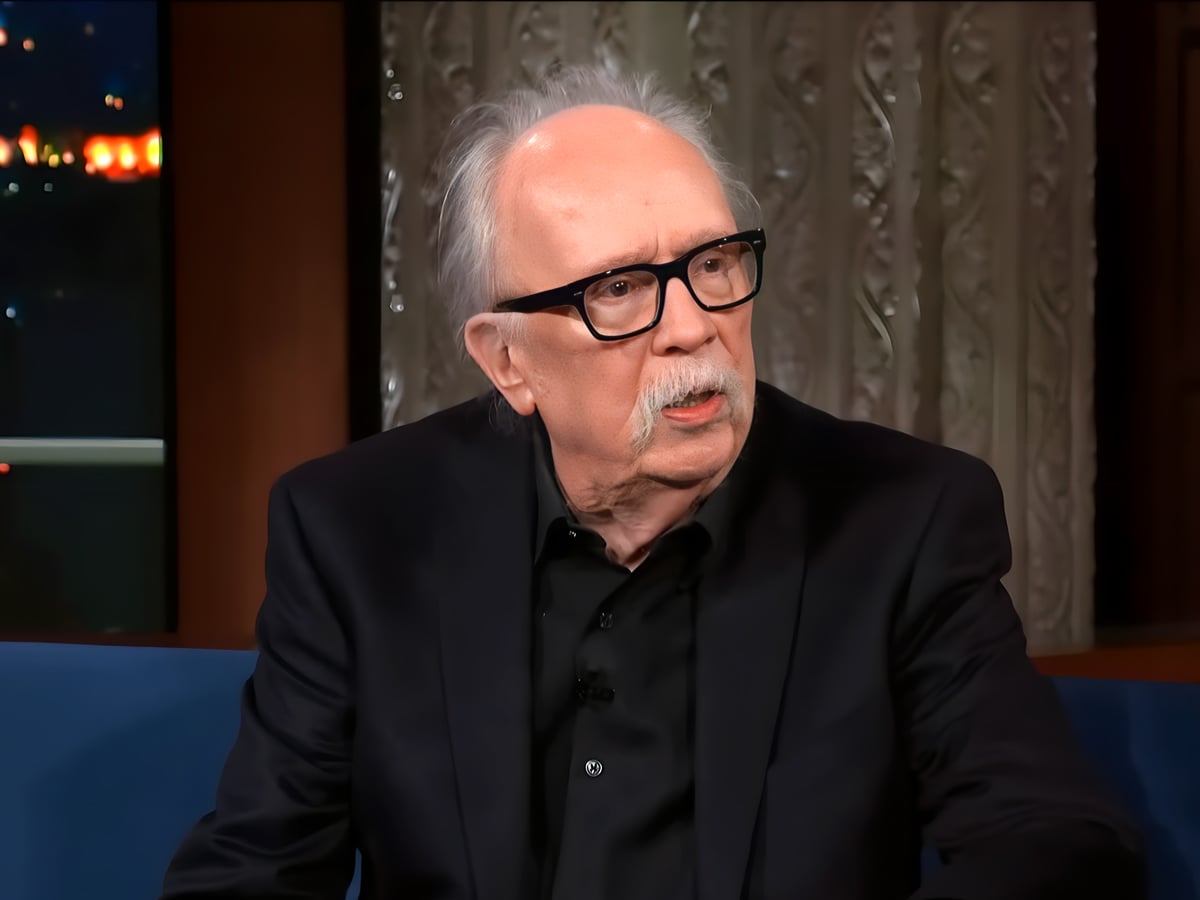
Our society is certainly obsessed with knowing what our friends think of the movies; surely, then, we might sit up a little straighter and take heed when someone who actually understands the industry delineates what their favourite projects are? Writer, director, actor, composer, and filmmaker John Carpenter hasn’t exactly got the app, but he has previously shared his two favourite movies of all time.
In 1949, Carol Reed released The Third Man, a movie that ranks unbelievably high on Carpenter’s list, as Carpenter wrote for Criterion, “Oh, come on! You can’t get better than this movie.” The international crime thriller has elements of a noir film, and the plot, Carpenter tells us, is deceptively simple: “There’s an accident, a man is killed, and the third man turns out to be the bad guy, played by Orson Welles.”
When we take a look at Carpenter’s work, it becomes quickly evident why the movie strikes such a chord with the star: Its dark, dreary post-War sensibility accumulates into an offering that is almost horrifying, or, at the very least, off-putting. Plus, Carpenter adds, “The chase scenes in the sewers of Vienna are astonishing, and the use of shadows is brilliant and inspiring. It’s just an incredible movie.”
A decade before the release of The Third Man, Howard Hawks released a different type of movie – the acclaimed film, Only Angels Have Wings, a romantic adventure flick set at a South American airmail outpost, about which Carpenter wrote, “Howard Hawks has always been a big influence on me and my work, and Only Angels Have Wings is my favourite movie of all time.”
Carpenter couldn’t name just one thing that he loved about it; his obsession with the movie burns with such strength. He wrote, “If you sit down and watch it and you don’t love it, then you can just forget Howard Hawks. Everything about him as a filmmaker is here: the relationships between men and women, the adventure, the mystery, the pleasure.”
It appears that Carpenter has picked Only Angels Have Wings as his favourite Hawks movie because it combines two of his usual plots – some movies follow dramas about “daring men doing various adventurous things,” while other movies are comedies, “in which he takes his hero (usually played by Cary Grant) and humiliates him or brings out his goofier side”.
However, Only Angels Have Wings is “unique”, Carpenter explains, because “it’s a movie in which men, in this case, pilots, risk their lives every day, with every flight, while darkness is all around them… they have their own codes and their own ideas of bravery”. Famously, world-building in any creative project is hard, you must tackle the difficult question of immersion with innovation and intrigue, and Carpenter appears to have picked that skill up from the works of Hawks.
Related Topics