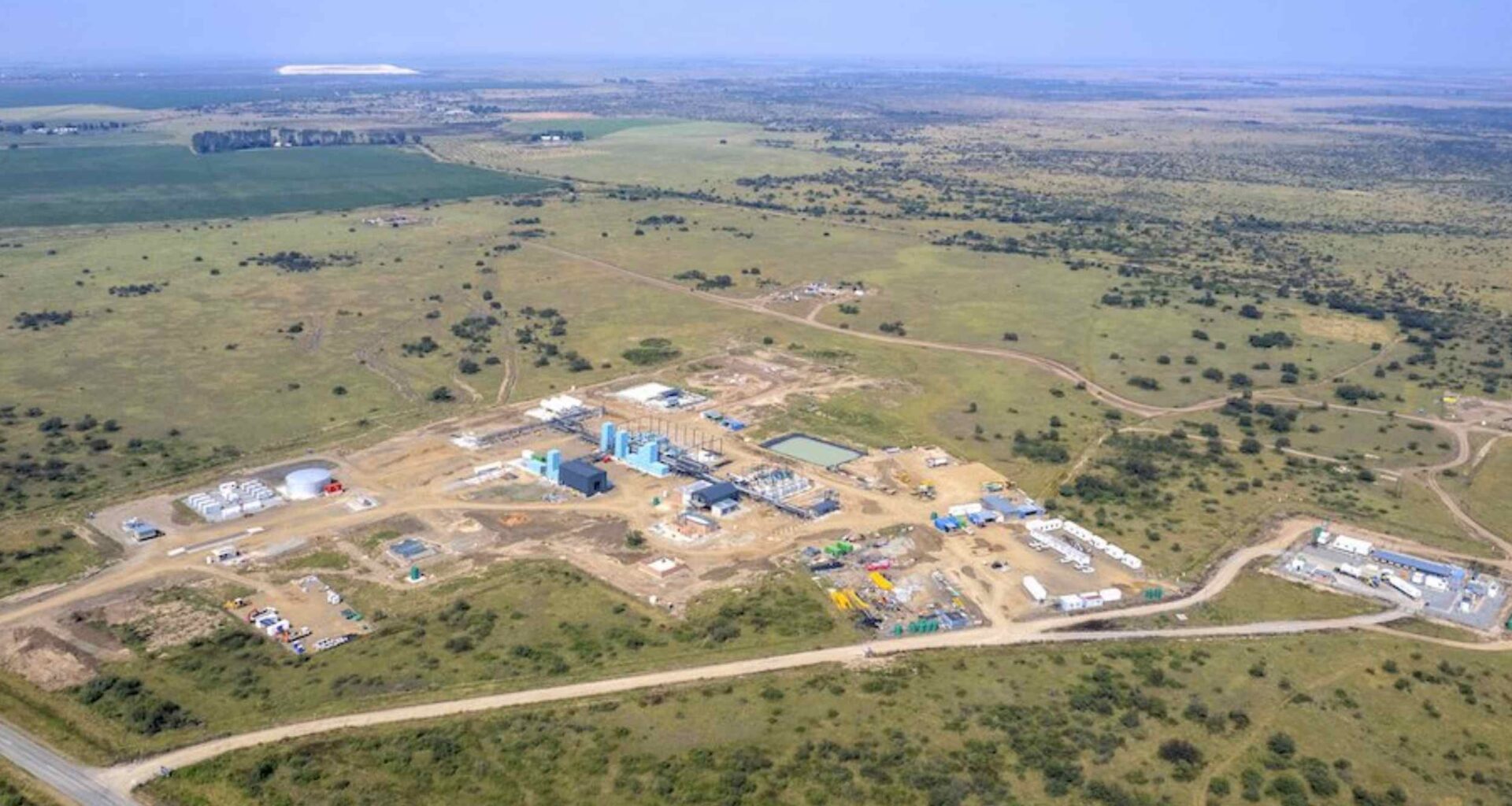
Deep beneath South Africa’s gold fields, an unexpected gas has been building for billions of years. Helium, essential for MRI scanners and advanced research, sits trapped in the ancient rocks of the Witwatersrand Basin at concentrations rarely found elsewhere.
At the Virginia gas project, helium-rich natural gas already reaches customers, and estimates suggest the field may hold more than 400 billion cubic feet of the element.

That turns the site into a natural laboratory for scientists studying how helium forms, migrates through rock, and survives underground for geological ages.
The research is led by Fin Stuart of the University of Glasgow’s Centre for Isotope Sciences (SUERC). His team uses helium measurements to track gas movement through some of Earth’s oldest crust.
By tracing helium from radioactive minerals deep below to modern gas wells, the scientists aim to uncover clues that could reshape how the world searches for this irreplaceable resource.
Ancient helium beneath South Africa
In the southern Witwatersrand Basin, the Virginia gas project taps natural gas with up to 12 percent helium, according to detailed work.
Based on regional geology, scientists think the reservoir has held helium since Karoo sediments capped it about 270 million years ago.
The team suspects uranium-rich gold reefs beneath the basin supply most of the helium, while a fractured granite basement deeper down provides an additional source.
A gas that hospitals depend on
Helium cools superconducting magnets, which carry electricity without resistance, inside MRI scanners in hospitals worldwide.
Because helium forms slowly as uranium and thorium decay, it is nonrenewable and not replaced on human timescales.
That mismatch between slow production and rapid use has already caused helium supply squeezes for laboratories, semiconductor manufacturers, and medical centers.
A field that can support decades of helium output therefore matters far beyond one mine, influencing long-term planning for global supply chains.
Radioactive rocks fuel helium
Helium in the Virginia field is largely radiogenic, meaning it’s been made by radioactive decay in rocks over millions of years.
The Witwatersrand Supergroup contains 2.8- to 3-billion-year-old gold-bearing reefs that concentrate uranium and thorium minerals.
Below those sediments lies a granite basement, old crystalline rock made of interlocking mineral grains, that produces helium which leaks into deep fractures.
By estimating helium contributions from each rock unit, the team can judge field longevity and identify where similar accumulations might exist elsewhere.
Ancient clues in modern gas
The project will use petrography, the microscopic study of thin rock slices, to map which minerals in samples contain uranium, thorium, and trapped helium.
Researchers will apply a thermochronology method that measures mineral helium buildup, revealing which grains retain helium and which release it quickly.
Noble gas instruments in SUERC labs will heat grains to release their isotopes, versions of elements with different masses, revealing when helium escaped.
By combining rock measurements with helium and methane data from wells, the team will build a model of helium generation, storage, and escape.
Microbes, methane, and moving water
Studies classify the Virginia methane as biogenic, produced by microbes rather than high-temperature reactions.
In nearby mines, scientists have sampled waters that host microbes feeding on chemicals, documented in a metagenomic survey at about a 1.9 mile (three kilometer) depth.
Groundwater moving through the basin’s fault network picks up methane and helium, carrying gases and salts as it circulates through deep fractures.
As that gas-rich water rises, methane bubbles form, sweep up helium, and accumulate in structural traps such as the Virginia field.
From gas to liquid
Renergen has solved cooling problems at its cold helium plant, reaching -452°F (-269°C) so liquid helium can be produced on site.
“This practical approach will continue until our plant reaches near nameplate capacity,” said Stefano Marani, CEO of Renergen.
The Phase 1 plant is designed to deliver liquefied natural gas and roughly 770 pounds of liquid helium each day.
As production ramps up, matching helium output with the geological model will be crucial for rebuilding customer confidence and planning the second phase.
Recruiting helium trackers
The University of Glasgow is recruiting a doctoral researcher to carry out this helium project as part of a fully funded Ph.D.
The program targets an early-career physical scientist and embeds them in the research for several years.
Rather than analyzing existing datasets alone, the role centers on hands-on field sampling, laboratory measurements, and close collaboration with academic and industry partners.
The researcher will become the primary investigator executing the work, translating geological theory into measurements that explain how ancient helium reached the Virginia gas field.
Measuring rocks and gas
The doctoral researcher will collect rock samples, prepare thin sections, and document the mineralogy and textures that control gas storage.
In the laboratory, the student will measure uranium, thorium, and helium retention in rock types, then compare results with gas compositions from wells.
Work in SUERC’s laboratories will train the doctoral researcher on mass spectrometers, instruments that separate ions by mass, to measure helium and noble gases.
Placements with Renergen will provide hands-on helium experience and connect geochemistry, the study of chemical patterns in rocks, with operations at a gas field.
Helium guides future drilling
Understanding helium migration into the Virginia structure could help geologists target cratons, ancient, stable continental crustal cores, where faulted rocks hold helium gas.
In such reservoirs, distinctive noble gas signatures, ratios of helium to other inert gases, can indicate that a field remained sealed for ages.
The Virginia study could help scientists refine estimates of how much helium is released when operators inject carbon dioxide into deep aquifers used for storage.
Because helium is inert and easy to measure, helium signals can track whether injected carbon dioxide stays underground or leaks to the surface.
Looking three billion years ahead
The Witwatersrand helium story links radioactive decay in ancient crust, microbial life miles down, and today’s demand for fuel and reliable medical imaging.
Using the Virginia gas project as a laboratory, scientists can study how geological and engineering factors interact in developing a helium-rich resource.
As the helium model improves, companies and regulators will understand how long the Virginia resource may last and how cautiously to produce it.
Lessons from this part of South Africa could guide future searches for helium-rich gas fields in other ancient terrains worldwide.
—–
Like what you read? Subscribe to our newsletter for engaging articles, exclusive content, and the latest updates.
Check us out on EarthSnap, a free app brought to you by Eric Ralls and Earth.com.
—–