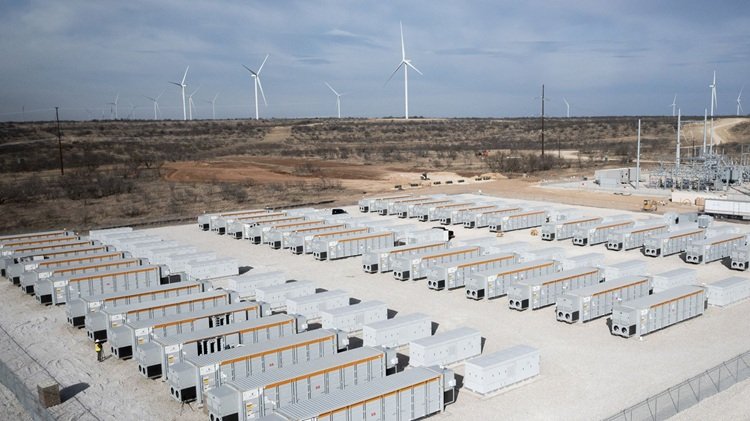
The final resolution of Spain’s FEDER programme redraws the country’s storage map. Total funding was reduced, major players such as Aquila Capital exited the scheme, while new large-scale projects from RWE and Alter Enersun entered the portfolio. The outcome also brought a strong regional reshuffle, with Catalonia, Extremadura and the Canary Islands emerging as key beneficiaries of the changes.
The definitive award decision under the FEDER programme introduces substantial changes compared with the preliminary list. The number of awarded projects fell from 133 to 126, total public support was adjusted to €818 million, and the final allocated storage capacity reached 9.4 GWh. At the same time, the geographical distribution of projects across Spain’s autonomous communities was significantly revised.
Among the most notable withdrawals is Aquila Capital, which stepped away from six projects totalling 170 MWh. Four of these were located in Catalonia (Bellissens 2, 3, 4 and 5, each with 17.91 MWh), while two were planned for Castilla-La Mancha: BESS Manztierra 1 (31 MWh) and El Cuco BESS (66.8 MWh).
Several hybrid storage projects were also removed from the final list. These include Cillamayor (190 MWh) by Solaer in Castilla y León; Valdezorita (8.8 MWh) by AboWind in Castilla-La Mancha; Llanos de Aldea I (16 MWh) in the Canary Islands; La Rubia (15.12 MWh) by R.Power Renewables; and Guadarrama (80 MWh) by Moeve, the energy arm of Cepsa, both in the Community of Madrid. In addition, La Farga, a 296 MWh stand-alone battery project in Catalonia, was ultimately discarded.
Three industrial power-to-heat thermal storage projects promoted by Iberdrola were also withdrawn. These initiatives were designed for industrial self-consumption and included a 60 MWh system in Andalusia (beverage sector), a 30 MWh project in the Valencian Community (ceramics industry), and a 100 MWh facility in Galicia (seafood processing sector).
New projects reshape the regional balance
On the other hand, the final resolution incorporates several new stand-alone battery projects, particularly in Catalonia. These include Coll de Moro by EDP, Torre Madrina by Portuguese developer Finerge, and Mateu by RWE Renewables, each with a capacity of 28 MWh. Two additional 19.9 MWh projects—Penedès and Castellet—were awarded to Renew Green Energy, a special-purpose vehicle belonging to Oside Investments.
Two hybrid storage projects were also added to the portfolio: Trevago I, a 120 MWh project by Our New Energy in Castilla y León, and Cáceres 2023, a 46 MWh initiative by Alter Enersun in Extremadura.
Market leaders dominate the awarded capacity
The final 9.4 GWh of awarded storage capacity will be deployed across 126 projects using different technologies. According to Energía Estratégica, more than 50% of total capacity is concentrated in the hands of three operators:
-
Iberdrola: 2,333.7 MWh across 12 projects
-
Atlantica Sustainable Infrastructure Ltd: over 1,500 MWh in eight projects
-
Rolwind Renovables: 1,225 MWh across just two large-scale projects
A second tier of awardees includes Naturgy, with seven projects totalling 359.3 MWh, mainly in the Canary Islands and Murcia, and BenBros, which secured a single 225.7 MWh project in Galicia. Other beneficiaries include Ecoener, with nearly 32 MWh in island-based projects, as well as companies such as Sermatec Energy, Viridi RE Group, Celso Solar, Abengoa, CTG Europe, Ignis, Helios and Dcoop, all of which received support for specific initiatives.
Regional allocation of funding: key shifts
Of the €818.3 million awarded by Spain’s Institute for Energy Diversification and Saving (IDAE), Andalusia emerged as the largest beneficiary, securing €354.5 million—more than 43% of the total budget. Although it remains the leading region in terms of project count and total capacity, Andalusia saw a €20 million reduction compared with the preliminary list.
Galicia (€97.2 million) and Castilla-La Mancha (€98 million) follow closely. Extremadura is the only region to see its allocation increase, rising from €73 million to €91 million, driven by the inclusion of the Cáceres 2023 project by Alter Enersun.
Castilla y León ranks fourth with €53.6 million, followed by the Valencian Community (€44.5 million) and the Canary Islands (€26.1 million), where hybrid renewable-plus-storage projects play a prominent role. Catalonia received €21.4 million and stands out as the region with the most extensive reshuffling, with five projects exiting and five new ones entering the programme.
In Madrid, the La Rubia and Guadarrama projects were removed, yet the region still retained €7.9 million through other successful initiatives. By contrast, Ceuta, Melilla, Navarre and La Rioja did not receive any funding in this call. Smaller allocations went to Asturias (€8.6 million), Murcia (€6.1 million) and Aragon (€4 million).
Technology mix and cost competitiveness
From a technological perspective, official data from Spain’s Ministry for the Ecological Transition (MITECO) confirms that hybrid storage projects linked to renewable generation dominate the portfolio, with 69 initiatives. These are followed by stand-alone battery systems (39 projects), thermal storage (15) and pumped hydro storage (three projects). Within hybrid solutions, solar PV is the most common generation source, ahead of wind power and mixed configurations, reflecting Spain’s strategy to pair storage with renewables to enhance grid flexibility and firm capacity.
Regarding prices for stand-alone storage systems, Spain has positioned itself below the cost levels observed in other European tenders. The average awarded price stood at €64,933 per MWh per year, lower than in comparable processes such as those held in Italy. Raúl García Posada, director of ASEALEN, described these figures as “highly competitive for the European market, in some cases even below the cost of capital”, underscoring strong private-sector interest and the efficiency of the allocation mechanism.

A cornerstone for Spain’s decarbonisation strategy
In total, the €818 million in non-repayable public aid will enable the integration of 2.2 GW of power capacity and 9.4 GWh of energy storage into Spain’s electricity system. All projects must be delivered by 30 September 2029.
With this package, Spain strengthens a core pillar of its decarbonisation strategy, deploying large-scale storage assets essential for renewable backup, grid stability and compliance with national and European targets under the PNIEC and the REPowerEU framework.
resol_definitiva_dgpem_pinalm-227-242