How European does Britain want to be? And how far will a leader who arrived in No 10 pledging not to undo Brexit, but who plainly hankers for closer membership of the European family, go towards making the UK as like the EU as possible – while remaining outside it?
The intricacy and political volatility of this question was one of the reasons why Labour has observed an omerta on the subject, beyond a lengthy attempt at “reconnection,” in areas like student exchanges and an ongoing quest to help food and agriculture businesses trade more cheaply. Nice to have, but hardly the magical growth recipe we were promised.
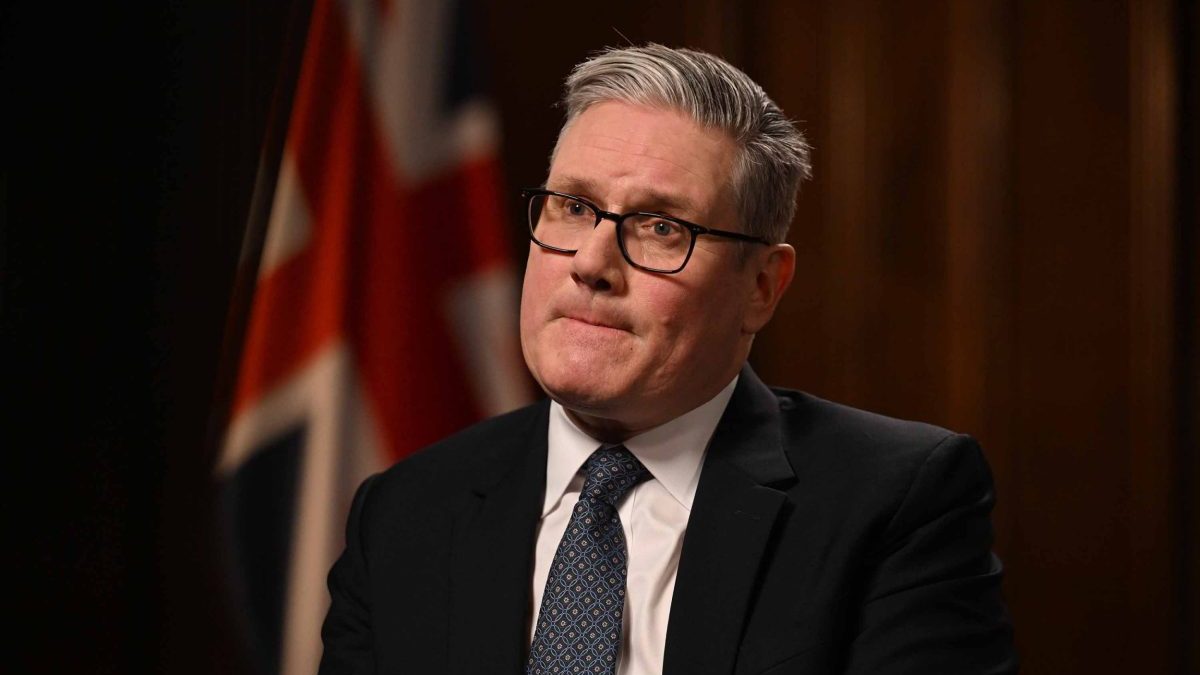
Significantly, Starmer used his first new year BBC interview to suggest that he would back the great closening: “If it’s in our national interest to have even closer alignment with the single market, then we should consider that, we should go that far”.
Brilliant, Labour’s un-quiet Remainers will have thought. But in Keir-world when something is announced, it is a long way from being a real thing. Realignment certainly is, when you take away the possibilities of rejoining a customs union.
I spend quite a lot of time on the Eurostar to Brussels and Berlin, and talking to EU and member governments about how they would see mutually useful relations with Britain in an era when mutual trade and defence advantages are in all our interests. Not least when the US is missing in action in Europe or otherwise deployed taking over Venezuela.
So, I do get the desire to find a recipe to oppose Nigel Farage’s narrow British nativism and find renewed purpose for Labour as a party that connects us to the big trading bloc on our doorstep. Even so, I am confused about what Starmer really means by his recent statement on alignment – beyond it acting as easy-listen elevator music to pro-Europeans in Labour, the Greens and Lib Dems. Maybe that is the real purpose, because otherwise, the content of “realignment” on the PM’s description is hard to follow.
Item one: rejoining a customs union which reduces external tariffs on agreed goods. He doesn’t want to oblige Wes Streeting, David Lammy, the Lib Dems and others who have favoured this route as a way to signal that Britain is prepared to take trade-offs for the sake of becoming more akin to the trading bloc closest to us.
Keir-speak on this is clear: “I argued for a customs union for many years with the EU, but a lot of water has now gone under the bridge… I think that now we’ve done deals with the US which are in our national interest, now we’ve done deals with India which are in our national interest, we are better looking to the single market rather than the customs union for our further alignment.”
Aside from breaking the record on the use of the phrase “national interest” without explaining what the national interest here is in any detail, I read this as a knock. One aimed mainly at Streeting, whose day job is Health Secretary, but is also the most promising of leadership contenders and customs union advocates. That is, if the ides of May do turn bad local election results into a hands-on contest for power in Labour – and No 10.
Item two: essentially the PM wants to be in the single market but not tied to immigration rules the EU itself is finding difficult. It is easy that other prosperous countries like Germany or France are hard at work trying to find new inventive ways to restrict freedom of movement for similar reasons to the UK – their populations think governments were too liberal on this and moving hard to the right in protest.
But technically, it remains a core principle of the EU single market. So, if Labour would like more alignment for growth purposes, that needs to be squared against the question of whether the UK is prepared to allow EU citizens with no limit to come to the UK. To which Starmer says: hell “no”.
So, not that aligned, then.
This leaves item three, which is in EU-speak “dynamic alignment” – measures on quantifiable things like carbon reduction schemes (where the UK does have a good story to tell) and other “unilateral measures” in return for increased EU market access.
On this version, countries can choose to adopt EU regulations, without any formal concessions from Brussels in return, but which means they do not diverge too far in the way they operate. There are several variants of this – the best being the European Economic Area agreement enjoyed by Norway – and a couple of very small trading states.
The problem for Britain is that it is not Norway – in that it did vote for Brexit and that still rankles – and does not have a big sovereign wealth fund. It is not Liechtenstein or Iceland either, nor is it in the “other countries” sort-of alignment camp – Ukraine and Moldova – who are given licence by the EU for obvious geo-political reasons connected to shoring them up against Russian takeover.
Therefore my challenge to Starmer would be to tell us what he is talking about. Should we exchange the possibility of further trade deals with the US and Asia, painstakingly pursued in his first year, because any degree of proximity to the EU is more promising? He can’t have both to any major degree.
Or is there a risk in this latest split-the-difference by a PM who often says one thing and means something subtly different, that we align with no tangible gain from the EU. In which case, this does not sound like a clinched argument.
Starmer is leaning on polling evidence which reflects a more downbeat mood of voters about the promises of Brexit as the years go by. Team Starmer can see renewed pro-Europeanism as a clear dividing line with Nigel Farage and to turn up the heat under Kemi Badenoch on her stance while wooing Lib Dems and Greens, who are gut pro-Europeans.
Your next read
Yet at the same time, the PM predicts 2026 is the time when people will feel improvement in the economy – after a year when his achievements were trade deals outside the EU. What does he think would be materially different after a “realignment”, on the uncertain terms he laid out on Sunday?
It sounds a bit like the “great rejoining” which causes all the churning drama in Apple TV’s Christmas hit Pluribus – the blissful idea has its own hidden catches and contradictions.
The most important of which is that until Keir tells us what he means, we might reasonably fear getting the worst of both worlds – neither in, nor out but living in a new Labour nowhere land.
Anne McElvoy is executive editor of Politico and co-host of Politics at Sam and Anne’s podcast