Eric Roth chuckles into his bristly silver beard when I refer to him as the new kid on the block, but that doesn’t make it any less true. His debut play, an adaptation of the 1952 western High Noon, is about to receive its world premiere, and the fact that he turned 80 last year is neither here nor there. “Maybe I’m the old new kid on the block,” he concedes from his home in Los Angeles. His baseball cap bears a picture of a typewriter, as though there could be any doubt that he has writing on the brain.
Admittedly, Roth is more experienced than the typical first-timer. Behind him lies not so much a hinterland of a career as an imposing mountain range, all of it in movies. He won an Oscar in 1995 for writing Forrest Gump: he’s the one you can credit (or blame) for lines such as: “Life is like a box of chocolates. You never know what you’re going to get.”
I loved working with Robert Redford. One of the loneliest men I’ve ever met
His own CV has something of the chocolate box about it, mixing chewy toffees – Michael Mann’s whistleblower drama The Insider, Steven Spielberg’s Mossad thriller Munich – with bonbons like David Fincher’s The Curious Case of Benjamin Button, in which Brad Pitt is born elderly and ages backwards, and recent versions of A Star Is Born and Dune. All earned him Oscar nominations. Film or play, the pleasure is the same. “I love to put one word in front of the other,” he says. “See if I can get the right one.”
‘A little more human’ … Billy Crudup and Denise Gough in rehearsals. Photograph: Johan Persson
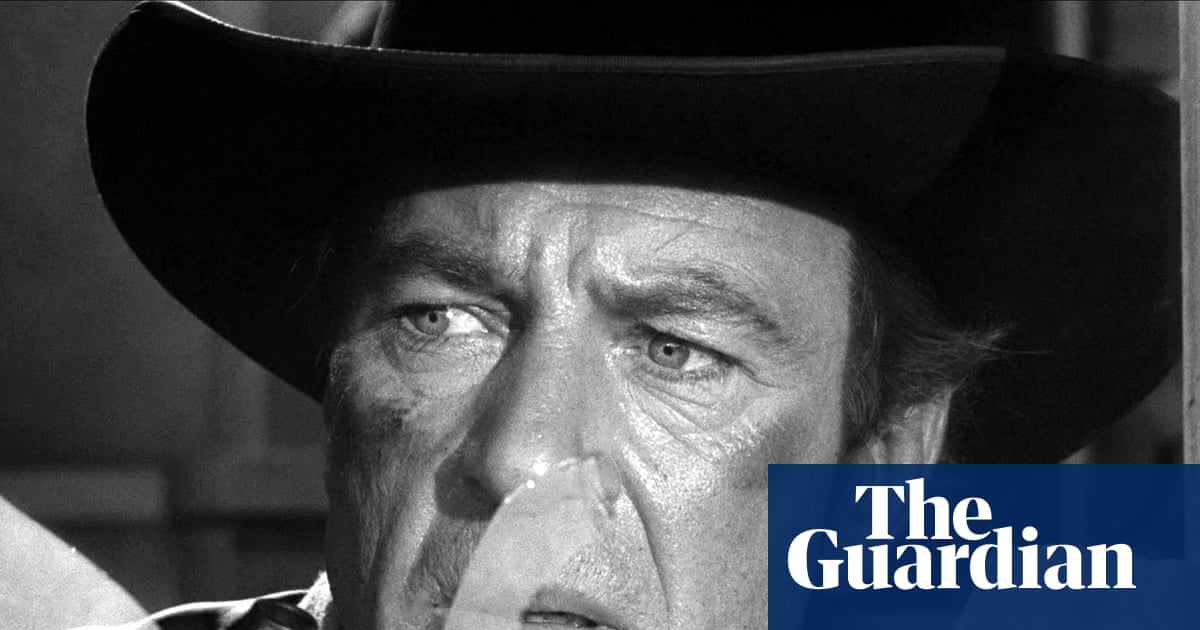
His swerve into theatre was sparked by the realisation that non-musical westerns were a rarity on stage. “I thought, ‘What better vehicle than this parable?’” Directors agreed: Ivo van Hove was attached at one point; Thea Sharrock is now in the saddle. Most actors, Roth tells me, were wary of stepping into the cowboy boots of Gary Cooper, the film’s star. Cooper played Will Kane, the marshal trying frantically to rustle up a posse on his wedding day, having learned that a vengeful outlaw is due back in town on the noon train. Billy Crudup was undaunted, though. His interpretation of Will, says Roth, is “a little more human. Not that Gary Cooper wasn’t human but he maintained that mask. Now we learn more about Will and his fears.” Denise Gough plays his wife, a pacifist Quaker urging him to flee with her rather than stand firm.
The film served as an allegory for life during the US anti-Communist witch-hunts of the early 1950s. Its screenwriter Carl Foreman was blacklisted for refusing to name names. “It’s about cowardice and courage,” says Roth. “There’s a lot of cowardice in America right now, with people voting against their own interests. Incipient racism is being fostered by the actions of our leaders. High Noon applies to that but also to other eras, like the people who had the courage to hide Jews during the second world war.”
‘Farcical novel’ … Roth picks up his Oscar for adapting Forrest Gump. Photograph: Michael Caulfield/AP
Roth has often expressed a preference for adapting imperfect or mediocre source material. He called the original novel of Forrest Gump “farcical”, dismissed Benjamin Button as one of F Scott Fitzgerald’s poorer works, and was bored by Dune when he read it in his teens. He knows where I’m going with this. “That’s an unfair question,” he grumbles good-naturedly, acknowledging that High Noon is an exception. Adapting it was “1,000% a challenge. It’s the pinnacle of what a western could be.”
He also found himself navigating the demands of theatre. “Movies are written in closeup. In my first version of High Noon, I wrote the stage direction, ‘He shuffles his feet.’ The director asked me, ‘And how are we seeing this from the balcony?’” A sprinkling of Bruce Springsteen songs will further distinguish play from film. “They’re anachronistic, which makes for an interesting combination.”
Thankfully, the stage version retains the picture’s structural asset: it unfolds in real time as the townsfolk prepare anxiously for the noon showdown. In that sense, it continues the writer’s fascination with temporal compression and elasticity. Forrest Gump and Benjamin Button span decades; the CGI-heavy Here, which reunited Roth with the Gump gang (director Robert Zemeckis, stars Tom Hanks and Robin Wright), whizzed through millions of years from prehistoric times to the pandemic. Few cared. “We thought we had something special, but the critics were nasty and nobody showed up.”
One of Roth’s as-yet-unfilmed ideas revolves around a widow who is given the chance to relive her late husband’s final 24 hours. “As the day wears on, it gets more and more touching, until finally he leaves his boots downstairs and goes up to bed – and you know he’s gone. Kevin Costner bought it, and every year I keep hoping he’s going to make it.”
If I said to Martin Scorsese, ‘Why don’t we do this movie backwards?’ he’d say, ‘Let’s try it! Keep writing!’
Would he trust Costner after the actor-director made such a dog’s dinner of The Postman, one of Roth’s earlier screenplays? “You really are a rat, boy!” he says with a rueful laugh, then explains what happened: he wrote the script, about a postal worker roaming a dystopian America, as a vehicle for Tom Hanks – only for Costner to buy it and commission a rewrite. “I’d given it a sardonic quality. It was like Gulliver’s Travels. Kevin made it very earnest and serious.” It won five Golden Raspberry awards, AKA Razzies, including, as Roth cheerfully reminds me, Worst Screenplay.
Being rewritten comes with the territory but that doesn’t make it any easier to take. “It can be bruising,” admits Roth. His departure from The Horse Whisperer was especially painful, and came after he had moved in with the film’s director and star, Robert Redford, to work on the script. “We got up at nine and he’d say, ‘I think I’ll go for a jog.’ Then he’d be back at 10.30 and say, ‘I’ll have a little something to eat.’ Then it’s noon and he’s got calls to make. It’d be 2.30 before we started work.
“I don’t want to speak ill of him because he’s gone now but I wish he had been a little braver with the movie. I loved working with him, and I found him fascinating. One of the loneliest men I’ve ever met. But I knew one day he’d look in the mirror and not want to see me there.” Sure enough, Roth was replaced. “That day, I was giving a keynote address at the Austin film festival. I thought to myself, ‘You fucking fraud. You just got fired!’”
Robert De Niro, left, and Leonardo DiCaprio in Killers of the Flower Moon. Photograph: Melinda Sue Gordon/AP
Swings and roundabouts. Roth has done more than his share of rewriting other people, including uncredited work on everything from Ridley Scott’s Black Hawk Down to Denis Villeneuve’s Arrival. It would be remiss to spend time in his company and not canvas his opinions on the Who’s Who of auteurs who have called on his services. The word is that Mann is the toughest cookie in Hollywood.
“Michael gets upset when he thinks people are stymieing him creatively,” he says. “He’s hard on crews. I keep telling him not to be. He wants to get it perfect. Nobody’s tougher than David Fincher, but I’ll work with him till I die. His obsessive nature probably makes him a better director. On Mank, he would shoot 40 takes of an actor walking across a room. I’d ask him, ‘Why are you doing so many takes?’ He’d say, ‘He hasn’t done it right yet.’”
Writing on the brain … Roth watches rehearsals. Photograph: Justine Matthew
That couldn’t be more different from Martin Scorsese, with whom Roth wrote Killers of the Flower Moon, a sorrowful thriller about the Osage tribe members in 1920s Oklahoma who are swindled and murdered for the oil discovered on their land. “Marty lets you do anything. If I said, ‘Why don’t we do this movie backwards?’, he’d say, ‘Let’s try it! Keep writing!’”
Roth currently has his plate full working on a Sydney Sweeney thriller (I Pretended to Be a Missing Girl) and a real-life mafia drama for Scorsese (Midnight Vendetta), as well as being an executive producer on Mann’s Heat 2. “I haven’t done any writing on it, but I probably will,” he says, in the casual manner of someone accustomed to helping friends with their DIY.
It is High Noon, though, that brings the brightest gleam to his eye today. “It’s made me feel 22 again,” he says. “Theatre is like this little village. Everybody’s fighting for the most creative way to tell the story. I’m not used to being treated with such respect. They won’t cross a ‘t’ without asking me. Whereas in the movies, they’ll go, ‘Who gives a shit what Eric Roth thinks?’”
High Noon is at the Harold Pinter theatre, London, until 6 March