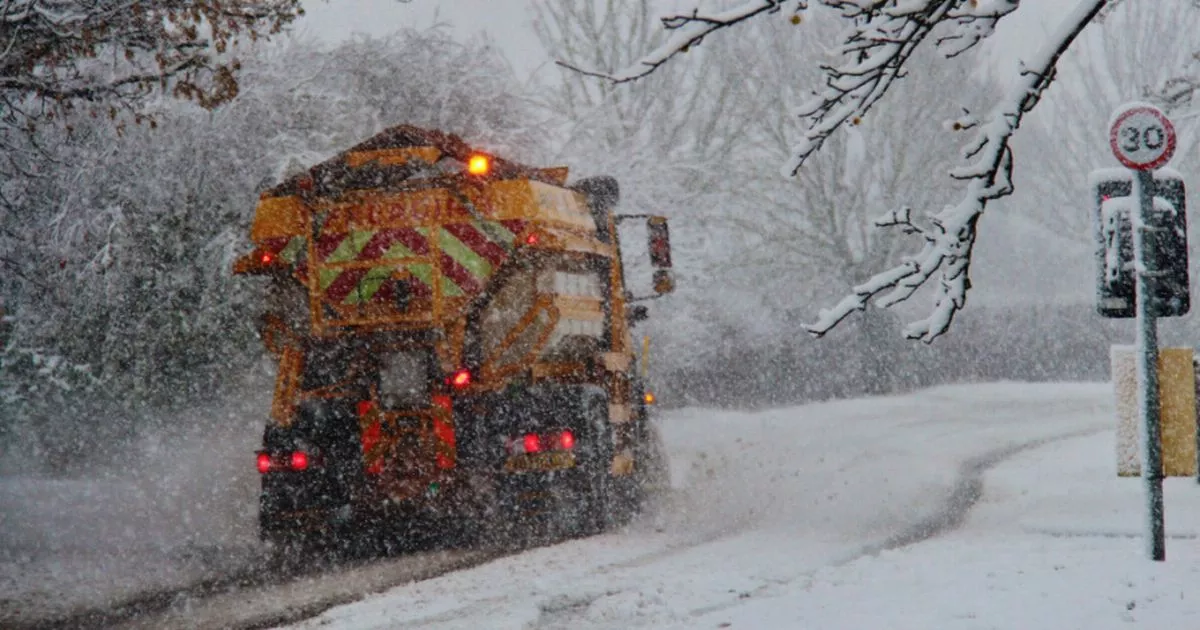
Temperatures plummeted to minus 7C in some areas of Merseyside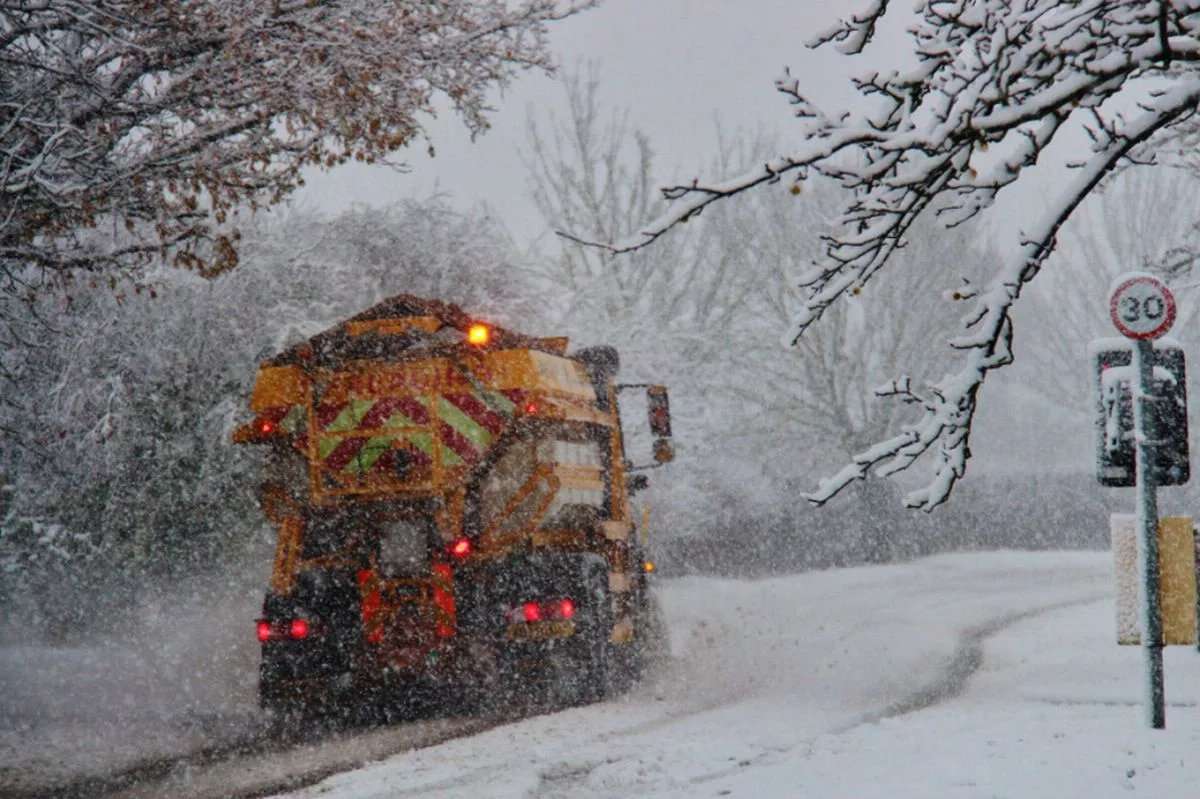 Gritting truck working in snowy conditions(Image: Getty Images)
Many people across Merseyside woke up this morning to start their first commute of the new year, and found it all the more difficult due to the presence of ice and snow on the roads. As a result, the region’s social media timelines haves been awash with frustrated motorists, bemoaning the apparent lack of grit, and the impact on their journey times.
The Liverpool ECHO was contacted by people travelling across the Liverpool City Region, reporting treacherous conditions, traffic chaos and severe delays, one person said: “It was absolute hell getting into work today. It took me 1hr 40m the majority of that was around Switch Island.
“Parts of it weren’t gritted and then the same with Copy Lane. There were lane closures, and cars stuck on a bridge. It was a nightmare.”
The ECHO also saw posts from several local Facebook pages, including complaints relating to the road conditions in Huyton, Whiston, Kirkby, Prescot and Maghull. One driver wrote about Milton Avenue in Whiston: “I’ve just drove up and it’s like a ice rink.”
Another person added: “It’s really bad. Knowsley Council maintain it was gritted twice yesterday and once today. I’m almost 100% certain it hasn’t been.”
In Sefton, one person posted about the conditions around Netherton and Bootle: “Park Lane was like a skating rink this morning.” Responding to a similar post published to a page dedicated to Maghull, one commuter said: “I drove from Tuebrook to Aughton this morning and the Sefton section was absolutely horrific.”
However, in an attempt to clarify what is going on with road management during the cold snap, the ECHO contacted both Sefton and Knowsley Councils to get some clarity on the gritting operations.
A spokesperson from Sefton Council told the ECHO: “We have been out gritting on a number of occasions over the weekend, including three times on Sunday, and have spread over 150 tonnes of grit. We have also been out again today.
“As part of our Winter Maintenance Policy, we monitor weather conditions 24 hours a day, seven days a week. Gritters are deployed when the roads when road surface temperature drops below 0°C.
“We grit around 470km of roads across Sefton across eight routes, covering all arterial routes, bus routes and roads into hospitals as well as some footway routes.
“Gritting helps prevents the formation of ice at 0°C, but doesn’t prevent snow from settling on the road, and during extended periods of sub-zero temperatures and snowfall the effectiveness of the grit can be diminished.
“Last night some Sefton roads reached as low as minus 7°C, below the temperature at which grit works best, which is down to minus 5°C.
“Traffic helps to break down the salt and disperse it over a wider surface area meaning busier roads tend to clear more quickly. This also means that overnight when there is less traffic the roads can remain icy, and people should take care when driving early in the morning.
“When the weather is at its coldest – often late evening and very early hours of the morning, most people are at home asleep, which is why they often don’t see the gritters. Sometimes people spot trucks ‘not gritting’ and these may be on their way to their route or returning to the depot.”
This was followed by an update from Knowsley Council who posted an update to its official Facebook page, which added: “Many of you have asked us: “If the council gritted the roads, why were they slippery this morning?” Here’s why: Grit alone does not melt ice, stop ice forming, or prevent snow settling on the roads.
“For grit to work effectively, it needs traffic to drive over it, crushing and spreading it and mixing it into ice and snow – so if you’re one of the first vehicles on the road after treatment, it’s likely that you’ll find the road is still slippery.
“It’s not possible for any council to treat every single road – it would take too long and most gritting vehicles can’t navigate narrow side streets or cul-de-sacs. Instead we prioritise main routes that connect people to schools, hospitals and workplaces. You can see a full list of the roads we treat each time we go out on our website.
“Our gritters treated all primary routes in Knowsley twice yesterday, and again this morning. We will continue to monitor the weather and treat the roads whenever needed over the coming days and months.
“We know driving on icy roads can be scary, and it can cause queues and delays. We do all we can to keep Knowsley moving, we monitor weather conditions 24/7, but sometimes ice and snow happens. In adverse weather conditions like those experienced today, always drive extra carefully, be mindful of the road conditions, adjust your speed and allow extra time for your journey.
“Our gritting crews remain on standby 24 hours a day to treat primary routes whenever they’re needed … even through the night. Which is why you may not see them. We think they do a fantastic job, whilst most of us are sleeping.”