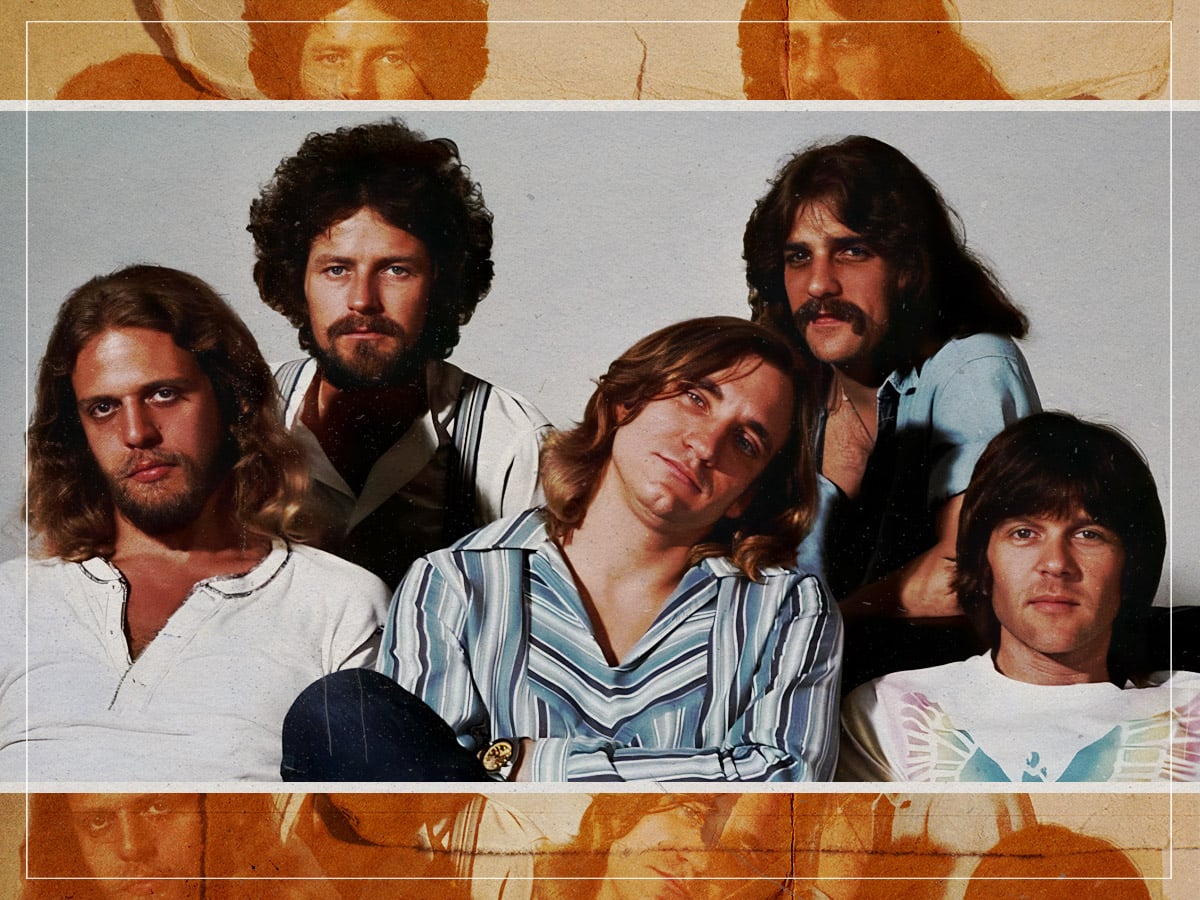
(Credits: Far Out / The Eagles)
Mon 5 January 2026 19:35, UK
Artists will always want to make something that stands the test of time. For all of the money that they could make at the moment by following trends, the best part of being in a rock band is going to the studio and trying to create a tune that will be carried on for generations to come. While many of the Eagles’ songs have been etched into classic rock history, Don Henley thought the first handful of albums really could have used some work.
Throughout the first half of their career, they were already a much different outfit than what they would become. Forming as a four-piece after Henley and Glenn Frey left Linda Ronstadt’s band, some of those country inflexions hadn’t yet worn off, including songs that had a distinct twang behind them on tracks like ‘Peaceful Easy Feeling’.
That wasn’t by accident, either. On the band’s sophomore effort, Desperado, they claimed to want to make an album inspired by the country outlaws they had been reading about, including the first songs written by Frey and Henley like ‘Desperado’ and ‘Tequila Sunrise’. While the critical reception sank without a trace, the group were determined to switch up their style anyway when going into On the Border.
For the next few years, the band would keep toying with different forms of American music to get what they wanted. One minute, they would be making the kind of fierce rockers like ‘Already Gone’, and the next, they would take cues from soul and R&B when putting together ‘One of These Nights’. For Henley, the one time it really came together was Hotel California.
Henley’s frustration was less about genre and more about clarity. In those early records, the band were still discovering who they were meant to be, experimenting in public rather than arriving with a fully formed identity. That sense of uncertainty occasionally bled into the lyrics and arrangements, leaving songs that sounded competent but not yet inevitable, as though the band were circling their destination rather than landing on it.
 Don Henley was a tough critic. (Credits: Far Out / TIDAL)
By the time they reached Hotel California, that uncertainty had largely vanished. The themes were sharper, the arrangements more deliberate, and the band finally sounded comfortable interrogating the darker side of the success they had achieved. It was not simply a step up in songwriting, but a moment where ambition, experience, and discipline aligned in a way that made everything that came before feel like a rehearsal.
After a few lineup changes and time honing their craft, the band walked out with one of the defining albums of their era, talking about the dangers of Hollywood and what can happen when people believe the myth of what the glamorous life is. As for their previous projects, Henley said that he thought the others started to look a little tame by comparison.
Since Hotel California was one of the first albums where Henley and Frey took full creative control of the studio, Henley remembered a few times in their back catalogue that never worked, telling Louder, “We were trying to explain things to ourselves, and a lot of the time we didn’t know what we were talking about. There’s something on all those albums that makes me cringe. I mean, our whole quest as we went along was to try to make each album better than the previous one. And that’s difficult to do when you’re trying to run a group as a democracy.”
That’s not to say that there weren’t at least some decent contributions by the rest of the group. Throughout every album, Randy Meisner’s high voice is practically the unsung hero, making the band soar on tracks like ‘Take it To The Limit’, while the skills of both Don Felder and Bernie Leadon blended their country roots with rock and roll chops.
Still, Henley and Frey found the best way of directing their best work into the Eagles’ mould, taking Felder’s chord progression to use as the basis for ‘Hotel California’. That did leave a few raw nerves, though, with Felder getting tense with the band over ‘Victim of Love’ and ultimately breaking the group up once they fought onstage. A lot of egos may have got in the way of their momentum over the years, but if there wasn’t that tension, chances are they wouldn’t have been as good.
Related Topics