Your support helps us to tell the story
From reproductive rights to climate change to Big Tech, The Independent is on the ground when the story is developing. Whether it’s investigating the financials of Elon Musk’s pro-Trump PAC or producing our latest documentary, ‘The A Word’, which shines a light on the American women fighting for reproductive rights, we know how important it is to parse out the facts from the messaging.
At such a critical moment in US history, we need reporters on the ground. Your donation allows us to keep sending journalists to speak to both sides of the story.
The Independent is trusted by Americans across the entire political spectrum. And unlike many other quality news outlets, we choose not to lock Americans out of our reporting and analysis with paywalls. We believe quality journalism should be available to everyone, paid for by those who can afford it.
Your support makes all the difference.Read more
Sir Keir Starmer is preparing a bill which would hand ministers powers to bring the UK into alignment with EU law, as part of an attempt to reduce paperwork and boost growth in Britain.
The bill, which will be brought forward this year as part of the government’s Brexit reset, would give ministers overarching powers to bring the UK in line with EU law in certain areas, such as food standards, animal welfare and pesticide use – a process known as dynamic alignment.
It is understood that the new powers could be used to implement deals struck with the EU, such as agreements to align electricity and carbon markets, or plant and animal standards.
Ministers argue that dynamic alignment would have little material impact as UK food manufacturers have already largely followed EU rules since Brexit, but it is hoped that it would reduce expensive and time-consuming paperwork for suppliers who want to export to the single market.
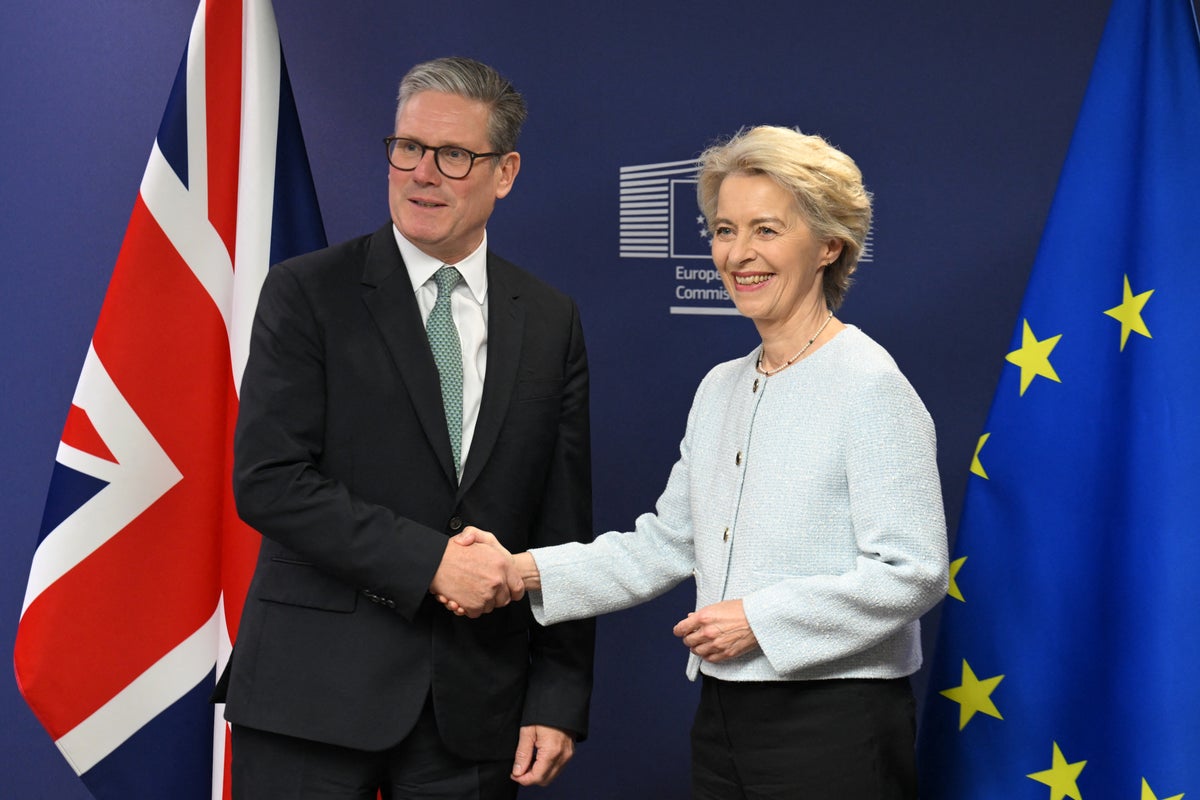
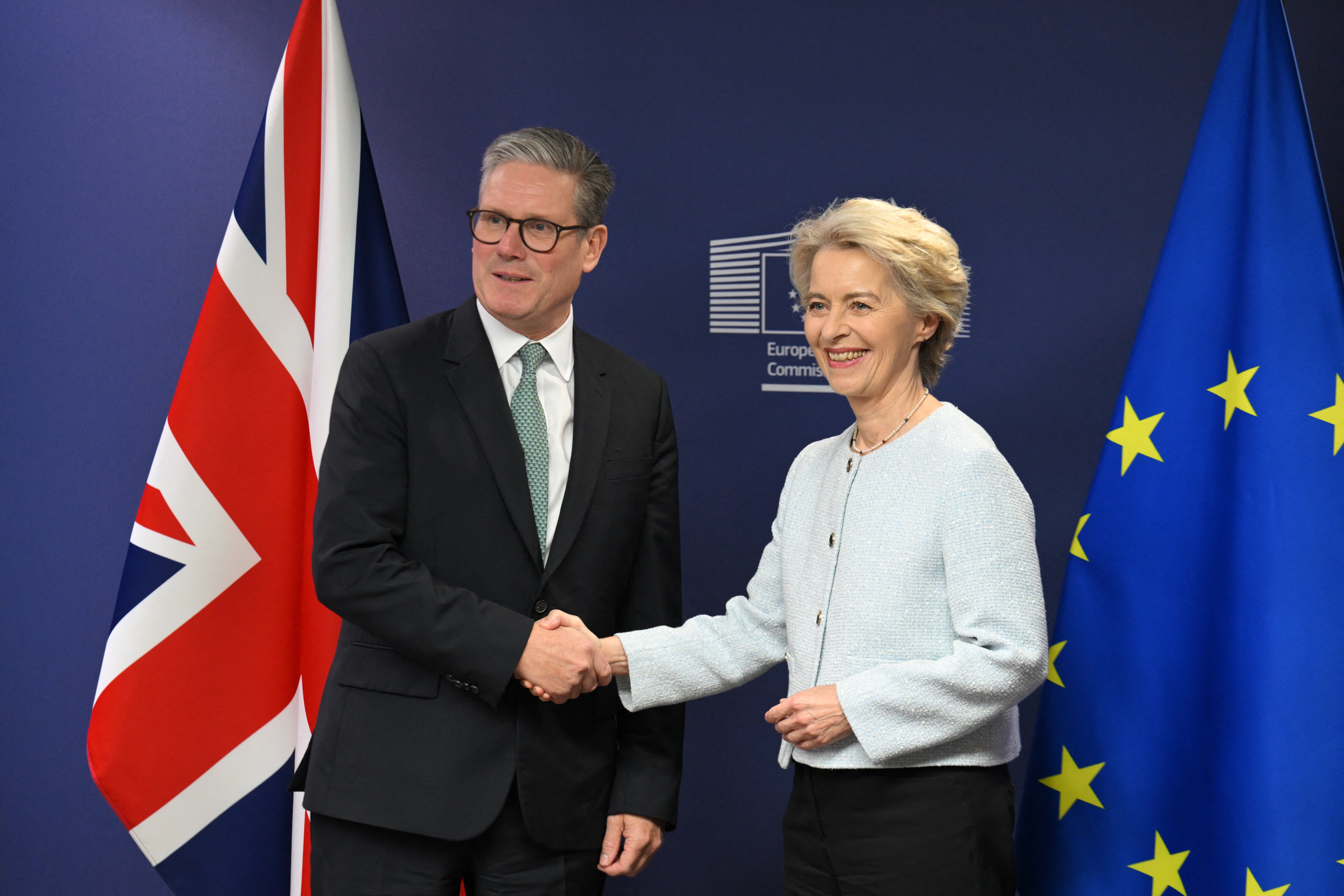 It is understood that the new powers could be used to implement deals struck with the EU (AFP via Getty)
But there are concerns that it would see the UK surrender control over its own laws.
When the UK was a member of the EU, the government previously had a vote on new laws being passed by Brussels. But now, the UK would need to accept the laws without a vote if it wants to remain in dynamic alignment with the trade bloc.
Both Conservative and Reform UK MPs are expected to oppose the plans, with the Tories accusing the prime minister of “surrendering our freedom” to appease his Labour backbenchers, and trying to “undo” Brexit.
But a Labour source argued that “all international agreements involve shared rules”.
Meanwhile, the Liberal Democrats are calling for the government to go even further and negotiate a customs union with the EU, accusing the government of having been “too timid” in its ambitions for closer ties with Brussels.
While the government has ruled out such a plan, sympathetic Labour MPs could rebel and vote with the Lib Dems.
Sir Keir has recently faced pressure from his own backbenchers to change course on a customs union, with some 13 Labour MPs backing proposals that would pave the way for such an arrangement in a Commons vote last month.
When he became prime minister, Sir Keir promised to reset Britain’s relationship with Brussels and rebuild ties with the bloc after years of tension and mistrust under the Conservatives.
And over the weekend, the prime minister signalled that the government would be prepared to align even more closely with the EU single market if the move is in the national interest.
Sir Keir insisted Britain should “go further” in strengthening post-Brexit ties with Brussels following a trade deal agreed earlier this year.
But he appeared to pour cold water on suggestions that the UK should rejoin a customs union with the bloc after his health secretary Wes Streeting said the arrangement had “enormous economic benefits”.
Speaking to the BBC’s Sunday with Laura Kuenssberg over the weekend, Sir Keir pointed to steps already taken to align with the EU more closely on agriculture and food, adding: “That’s the sovereign decision that we have taken.
“I think we should get closer, and if it’s in our national interest to have even closer alignment with the single market, then we should consider that, we should go that far.”
He added: “I think it’s in our national interest to go further.
“What I would say about the customs union is that I argued for a customs union for many years with the EU, but a lot of water has now gone under the bridge.
“I do understand why people are saying, ‘Wouldn’t it be better to go to the customs union?’ I actually think that now we’ve done deals with the US which are in our national interest, now we’ve done deals with India which are in our national interest, we are better looking to the single market rather than the customs union for our further alignment.”
The prime minister insisted freedom of movement – a core principle of the EU single market – was off the table as he faced questions about what concessions he was willing to offer in return.
A Labour source told The Independent: “The bill will give us the powers to share rules with the EU. All international agreements involve shared rules. That’s their very nature.
“We’re confident in making the case for specific trade-offs, where it has clear benefits for businesses and consumers.
“Kemi has a short memory – it wasn’t long ago she was making similar arguments, when she U-turned on the Brexit bonfire of EU regulation in the name of pragmatism and what works in the real world.
“Yet, the Tories and Reform are keen to protect a broken status quo and want to rip up our deal, all in the name of petty ideology.”