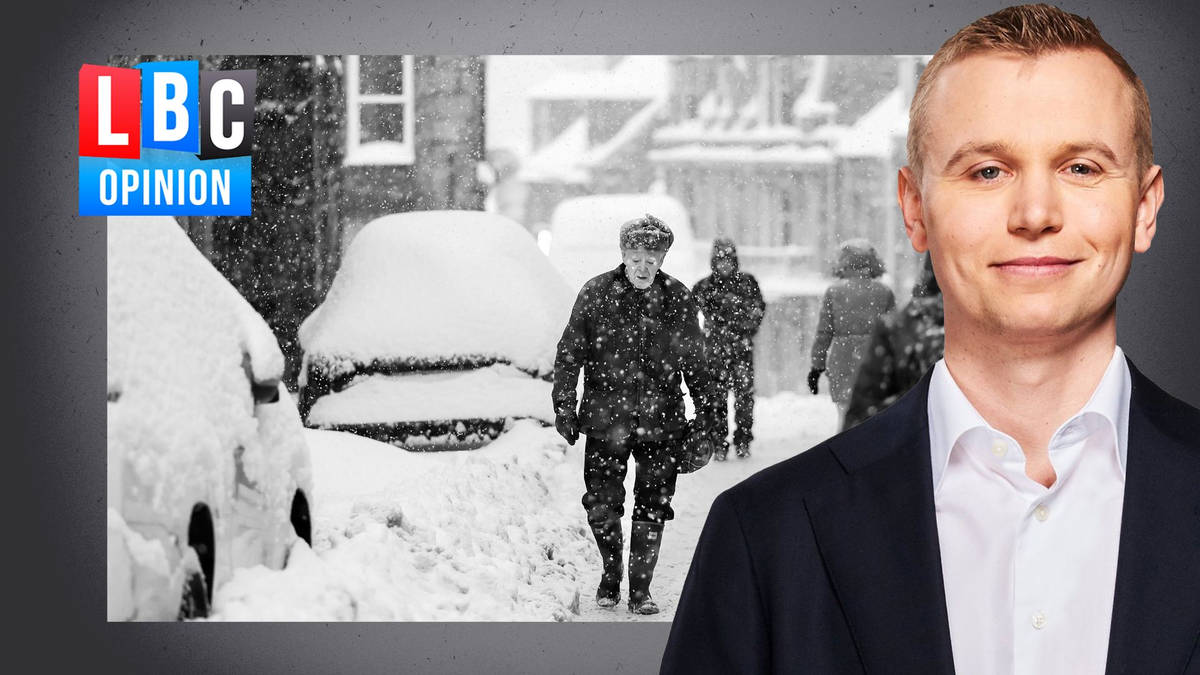
And yet every time the UK is hit by conditions just a little beyond the norm, the entire country seems to grind to a halt. Why?
This week’s snow and ice have led to hundreds of schools being closed – 384 in Wales, at least 320 in Scotland, 186 in Northern Ireland and more than 100 in England. The weather is also affecting travel, with National Rail warning of major disruption.
To make matters worse, conditions are likely to worsen as the week goes on. The Met Office has issued further weather warnings for Wednesday, Thursday and Friday, as Storm Goretti arrives. And yet, predictably, our collective response is so histrionic there are even calls for the military to be called in!
This was meant to be the week that millions of Brits returned to work. Instead, many offices and schools will remain empty for another week, all because of a bit of bad weather. No wonder our productivity rate is so woeful.
I’m not trying to trivialise the bad weather. There are homes cut off by snow in rural Scotland for whom the situation is very serious, but for most of us, the low temperatures should be little more than a minor inconvenience. Do schools in Colchester, Norwich or Stoke really need to close as a result?
And why, just why, does snow inevitably grind our rail network to a halt? Trains in Scandinavia and central Europe are highly reliable, even in deep snow and sub-zero temperatures. What would Isambard Kingdom Brunel think if he were still around to witness our complete failure to keep the trains running the moment the white stuff falls?
This speaks to a wider problem facing modern Britain: a lack of resilience. As Russian spy ships map Britain’s crucial network of undersea cables, it is not inconceivable to imagine a scenario in which the UK is subjected to a national power cut, potentially lasting for days or even weeks.
Indeed, last month, the government published the scripts that chief medical officers would read out in the event of a national blackout. They included advice for filtering water through pillowcases, cutting out alcohol, and using camping stoves.
While officials stress such a scenario remains ‘very unlikely’, it’s worth remembering that much of Spain and Portugal faced days without power last April. And yet if we can’t even cope with a bit of snow and ice, how will we cope once the internet goes down and our energy supplies are switched off?
We are blessed with living in a country with a normally temperate climate, but as climate change continues, we must accept that extreme weather – both hot and cold – will become more, not less, likely. We should learn to live with it and not let it grind the country to a halt every time.
Listen to James Hanson on LBC Saturdays and Sundays from 4-7am on the LBC app.
LBC Opinion provides a platform for diverse opinions on current affairs and matters of public interest.
The views expressed are those of the authors and do not necessarily reflect the official LBC position.
To contact us email opinion@lbc.co.uk