They said: “Whilst these stations are the cheapest to run by a mile and serve the vast majority of the land mass of Scotland, they are becoming increasingly disregarded, and problems are occurring.
“Some on-call station appliances regularly turn out without the minimum of 4 crew due to a sense of moral obligation within their communities,” they claimed.
Rhoda Grant MSP has also spoken up about the crew issues.
In response, Deputy Assistant Chief Officer Ian McMeekin said that ensuring the availability of on-call firefighters was a “historical and complex challenge”.
He remarked: “The availability of our appliances can be impacted by various factors, including staff training, unplanned absences or the availability of staff with required skill sets.
“However, as a national service, we will always maintain strategic cover. We will always attend every emergency, and our Operations Control staff will mobilise the closest and most appropriate fire appliance to every incident.”
The issue has also been raised in Holyrood.
In September, Scottish Labour MSP Rhoda Grant claimed that just 10 of 125 on-call fire stations in Argyll and Bute, Highlands, Moray, and the Islands were fully staffed.
She said: “Understaffing is so bad that throughout the last period of wildfires, nearly all fire and rescue services have been most severely affected and in some areas off duty firefighters have been asked to work extra shifts.
“Fire engines are sitting in stations because there are not enough people to crew them.
Grant went on to blame a lack of Scottish Government funding for the recruitment issues.
She added: “I’ve launched a series of parliamentary questions seeking information on the current state of the service in the Highlands and Islands constituencies, and I was alarmed to learn that of 125 on-call fire stations, there are only 10 with a full team.
“That’s less than ten percent. In more rural areas in my constituency, that is exacerbated by many volunteers not working locally during the day, reducing the cover even more. ”
A typical four-person crew consists of an officer in charge with a valid incident command certificate, a driver with a valid emergency response certificate and two qualified breathing apparatus wearers.
McMeekin said: “On-call firefighter availability is a historical and complex challenge, largely stemming from societal changes within local communities.
“We recognise this challenge and have already taken innovative steps to address it across Scotland through our On Call Improvement Programme, which will see £4 million of annual investment.”
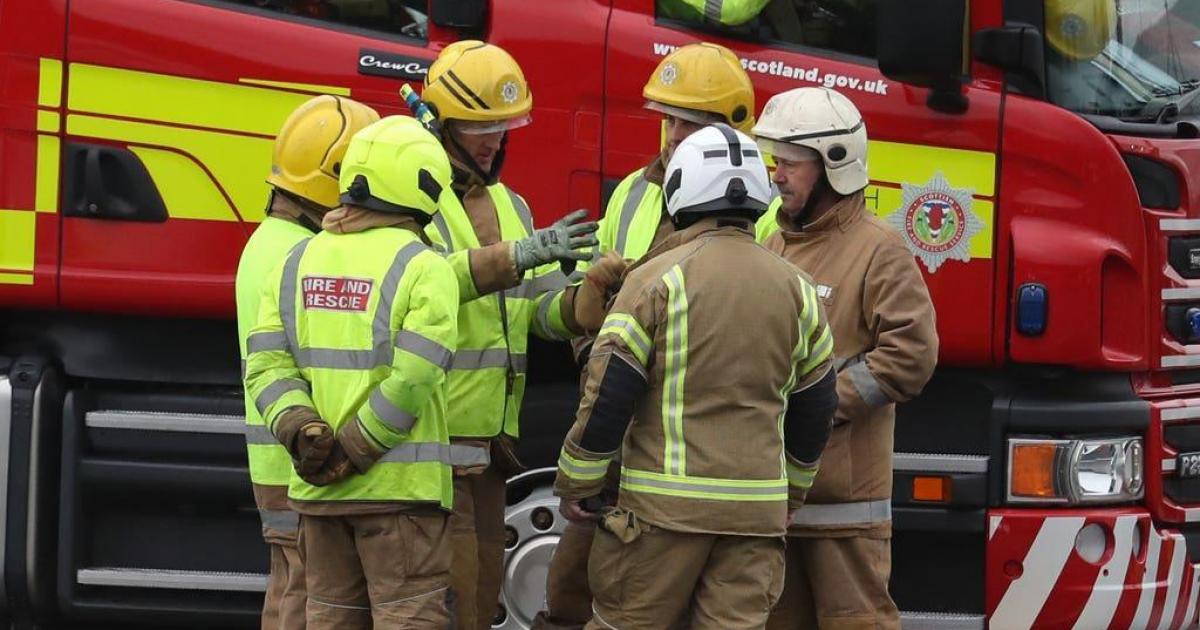
The Scottish Fire and Rescue Service operates a four-person crew system. (Image: Archive)
According to the SFRS website, on-call firefighters are contracted to provide cover and must live or work near the community fire station they serve.
There are five levels of cover, in which firefighters commit to being available up to 30 hours per week, 31-60 hours per week, 61-90 hours per week, 91-119 hours per week, and 120 hours and above per week.
Last week, the Fire Brigades Union (FBU) said that proposed budget cuts by SFRS management could result in up to 200 firefighter positions being lost.
FBU’s Scottish Secretary John McKenzie said that the cuts would negatively impact communities across the nation.
He remarked: “Scotland’s Fire and Rescue Service is in crisis.
“Since the creation of the single service over 1200 firefighter jobs have been lost, fire appliances have been withdrawn and response times to incidents have increased.
“If implemented these latest proposals would leave communities feeling the impact of yet another 200 frontline firefighter posts lost.”
A consultation carried out by the SFRS examined the impact of station closures, changes to duty systems, cuts to posts, and reductions in emergency cover.
Read more:
The potential restructuring comes as figures obtained over the summer revealed that the median time for crews to arrive at the scene of a fire increased by 21% over the last decade.
In 2014, it took a median of six minutes and 51 seconds for a 999 call to result in a fire crew arriving on site.
However, a decade later, this had increased to a median of eight minutes and 20 seconds – a rise of 21%.
At the time, a Scottish Government spokesperson said: “We continue to support the Scottish Fire and Rescue Service (SFRS) with substantial year-on-year budget increases that enable our firefighters to deliver a high standard of services and keep our communities safe.
“This year’s Budget includes £412.2 million for SFRS – an increase of £18.8 million and Scotland continues to have more firefighters per capita than other parts of the UK.”