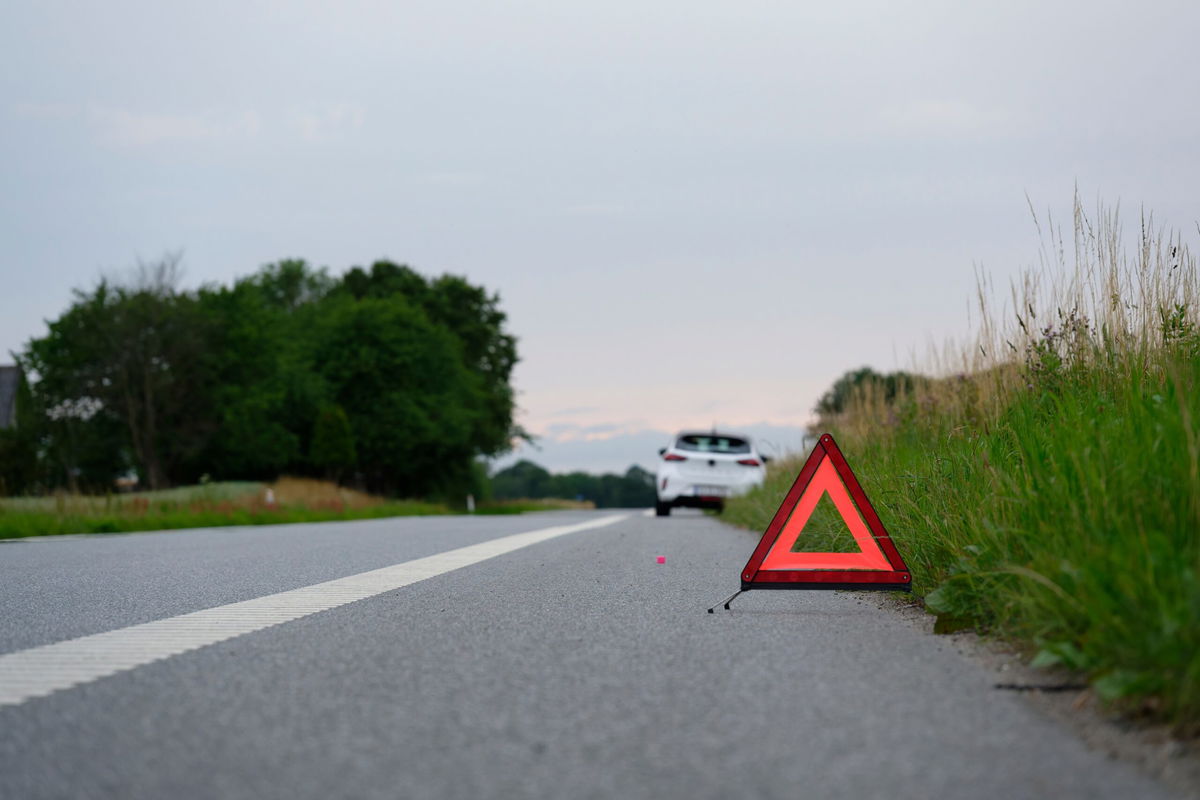
Drivers are advised to treat the V16 beacon as the first and essential step when stopping on the road. Photo credit: holgers.pictures/shutterstock
Since the start of 2026, Spain has officially entered a new phase of roadside safety. The connected V16 beacon is now the only legally recognised signalling device for vehicles stopped due to breakdowns or accidents on public roads. Despite this shift, traditional emergency triangles have not been banned.
Traffic authorities have clarified that while triangles no longer fulfil the legal signalling requirement on their own, drivers may still use them alongside a compliant V16 beacon. The change represents a shift in priority rather than a prohibition, focusing on reducing roadside risk rather than penalising older equipment.
Why the legal framework changed in 2026
Safety concerns drive the new signalling hierarchy
The replacement of emergency triangles as the primary warning device follows years of concern over roadside safety. Serious accidents have occurred while drivers walked along live carriageways to place triangles, particularly on motorways and high-speed roads.
Most Read on Euro Weekly News
The V16 beacon reduces this risk by allowing drivers to signal their presence without leaving the vehicle. Activated from inside the car and placed on the roof, it emits a high-intensity flashing amber light visible from long distances. Connected models also transmit the vehicle’s location to traffic management systems, improving early warnings for other road users.
Can emergency triangles still be used after an accident?
Legal use versus legal obligation
Yes, emergency triangles can still be used, but they no longer replace the V16 beacon. Under the rules now in force, a driver who relies solely on triangles without activating a connected V16 is considered non-compliant and may be fined.
There is no legal restriction on using triangles together with a V16 beacon, provided it is done safely. If traffic conditions allow and the driver can exit the vehicle without danger, placing triangles as an additional warning measure remains lawful.
Are drivers being fined for using triangles in 2026?
What actually leads to a sanction
The DGT have highlighted that there is no fine for using emergency triangles themselves. Penalties apply only when a driver fails to deploy a certified, connected V16 beacon during a breakdown or accident.
Traffic officers are not issuing sanctions simply because a triangle is present or used. Fines are linked to the absence or non-use of the mandatory V16 device. Authorities have reiterated that what is unlawful is relying on triangles alone, not carrying or supplementing with them.
 DGT hightlight there is no fine for using triangles themselves. Photo credit: DGT
What drivers are advised to do now
Practical guidance under the current rules
Drivers should activate the V16 beacon immediately after stopping and place it on the highest point of the vehicle to ensure maximum visibility. Remaining inside the vehicle is advised whenever conditions make exiting unsafe.
If visibility is poor and the situation allows, triangles may be placed as a secondary measure, but only after the V16 has been activated. Drivers are also reminded that only connected, approved V16 devices meet legal requirements.
What happens to emergency triangles already in cars?
No obligation to remove or discard them
There is no requirement to remove emergency triangles from vehicles in 2026. Many drivers continue to carry them, particularly those who travel on rural or low-traffic roads where extra visibility can be helpful.
Keeping triangles in the boot does not constitute an offence. Their presence is legally neutral; the issue arises only if they are used as the sole warning device without a V16.
What drivers need to know in 2026
- Emergency triangles are still legal in Spain
- A connected V16 beacon is now mandatory
- Using triangles alone can result in a fine
- Using triangles together with a V16 is permitted
- Enforcement focuses on safety rather than possession
A shift in how roadside safety is understood
From visibility to prevention
The 2026 rules reflect a broader change in road safety policy. Rather than prioritising physical placement of warning devices, authorities now focus on preventing drivers from entering dangerous traffic environments.
Emergency triangles remain familiar and, in certain circumstances, useful. However, they no longer define compliance. The connected V16 beacon has become the foundation of roadside signalling in Spain, combining visibility with real-time location transmission.
For drivers, the message is clear: triangles are no longer the legal solution, but they are not prohibited. Compliance in 2026 begins with the V16 beacon and ends with safer behaviour for everyone on the road.