Russia’s annexation of Crimea in 2014 and its full-scale invasion of Ukraine in 2022 fundamentally altered Europe’s security paradigm. The downsized armies and professional military models that emerged after the Cold War began to seem inadequate in the face of Moscow’s aggressive policies. In this context, countries such as Germany and France signaled a possible return to conscription as they sought to strengthen their armed forces.
In Germany, Defense Minister Boris Pistorius openly stated that if the number of volunteers proved insufficient, compulsory military service could once again be considered. The Christian Democratic Union (CDU) adopted a program at its party congress calling for a gradual return to conscription. In France, President Emmanuel Macron has sought to reinforce the “universal national service” model for young people. These developments have brought back to the fore the tension between liberal values and security concerns in the European Union’s security policies.
Today, Europe finds itself caught between its commitment to protect freedom and individual rights on the one hand, and the necessity of building deterrent power against the Russian threat on the other. This dilemma has become one of the most critical debates shaping the continent’s future security architecture and social cohesion.
Reasons for conscription
The EU’s renewed debate on conscription stems from multiple factors. Germany, which has one of the largest armies on the continent, faces a significant personnel shortage. Chief of Staff Carsten Breuer stated that the country needs 460,000 soldiers to maintain its defense capacity, while the current number stands at around 182,000, highlighting the urgent need for at least 100,000 additional troops. This challenge is not unique to Germany. The shortage of professional soldiers, combined with aging populations, affects all European countries. Security analyses suggest that such gaps are a decisive factor in bringing conscription back onto the agenda, as volunteer systems alone cannot meet the demands of large-scale military operations.
This shortage is not limited to combat soldiers; modern warfare relies heavily on critical support roles, including ammunition carriers, truck drivers, medical staff and logistical personnel. European armies are experiencing serious deficiencies in these areas as well.
On the other side, Russia’s new security policies have compelled EU states to expand their armies. At NATO’s 2023 Vilnius Summit, Russia was defined as “the most direct and greatest threat,” and member states agreed to raise defense spending to at least 2% of GDP and to establish a 300,000-strong high-readiness force. The reduction of U.S. security commitments in Europe has further forced the EU to shoulder more of the burden.
Another factor driving the EU’s conscription debate is internal security. Irregular migration along the Balkan route and across the Mediterranean has hardened border security policies. At the same time, the rise of far-right movements, radicalization and terrorism in Europe has made it necessary for armies to play active roles not only in external defense but also in internal security. This demonstrates that military capacity must be expanded not only to counter the Russian threat but also to safeguard domestic order.
Taken together, these factors show that the EU’s conscription debate is about personnel shortages, logistical deficiencies, internal security concerns, societal resilience, NATO burden-sharing and the Russian threat.
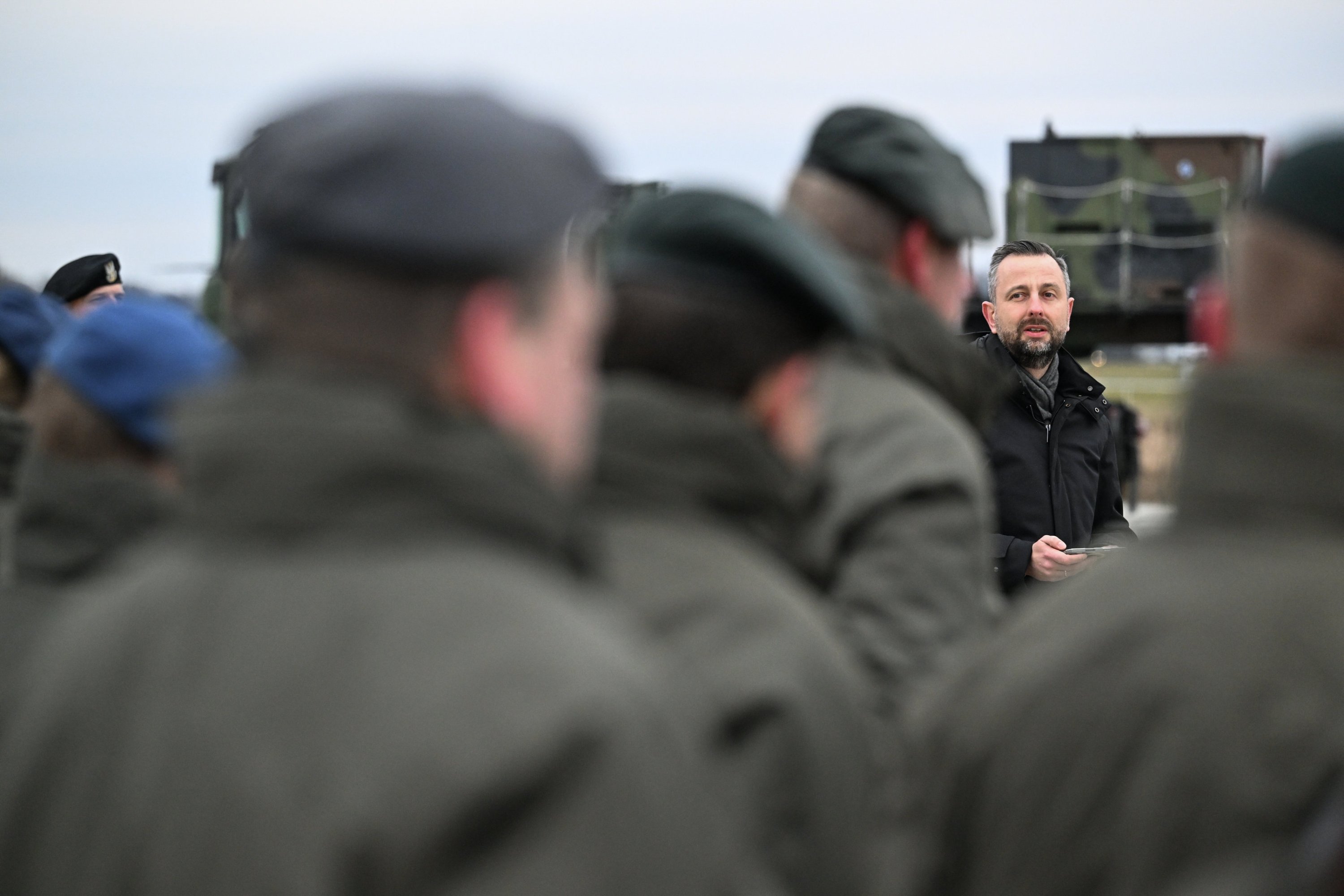
Polish Deputy Prime Minister and Minister of National Defense Wladyslaw Kosiniak-Kamysz (C) visits Dutch military forces stationed at the airport Rzeszow-Jasionka, Poland, Dec. 24, 2025. (EPA Photo)
Public reaction in Europe
The renewed debate over conscription in Europe emerges as a direct challenge to the continent’s liberal values. For societies that have long prioritized individual freedoms and voluntarism, the state compelling young people into military service represents a significant rupture. Younger generations, in particular, place greater emphasis on education, career development and global mobility rather than military duty. As a result, the idea of compulsory service rests on fragile ground in terms of public consent.
Public opinion surveys indicate that while conscription enjoys some support in countries such as Germany and France, opposition is stronger in Spain and the United Kingdom. Within this context, critics argue that conscription risks normalizing authoritarian tendencies in the name of national security. Thus, a deepening tension is unfolding between Europe’s security concerns and its liberal values. The continent’s future defense capacity will be tested not only in military terms but also in relation to social cohesion and democratic legitimacy.
Türkiye’s position
Against this backdrop, European countries have sought to rebuild the armies they downsized after the Cold War. Beyond Germany and France’s new military service arrangements, countries such as Sweden, Lithuania, Latvia and Croatia have reinstated conscription, while Greece, Austria, Switzerland, Finland and Norway continue to maintain it.
Türkiye occupies a special position in this equation. As one of the countries that still enforces compulsory military service, Türkiye is both a NATO member and a key actor in the regional security architecture. Its system represents a hybrid model: Compulsory service continues alongside efforts to strengthen professional units and voluntary programs. This makes Türkiye an important reference point in Europe’s ongoing debates. Europe’s conscription decisions reflect the end of its long peace period and the intensification of geopolitical competition.
The views and opinions expressed in this article are solely those of the author. They do not necessarily reflect the editorial stance, values or position of Daily Sabah. The newspaper provides space for diverse perspectives as part of its commitment to open and informed public discussion.

The Daily Sabah Newsletter
Keep up to date with what’s happening in Turkey,
it’s region and the world.
SIGN ME UP
You can unsubscribe at any time. By signing up you are agreeing to our Terms of Use and Privacy Policy.
This site is protected by reCAPTCHA and the Google Privacy Policy and Terms of Service apply.