(Credits: Far Out / Bob Gruen / Capitol Records / Harry Chase / Los Angeles Times / UCLA)
Tue 6 January 2026 19:00, UK
Whenever Paul Simon sat down to write a song, he was never going for the surface level.
He wanted to tell intricate stories, and while not every one of them needed to have the most depth when looking at them on the surface level, it was much better for him to make music that reflected the story he wanted to tell rather than go for something too cerebral. And when it came to message songs, he did have a few bones to pick with even some of the greatest musical minds of his generation.
Then again, Simon was never one to make message songs in the same way that, say, Bob Dylan could. He was a capable lyricist and could have certainly made songs about fighting against oppression if he wanted to, but the musician chops he had didn’t really reflect that. He was much more soft spoken, and he had no hope of trying to beat the listener up in the same way that Dylan could whenever working on ‘The Times They Are A-Changin’.
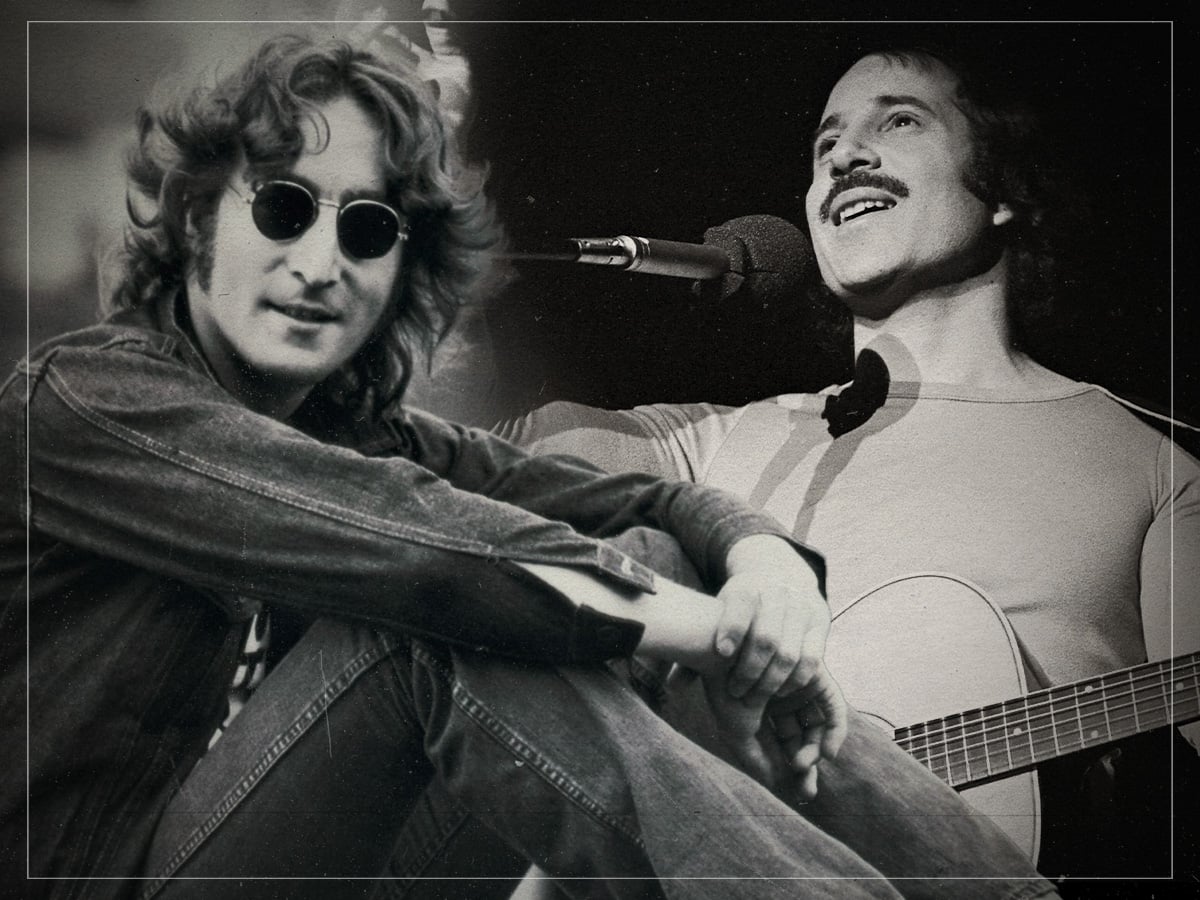
But even when putting him next to the more celebrated songwriters, Simon did have a much more negative outlook on what John Lennon was bringing to the table. It goes without saying that Lennon wrote some of the greatest rock and roll songs ever made when he was in The Beatles, but compared to the others’ solo careers, a lot of people were bound to have a few issues when he started bringing his own political beliefs into the music.
It was bad enough for some people that Yoko Ono became a central part of his musical career, but when he started making songs like the ones that turned up on Some Time in New York City, most people realised that one of the Fab Four could be fallible. If you were to ask Simon, though, ‘Power to the People’ was one of the worst records that Lennon ever made, oftentimes missing the point of what a rallying cry is supposed to do.
Whereas Simon saw Lennon’s attempt at political commentary as nothing but manipulative, he felt the Chi-Lites outdid him in every single way, saying, “Did you hear the other record of ‘Power to the People’? There were two records called that. There was one record called, ‘For God’s Sake Give More Power to the People.’ It was a good record though. It really was a good record. I think it was the Chi-Lites. I like that record much better than Lennon’s record.”
Whether or not the song is better harmonically is up to interpretation, but The Chi-Lites do have a lot more going for them than cheap sloganeering. For one thing, the verses actually seem to have an agenda about them a lot more than Lennon’s does. There are countless songwriters that try to write the hook and fill out the rest later, but the verses of the Chi-Lites’ song make it feel like a cry of anger once they finally get to that chorus line.
Which is a strange fault to say about a John Lennon song. Of all The Beatles, he was one of the most verbose whenever writing his classics, and since he cited Dylan as a main influence during his time in the band and beyond, the fact that he managed to write a stellar hook and waste it on verses that only have a handful of musical platitudes does feel like a step down from the more pointed songwriters going on at the time.
Simon would have fully admitted that he wasn’t in the same category as The Beatles by any means, but his love of the Chi-Lites over Lennon had nothing to do with anyone’s status as a musician. It was about the attention to detail as a songwriter, and sometimes even the best can get too caught up in their own agenda that they forget about the basic rules that they started off with.
Related Topics