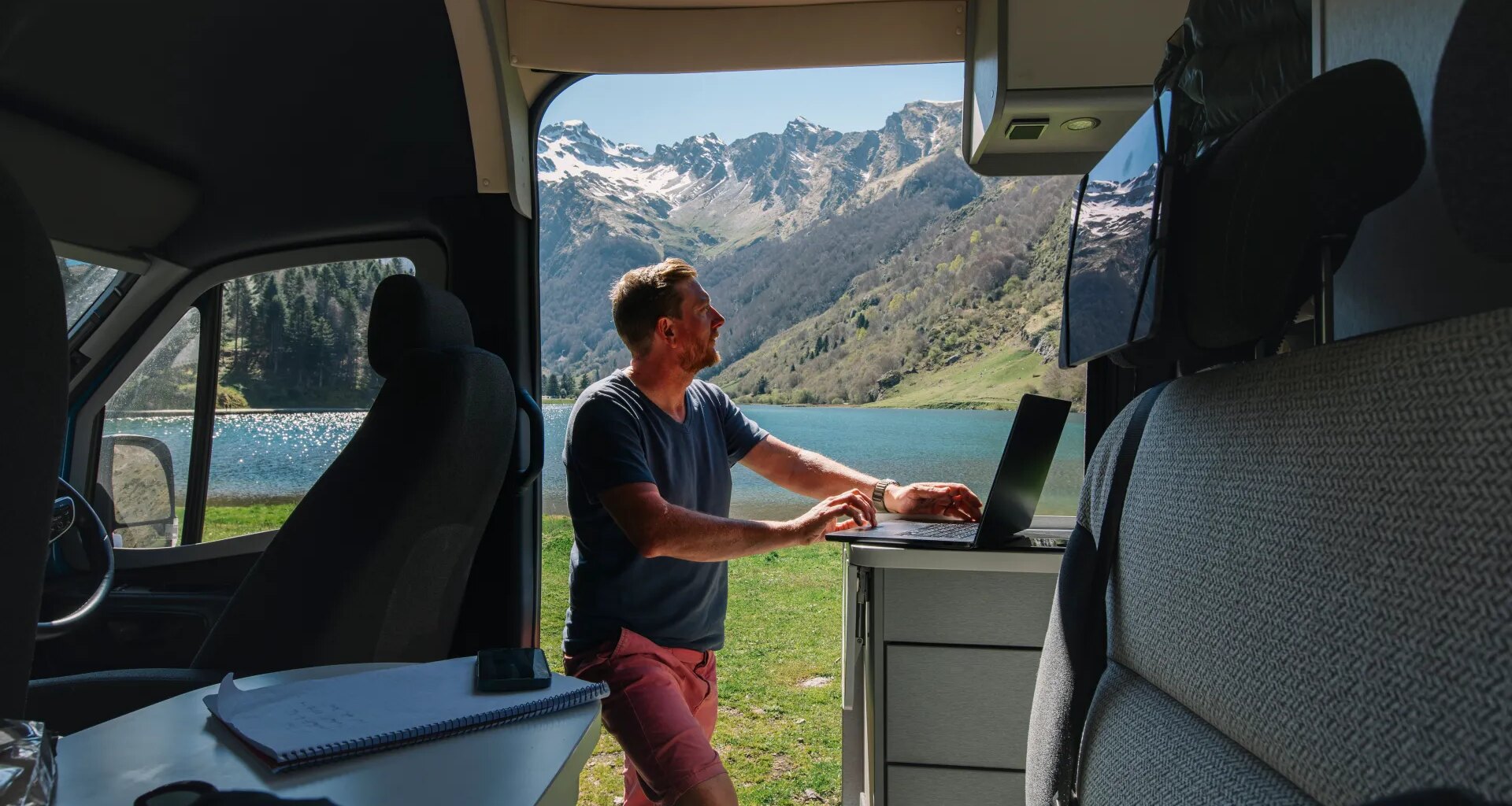
WORKERS are quitting their lives in Scotland to work remotely abroad, a new survey reveals.
An estimated 165,000 people from the UK are using digital nomad visas.
Nick is heading for Spain
The Scot is swapping Glasgow for sunny BarcelonaCredit: Alexander Spatari
The permits allow Brits to travel to a number of countries to work remotely meaning they contribute to the local economy without having to take jobs there.
A survey, carried out by hotel and co-working space brand The Social Hub, revealed almost three-quarters of digital nomads say they up sticks because a visa made it possible.
Meanwhile, other data shows that nearly a quarter of workers are unhappy in their jobs with nine per cent expected to hand in their notice, accroding to ACS International Schools research.
Places like Spain, Portugal and Italy have all introduced the scheme with Slovenia the latest European government to bring it in at the end of 2025.
Tasha Young, Chief Membership Officer at The Social Hub, said the research confirmed what the company had observed first-hand.
She says: “The opportunity to travel, work in new environments and push careers forward make life as a digital nomad very appealing.
“People living this lifestyle crave connection, community and a place where they can feel at home while at the same time be immersed in local cultural fabric – even when they’re on the move.”
Digital nomad visas were introduced starting in 2020, pioneered by countries like Estonia and Barbados after the worldwide rise in remote work due to the pandemic.
They are temporary permits, mostly with a duration of a year with the possibility to extend your stay.
The visas are generally granted to people who can prove they have sufficient funds to support themselves and their families, while working for a company outside the one issuing the document.
The new research found those using the permits had a variety of different careers, with strong representation in manufacturing, retail, catering, leisure and IT.
Millennials, people aged 29 to 44, make up most of the digital nomads and cite freedom and flexibility as the chief benefit of the lifestyle move.
Not all countries have embraced the introduction of permits, though, with anti-nomad campaigns from locals in countries such as Portugal and Mexico.
One Scot who’s taking up the chance to switch up his life is Nick Cohen.
The IT advisor and entrepreneur is leaving his home in Glasgow to set up in Barcelona early this year on a digital nomad visa.
Nick, 35, said: “Myself and my partner Kai are going to be moving to Spain in around four weeks.
“We came across the opportunity for the digital nomad visa about a year ago and thought why not. We’d both been looking to get a change of scenery at some point.
“We had the typical, on holiday, ‘what if we live here?’ type conversation. We both wanted to get out of Glasgow at some point. Neither of us have ever lived far from where we were born so kind of always wanted to give it a go. So when we were on holiday in Spain just over a year ago now, we were kind of like, ‘we’re moving to Barcelona’.
“I think it’s a difficult city not to fall in love with.”
The couple moved to the city for a two-month trial and loved it. So now, they’re packing up and heading off in less than a month.
LOG ON ABROAD
GEN Z digital nomads, aged 18 to 28, are the most lifestyle-driven, according to the survey with 40 per cent saying they chose the path for a better quality of life while 42 per cent cited opportunities to travel.
They are also the least likely to feel integrated, with more than a third saying they do not feel immersed in local culture.
Millennials are the most likely to make use of co-working spaces and events to stay connected.
Baby Boomers, those aged 61 to 79, were once seen as the least likely to embrace the lifestyle
But nearly half said they chose nomadism for a better lifestyle and the chance to travel – a higher proportion than any other age group.
However, they are also the generation most affected by isolation, with 45 per cen saying loneliness is their biggest struggle.
One in four nomads have lied to friends and family about how much they are enjoying the experience.
Nick explained: “The application process is fairly straightforward. Places like Spain and Portugal have got a similar scheme where they are looking for people to come over, not to take local jobs but bring their remote work with them and invest in the local economy.
“It’s not an overly expensive visa to apply for. The bit that is more difficult is just proving all of the elements of it.
“When the pandemic hit, people like myself who love to travel and see different places were stuck at home when everything closed down and then once the world came back, I was trying to get out there and also noticing I could actually take my laptop with me for a few days and work but also have a holiday.
“The visa works because you’ve got that security of knowing you can continue to do the work that you have been doing but also experience a different culture, a different climate and just a different way of life.
“We love Glasgow and we’ve got friends and family here but we feel like we’re at a certain stage, we’re both mid-30s and we have this option that might not be around forever, so it feels like we need to go and do it to try this.”
Tasha Young says the lifestyle is appealingCredit: