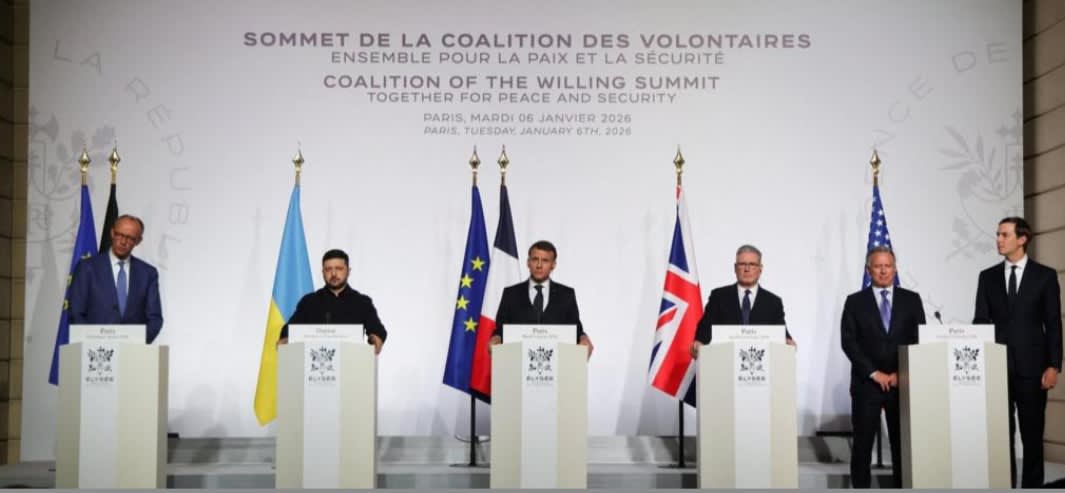
British Prime Minister Keir Starmer has announced that the United Kingdom and France would be prepared to send troops to Ukraine if a future peace deal with Russia is reached. The statement followed high-level talks in Paris, signaling a potential shift in how European powers might guarantee Ukraine’s security after active hostilities end.
Starmer emphasized that any troop deployment would not be part of ongoing combat operations but would instead serve as a stabilizing and deterrent force, designed to uphold the terms of a peace agreement and prevent renewed aggression. The proposal reflects growing concern among European leaders that Ukraine will require long-term security assurances beyond diplomatic promises.
The Context: Europe Searches for a Durable Peace
As the war in Ukraine drags on, European governments are increasingly focused on what comes after the fighting. While military aid to Kyiv continues, policymakers are quietly preparing for the possibility of negotiations that could freeze or end the conflict.
Starmer’s comments suggest that Britain and France are considering boots-on-the-ground guarantees as a way to ensure that any peace deal is credible. Past agreements in the region have collapsed due to lack of enforcement, leaving Ukraine vulnerable to renewed attacks.
The Paris talks brought together senior officials from both countries to explore options for post-war stability, reflecting a shared view that Europe must take greater responsibility for its own security.
What Starmer Actually Said
Speaking after the Paris meeting, Starmer said the UK and France were “ready to play a leading role” in securing peace, including the possibility of deploying troops if requested by Ukraine and agreed upon by international partners.
He stressed that such a deployment would be conditional—dependent on a formal peace agreement, clear legal frameworks, and coordination with allies. Starmer framed the proposal as defensive rather than provocative, arguing that credible security guarantees are essential to deter future violations.
The remarks stop short of committing to a specific timeline or troop numbers, leaving room for further negotiations.
France’s Position and European Alignment
France has long advocated for stronger European defense autonomy, and President Emmanuel Macron has previously floated the idea of European forces playing a more direct role in Ukraine’s security. Starmer’s alignment with Paris suggests a growing convergence between London and France despite post-Brexit tensions.
French officials echoed the emphasis on deterrence, noting that peacekeeping or stabilization forces could help prevent a return to war. However, they also emphasized that any deployment would require broad international backing and respect for international law.
The proposal highlights an emerging Franco-British axis on European security, particularly as the U.S. debates the scale of its future involvement in Ukraine.
How Russia Is Likely to View the Proposal
Moscow has consistently opposed the presence of NATO or Western troops in Ukraine, viewing such moves as a direct threat. While Starmer framed the deployment as post-conflict and non-combat, Russia may still see it as an expansion of Western influence.
Analysts warn that the proposal could complicate peace negotiations if Russia interprets it as a precondition rather than a safeguard. However, supporters argue that without credible enforcement mechanisms, any agreement would be fragile.
The challenge for European leaders will be balancing deterrence with diplomacy—offering security guarantees without undermining talks.
Ukraine’s Perspective: Security Above All
For Ukraine, the idea of European troops on its soil could represent a crucial layer of protection. Ukrainian officials have repeatedly stated that security guarantees are non-negotiable in any peace deal.
While NATO membership remains Kyiv’s long-term goal, interim solutions—such as multinational stabilization forces—are increasingly being discussed. Ukrainian leaders have welcomed conversations about concrete commitments rather than vague assurances.
However, domestic opinion in Ukraine is complex. Some citizens worry about sovereignty and long-term dependence, while others see international forces as essential to survival.
The NATO and US Factor
Starmer was careful to note that any deployment would be coordinated with NATO allies, even if it is not formally a NATO mission. This distinction is significant, as it could allow European countries to act without triggering alliance-wide escalation.
The United States has not publicly endorsed the idea, but Washington has encouraged European allies to shoulder more responsibility for regional security. A Franco-British initiative could align with U.S. efforts to rebalance commitments while maintaining deterrence.
Still, the absence of explicit U.S. leadership raises questions about command structures, funding, and long-term sustainability.
Domestic Reactions in the UK and France
In the UK, Starmer’s statement has sparked debate. Supporters argue that Britain must play a proactive role in European security and prevent future wars through deterrence. Critics warn of mission creep, financial costs, and the risks of deploying troops near a volatile conflict zone.
Similar debates are unfolding in France, where public opinion is divided over military commitments abroad. Both leaders will face parliamentary scrutiny before any concrete plans move forward.
The political challenge lies in convincing voters that post-conflict deployments are an investment in peace rather than a pathway to new entanglements.
Legal and Practical Challenges
Deploying troops to Ukraine would require clear legal mandates, rules of engagement, and exit strategies. Questions remain about whether forces would operate under a UN mandate, a bilateral agreement, or a broader European framework.
Logistical issues—including supply chains, troop rotation, and coordination with Ukrainian forces—would also need careful planning. Experts caution that poorly defined missions risk failure and escalation.
Starmer acknowledged these challenges, emphasizing that discussions are at an early stage.
What This Means for Europe’s Future Security
The proposal reflects a broader shift in European thinking. Rather than relying solely on the U.S., European powers are exploring ways to collectively guarantee peace on the continent.
If realized, a UK-France deployment could set a precedent for future European-led security missions. It would also signal a more assertive European role in shaping post-war outcomes.
However, success will depend on unity, legitimacy, and clarity of purpose.
Conclusion: A Tentative Step Toward Peace Enforcement
Keir Starmer’s statement after the Paris talks marks an important moment in the evolving debate over Ukraine’s future. By suggesting that the UK and France could send troops in the event of a peace deal, he has shifted the conversation from abstract guarantees to tangible commitments.
Whether this proposal becomes reality remains uncertain. It faces diplomatic, political, and practical hurdles. Yet it underscores a growing recognition that peace without enforcement may not last.
As negotiations continue and the shape of a future settlement remains unclear, Europe is preparing for a role that extends beyond aid and rhetoric—toward actively safeguarding peace on its own continent.