Home » Airlines News of Europe » Winter Storms Disrupt Travel Across the UK, France, Germany, and the Netherlands, With 60 Flights Scrapped and 94 Delayed; Brussels Airlines, British Airways, and EasyJet Suffer Severe Setbacks – What You Need to Know About the Affected Routes and Cities
Published on
January 7, 2026
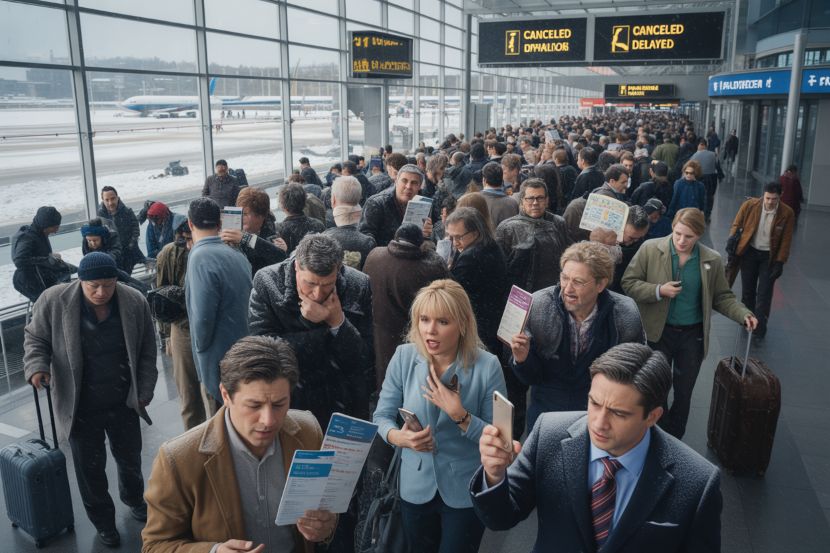
Severe weather conditions across Europe have led to widespread flight cancellations, heavily affecting passengers traveling with Brussels Airlines, British Airways, and EasyJet. These cancellations have rippling effects on airports and tourism, with thousands of passengers facing disruptions, delays, and rerouted flights. With winter storms sweeping through the continent, flights from major European hubs to destinations across the region are being severely impacted. For travelers looking to get from one country to another, whether for business or leisure, the situation has created a wave of confusion, frustration, and inconvenience.
Total Number of Cancellations Across the Airlines:
Brussels Airlines, British Airways, and EasyJet have collectively cancelled more than 60 flights due to bad weather conditions. The flight cancellations are primarily across popular European routes, including flights to and from major hubs such as London Heathrow, Amsterdam Schiphol, Brussels, and Menara International. The high volume of cancellations means that several thousand passengers have been affected, with many facing long delays and rerouted flights.
Affected Airports:
- Brussels Airlines:
- Brussels International Airport (BRU)
- Munich International Airport (MUC)
- Berlin-Brandenburg Airport (BER)
- Zurich Airport (ZRH)
- Frankfurt Airport (FRA)
- Lisbon Humberto Delgado Airport (LIS)
- Ouagadougou Airport (OUA)
- Kotoka International Airport (ACC)
- British Airways:
- London Heathrow (LHR)
- Amsterdam Schiphol Airport (AMS)
- Charles de Gaulle Airport (CDG)
- Linate Airport (LIN)
- London Gatwick (LGW)
- EasyJet:
- Menara International Airport (RAK)
- Nantes Atlantique (NTE)
- London Gatwick (LGW)
- Amsterdam Schiphol Airport (AMS)
- Geneva Cointrin International Airport (GVA)
- Toulouse-Blagnac Airport (TLS)
- Porto Airport (OPO)
- Lyon Airport (LYS)
- Tenerife South Airport (TFS)
Key Areas Affected:
- Brussels Airlines:
- The cancellations primarily impacted flights between major European hubs like Brussels and Munich, Berlin, Zurich, and Frankfurt. Passengers traveling for business and leisure between these cities have faced significant delays. The cancellation of long-haul flights to destinations like Ouagadougou and Kotoka has also affected travelers looking to connect to other international flights.
- British Airways:
- British Airways cancellations have been widespread, with a large number of flights affected between London Heathrow and major European hubs like Amsterdam, Paris, and Geneva. Passengers from London Gatwick to Amsterdam Schiphol were especially hit, causing massive disruptions for those connecting to other international flights.
- EasyJet:
- EasyJet’s cancellations have hit passengers traveling between Europe and popular Mediterranean destinations. With flights cancelled from Menara International to Nantes and from London Gatwick to Amsterdam Schiphol, many passengers have faced long waits or been rerouted to alternative airports.
Affected Routes:
- Brussels Airlines:
- Route: Brussels to Munich (BEL2643)
- Affected passengers traveling from Brussels to Munich experienced a major disruption. Delays were caused by heavy snowfall in Munich, affecting takeoff and landing operations.
- Route: Brussels to Berlin (BEL2581)
- Passengers traveling between Brussels and Berlin experienced cancellations due to poor visibility and dangerous flying conditions in the region.
- Route: Brussels to Copenhagen (BEL2257)
- Cancellations were attributed to icy runway conditions in Copenhagen, leading to grounded flights.
- Route: Brussels to Zurich (BEL2731)
- Zurich faced severe weather conditions, including strong winds and snow, affecting takeoffs.
- Route: Brussels to Lisbon (BEL3815)
- This flight was impacted due to a sudden storm in Lisbon, leading to the cancellation of the flight.
- Route: Brussels to Munich (BEL2643)
- British Airways:
- Route: London Heathrow to Amsterdam (BAW439)
- Bad weather across London and Amsterdam led to this flight’s cancellation, with delays caused by the grounding of flights in both cities.
- Route: London Heathrow to Paris (BAW304)
- A massive storm system over France led to delays in Paris, resulting in this flight being cancelled.
- Route: London Heathrow to Brussels (BAW386)
- A cold front across Belgium and northern France caused delays and cancellations, severely impacting this route.
- Route: London Heathrow to Geneva (BAW1516)
- With snowstorms battering the Swiss Alps, this route faced cancellations affecting tourists heading to ski resorts.
- Route: London Heathrow to Amsterdam (BAW439)
- EasyJet:
- Route: Menara International to Nantes (EZY4780)
- This route was cancelled due to an intense weather front, including snowstorms that forced airport closures.
- Route: London Gatwick to Amsterdam Schiphol (EZY8683)
- The cancellation of this flight was due to icy weather conditions in Amsterdam, causing delays across European airspace.
- Route: Menara International to Toulouse (EZY4974)
- Flights between Marrakech and Toulouse were cancelled due to freezing temperatures in Toulouse, affecting runway operations.
- Route: Menara International to Nantes (EZY4780)
Airline Specific Flight Cancellation TablesBrussels Airlines
British Airways
EasyJet
Passengers in Peril: Weather Disruptions and Its Far-reaching Effects
For passengers, flight cancellations bring not just frustration but significant financial setbacks. Stranded at major hubs like London Heathrow, Brussels, and Amsterdam Schiphol, many travelers are left with few options but to wait for rebookings or make last-minute travel arrangements. The chaos is exacerbated by the unpredictability of severe weather, with many facing extended delays and missed connections that cause further stress and missed opportunities. As flights continue to be grounded, affected passengers must act fast to explore alternatives and minimize the time spent in limbo. Navigating the ongoing storm of delays requires patience, quick thinking, and a proactive approach to securing new travel arrangements.
The Domino Effect: How Flight Cancellations Are Shaking Local Tourism
The consequences of these cancellations go beyond the passengers themselves. The tourism sector, already dealing with the post-pandemic recovery, takes a hard hit, especially during peak seasons. Countries like Belgium, the UK, and France — renowned for their tourism-driven economies — feel the sting of lost revenue as business travelers and tourists alike are left scrambling for alternative routes or simply abandon their plans altogether. With fewer international visitors in places like London, Brussels, and Amsterdam, hotels see a decrease in bookings, popular attractions become less crowded, and local businesses suffer financially. The ripple effect extends far beyond the airports, with smaller tourist-dependent towns and regions losing out on vital economic inflows.
Smart Travel Strategies: How to Navigate Disruptions Like a Pro
For those caught in the storm of flight cancellations, knowledge is power. Passengers are urged to immediately check with their airline’s customer service for rebooking options. Airlines are often obligated to provide alternative flights, hotel accommodations, and meal vouchers, but only if you know what to ask for. Take the following proactive steps:
- Check your flight status regularly: As soon as the weather forecast changes, your flight status could be impacted. Keep track of your flight’s status on official airline apps, or flight-tracking websites to stay ahead of any changes.
- Know your rights: According to EU regulations, you may be entitled to compensation depending on the length of your delay and the circumstances of the cancellation. Be prepared to claim your rights.
- Consider alternative transport: Explore other options like high-speed trains or buses if flights are cancelled, especially if you’re in a major European city. For instance, traveling from London to Paris may be quicker by train if air travel is suspended.
- Travel insurance: If you haven’t yet purchased travel insurance, consider it for future trips. It can cover a wide range of scenarios, including flight cancellations, rebooking fees, and additional accommodation costs.
Boosting Local Tourism: How Affected Destinations Can Bounce Back
For those looking to make the most out of a disrupted trip, it’s important to maintain a positive outlook and make the most of the situation. Even during travel disruptions, there are ways to ensure that your visit still has an impact. For tourists, embracing the spontaneity of the situation can lead to discovering hidden gems in the affected destinations. Local tourism authorities can step up by providing immediate updates on alternate routes and offering discounts on local experiences for affected tourists.
Additionally, investing in clear communication, setting up alternative travel routes, and promoting off-season discounts could be a way to make up for the dip in tourists. It’s essential that destinations bounce back quickly, ensuring that visitors are still able to explore the cultural richness and beauty these regions have to offer, even amid a storm of cancellations.
Restoring Normalcy: How the Industry Can Reclaim Its Strength
The road to recovery is far from simple, but it is achievable. Airlines and airports are continually improving their systems, particularly in weather forecasting, to better predict and manage cancellations. With innovations in technology, travelers can expect smoother experiences, fewer disruptions, and quicker recovery times. Airports are enhancing passenger communication systems to deliver real-time information, while airlines are investing in training staff to handle large-scale disruptions more efficiently.
As Europe’s weather stabilizes in the coming months, airlines and airports are well-positioned to bounce back from these tough disruptions. The lessons learned from the current chaos will lead to better preparation and more resilient systems, ensuring that both passengers and the tourism industry emerge stronger and more adaptable for the future.
