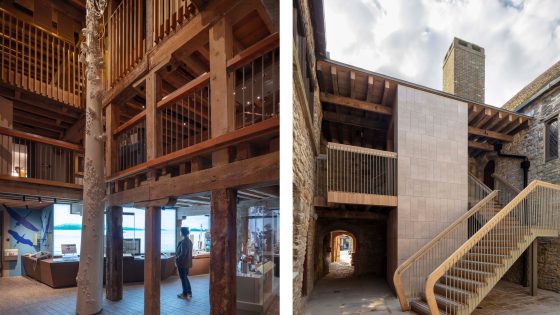
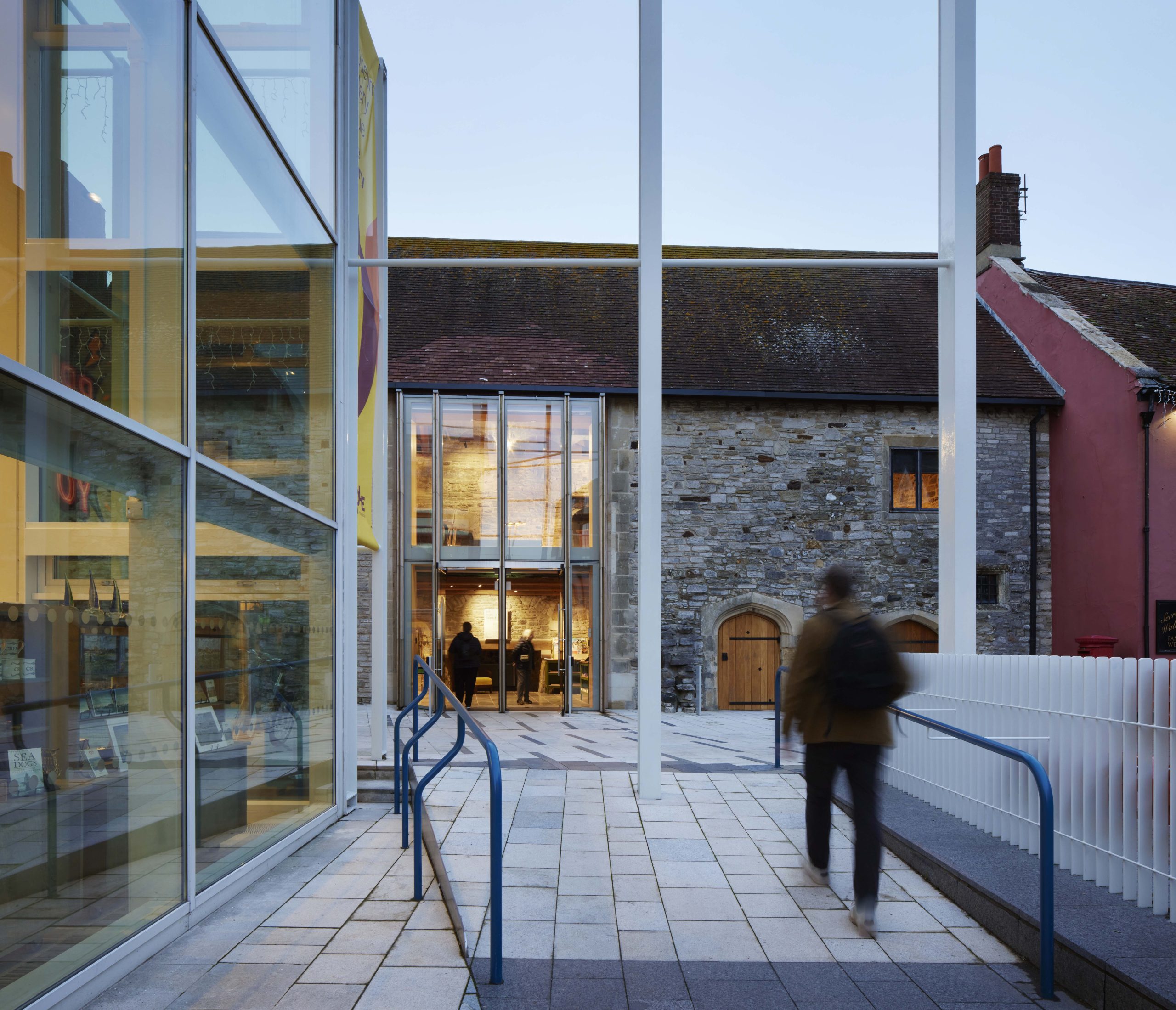
The comprehensive redevelopment ranges across a complex of buildings dating from the medieval period to the 20th-century and includes Scaplen Court, a Grade I-listed 15th century merchant’s house and linking public realm.
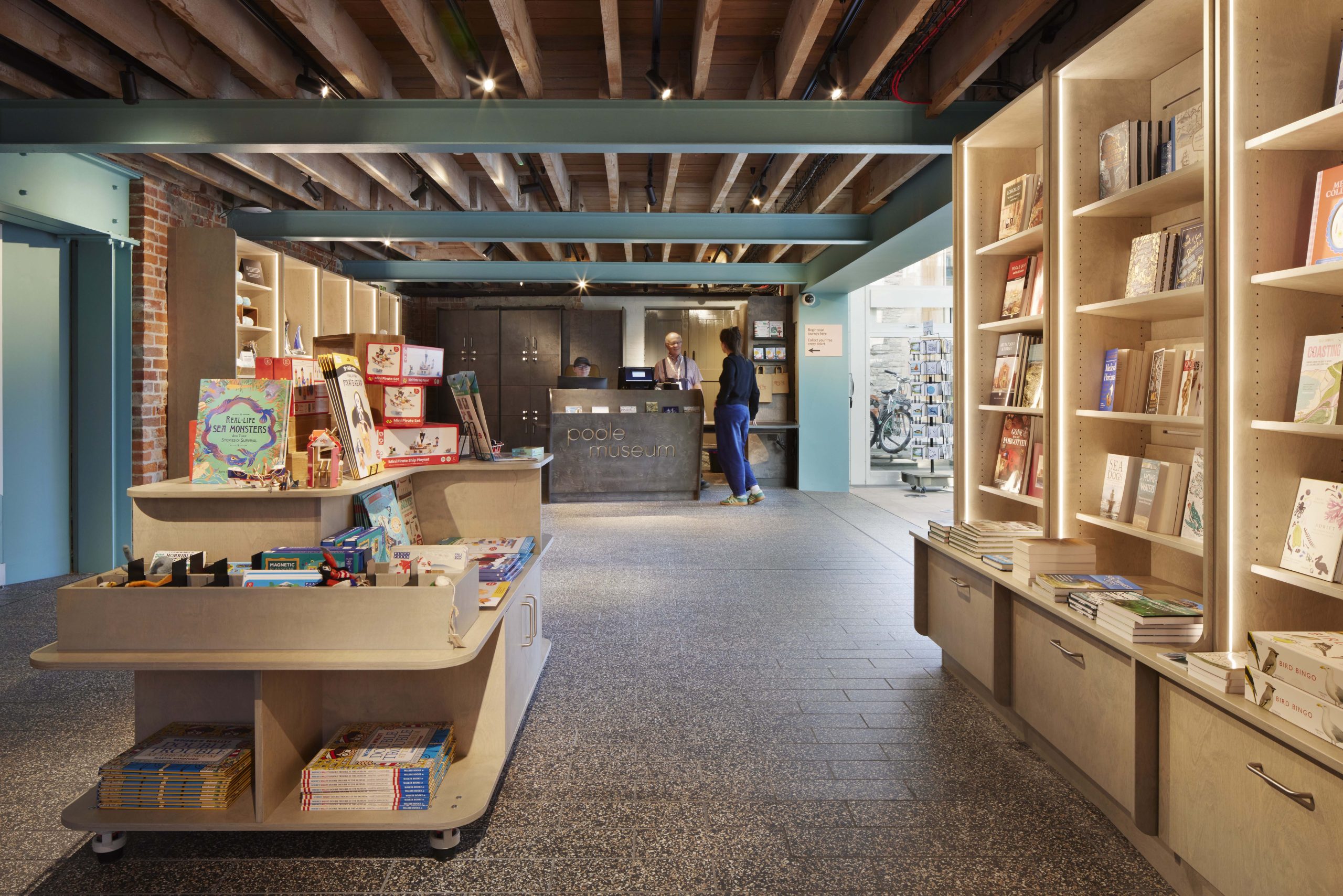
The two-phased project has included the extensive reworking of buildings adjacent to the quayside of Poole Harbour.
The now fully accessible venue has had its collections and displays reimagined across six floors. New permanent and temporary exhibitions galleries focus on the rich story of Poole’s maritime and archaeological heritage, on which ZMMA worked with the Museum’s curatorial team, BCP Council, Historic England, Arts Council England and the local community.
The initial deep retrofit of the building, saw ZMMA selectively peel away recent interventions, including mezzanine structures, staircases, partitions and linings, to reveal the original historic fabric. This enabled wide-ranging restoration of the complex’s handsome stone and timber structures, while new architectural interventions celebrate and reveal these further.
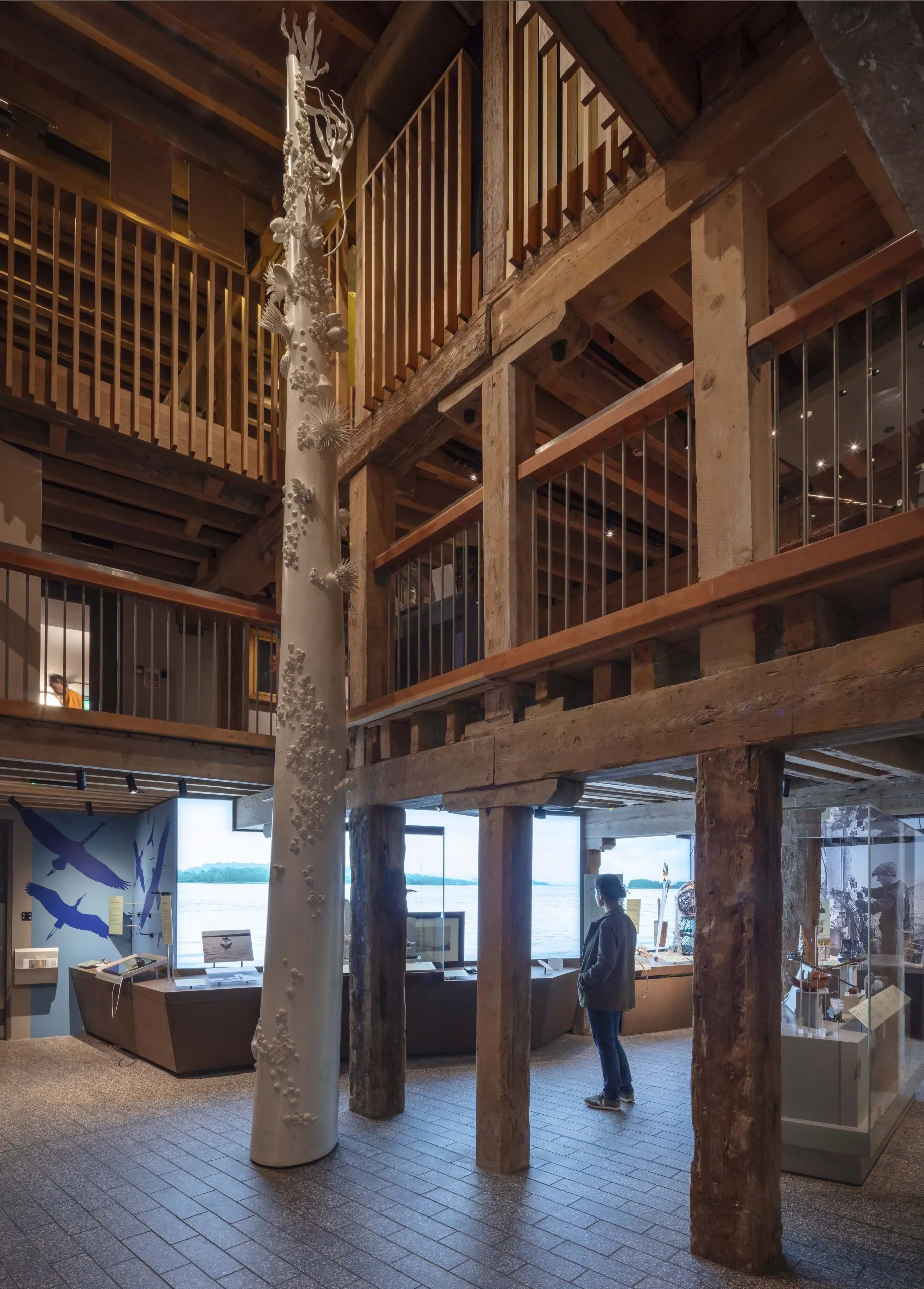
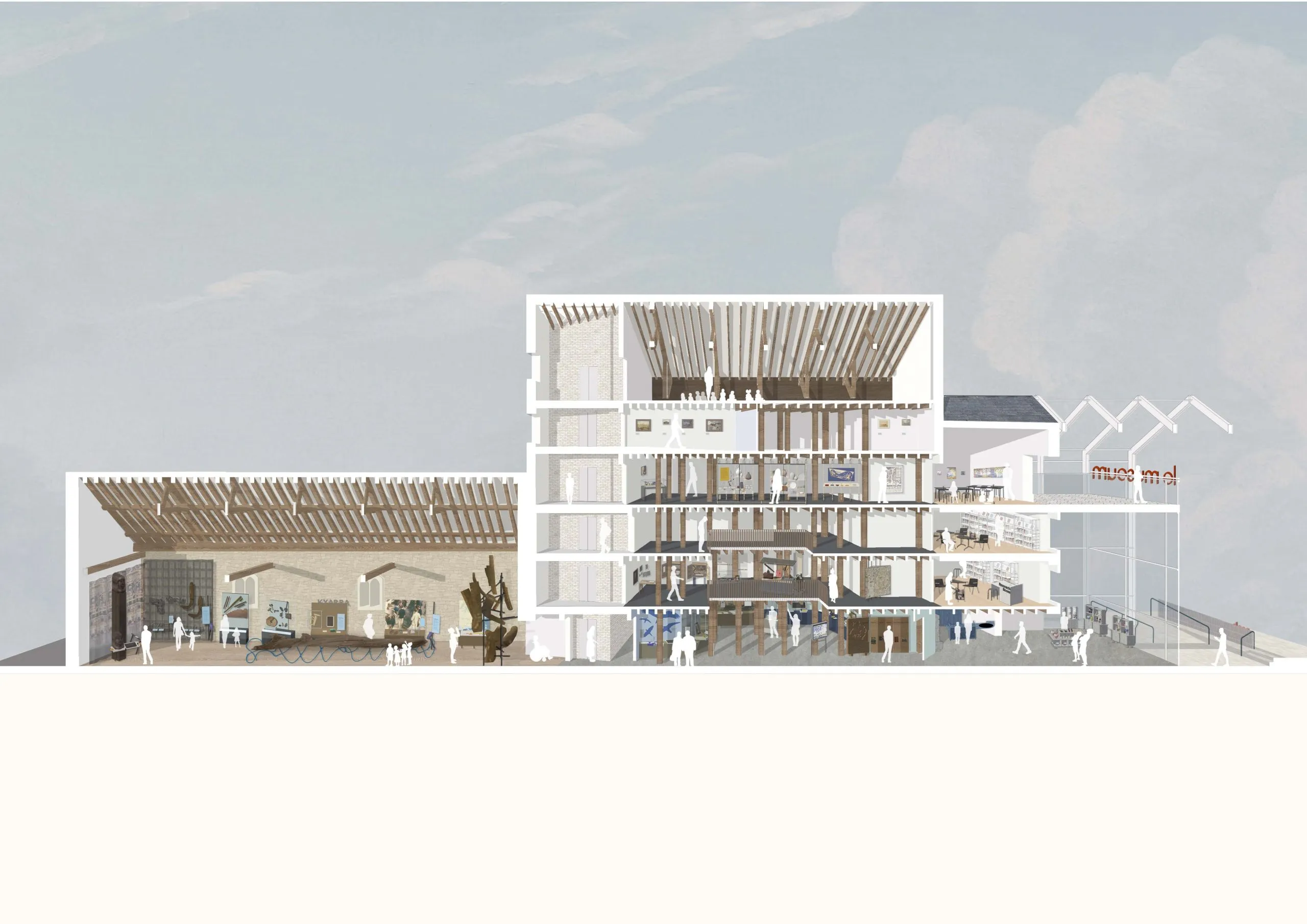
This is immediately apparent on entering the galleries within the main Grade II-listed six-storey 18th century grain warehouse, where a three-storey void has been cut through to connect floors visually, exposing the warehouse’s visceral, ship-like timber framework. New elements and detailing such as handrails and benches continue the rich timber language of the original.
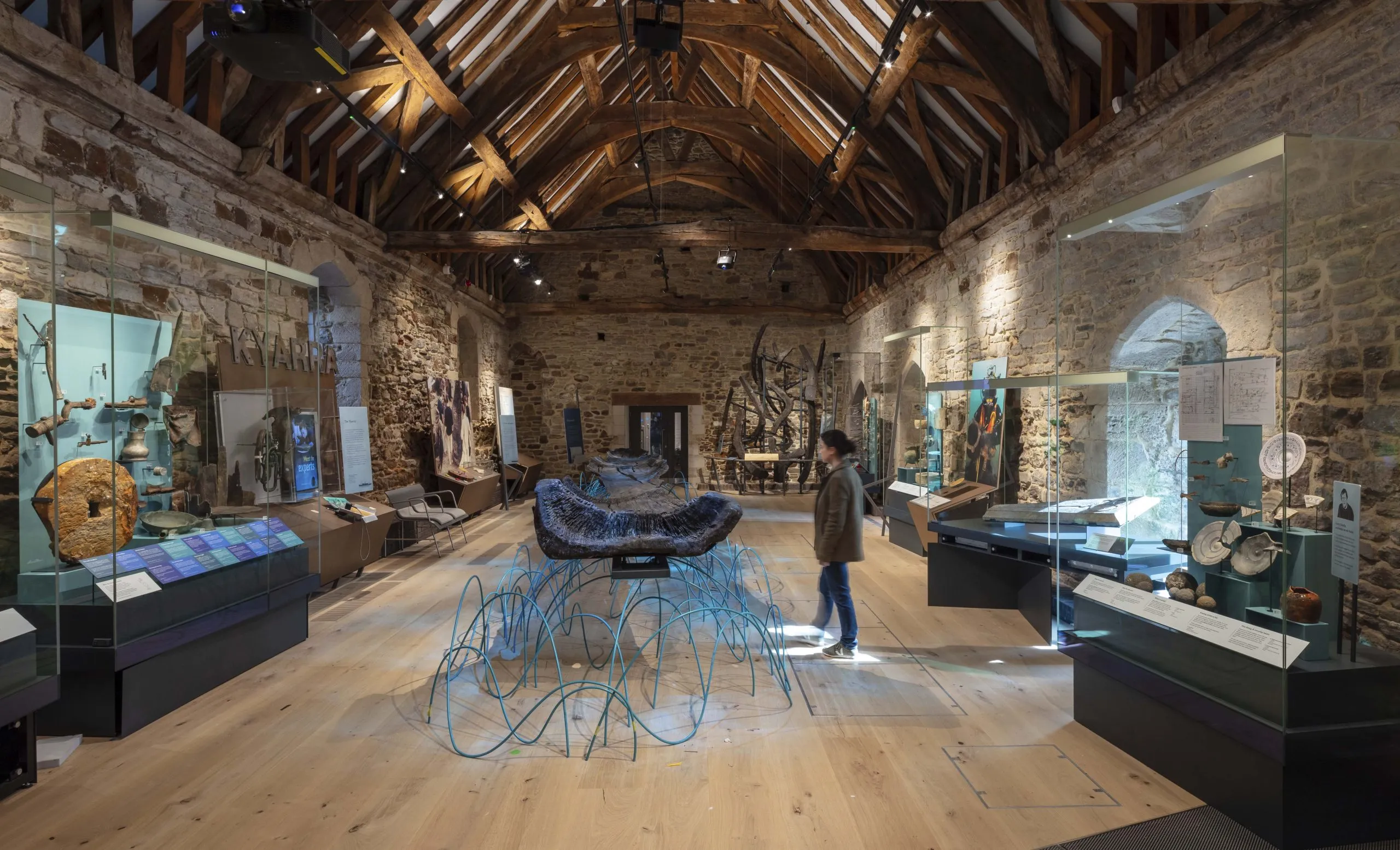
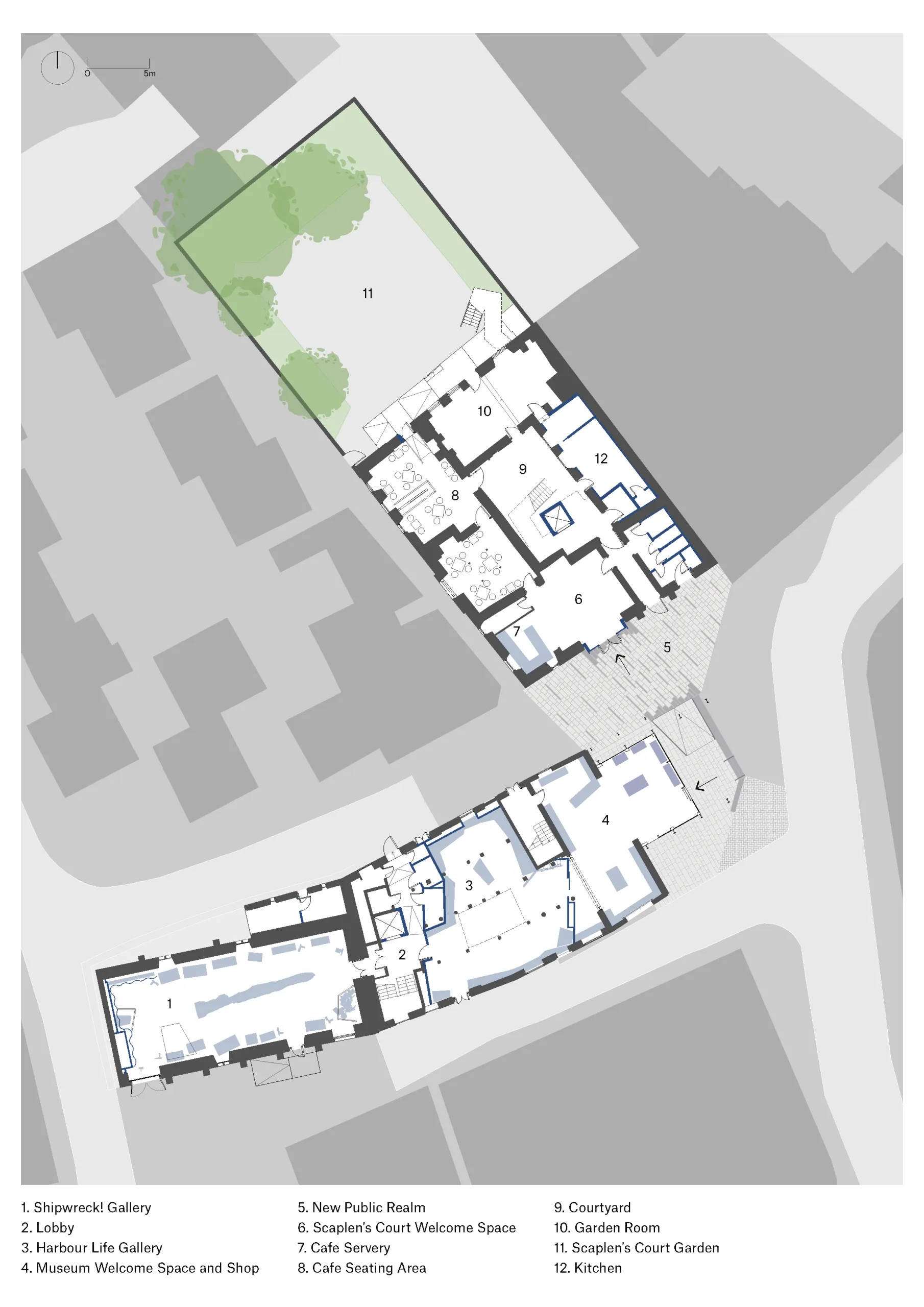
The largest gallery is the dramatic Grade I-listed medieval Wool Hall, which has been fully restored, and where the town’s maritime archaeology collections are on display, focused around a rare, preserved 10m-long Iron Age log boat.
Further exhibition galleries on upper floors focus on Poole’s sea-trading history, exploring subjects such as its association with Newfoundland and connection to the slavery trade. One gallery also showcases the legacy of the celebrated Poole Pottery. The exhibition design foregrounds open display material and close-up experiences of objects, with interactivity for visitors integrated throughout.
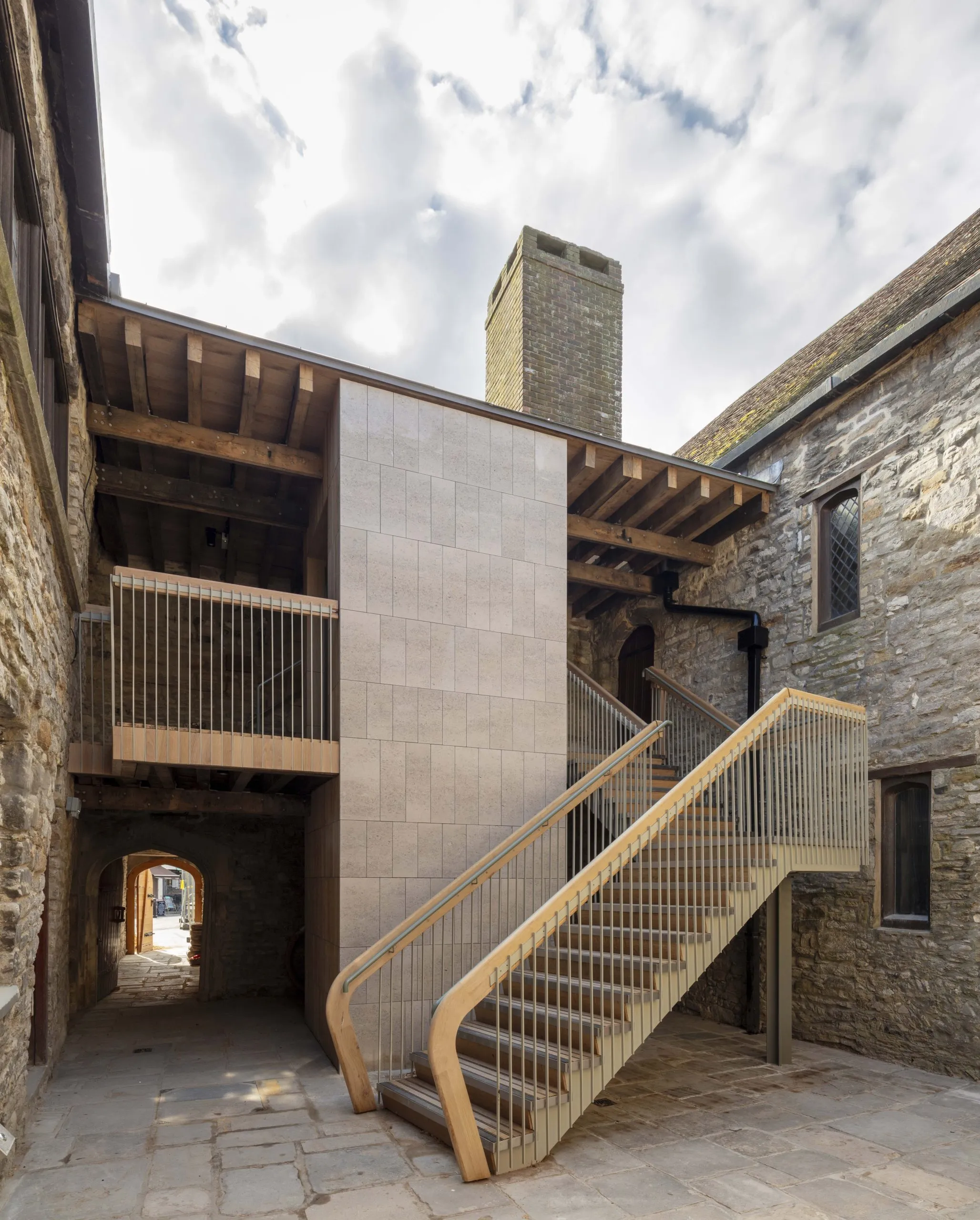
Working closely with accessibility consultants, ZMMA has reorganised visitor routes, reconfigured floor levels and installed new staircases and lifts, making all exhibition, activity and events spaces fully accessible.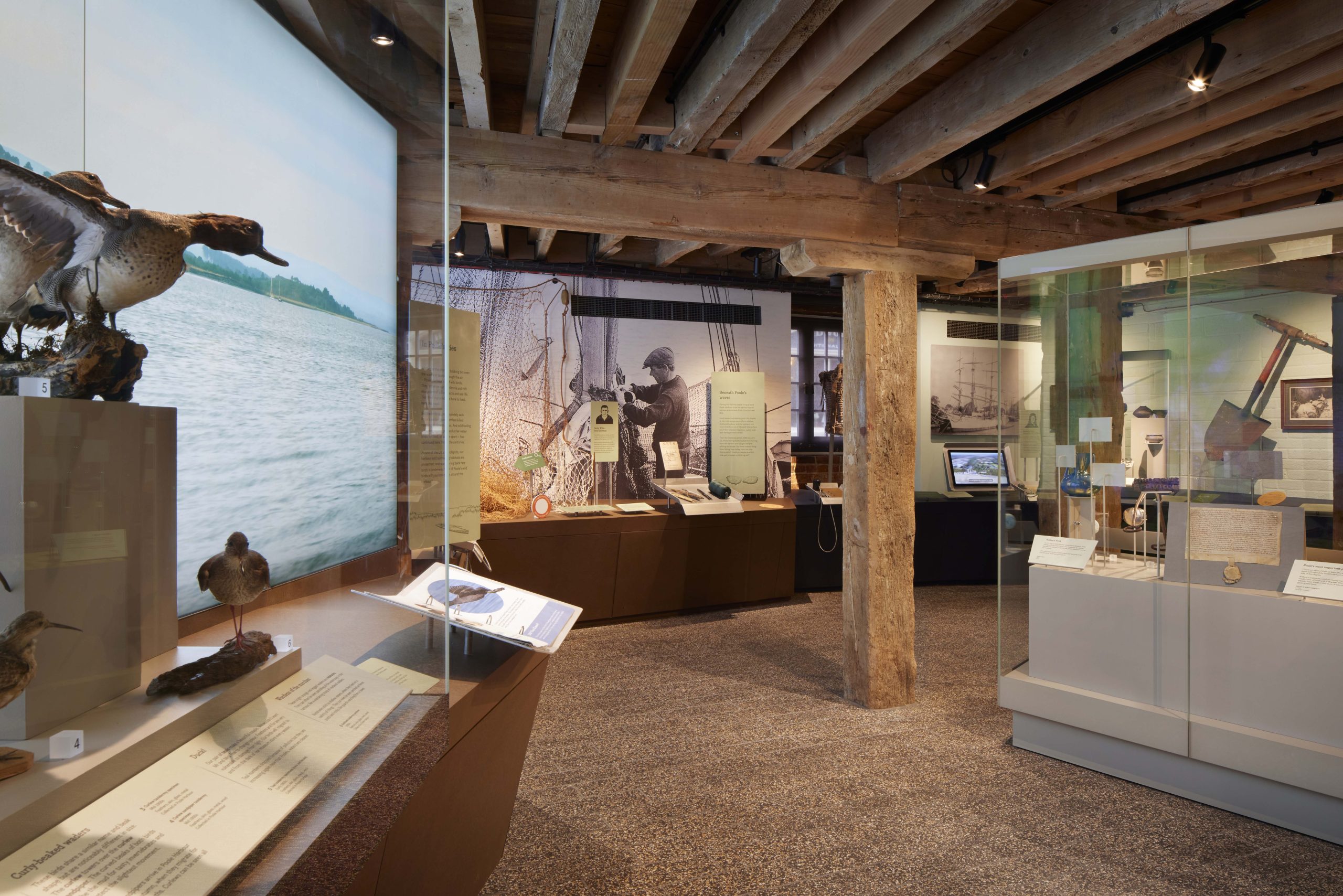
An extensive programme of decarbonisation was carried out across the buildings, using selective environmental materials to sensitively enhance the historic fabric. This included re-roofing, new windows, the installation of solar panels and combined lambswool and breathable wood-fibre insulation, measures which together resulted in a 25 per cent reduction in operational energy.
New low-energy environmental control systems and lighting design have been discretely woven into the historic structures to achieve safe environments for conserving the collection, which includes elements such as sensitive ancient ships’ timbers. The exhibition design in addition used recycled and recyclable, low-carbon emission materials and construction techniques and a timber-first approach.
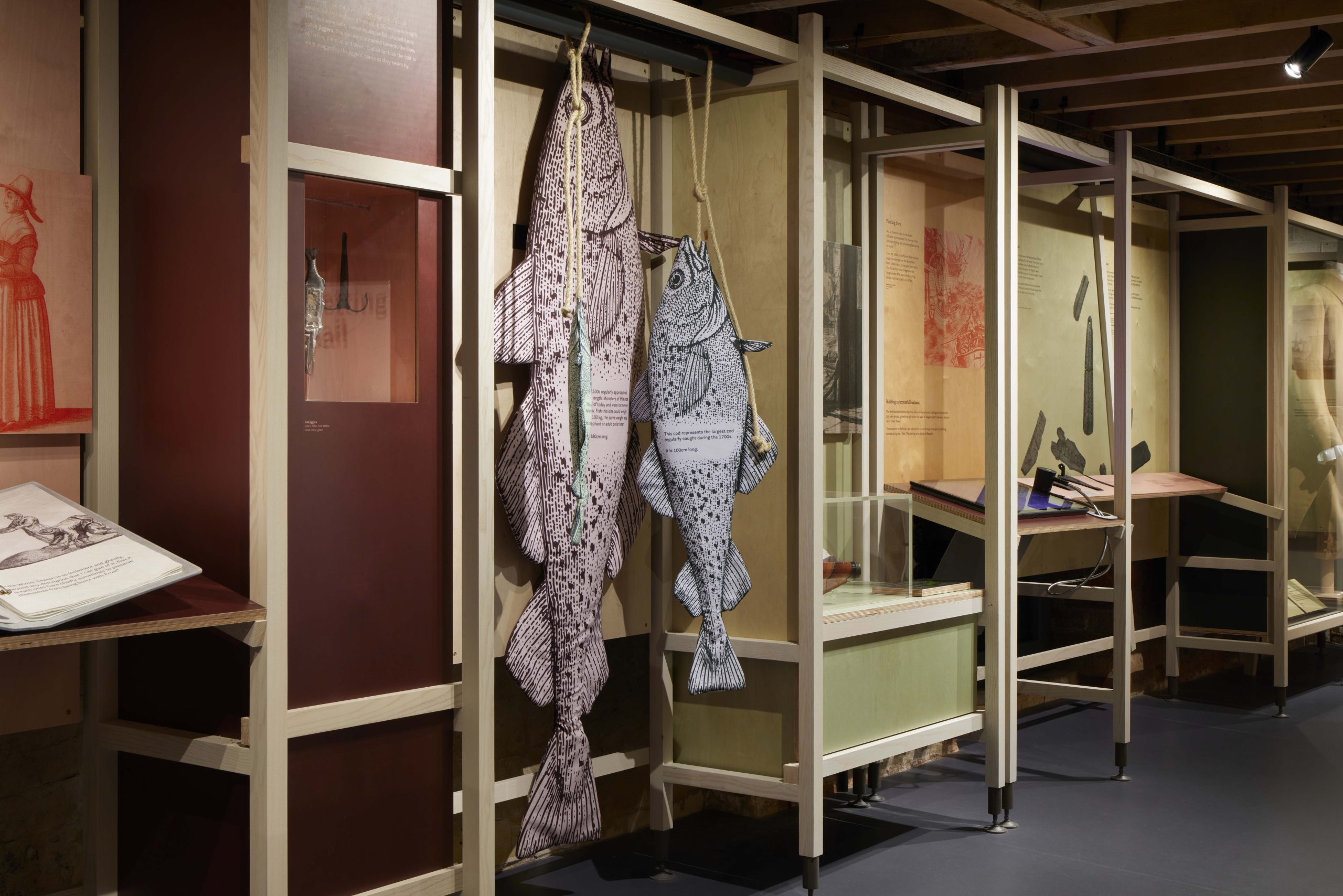
In addition to the permanent exhibition galleries, there is a new Government Indemnity Standard temporary exhibitions gallery, which now enables flexible programming to attract national touring exhibitions. The redevelopment also includes learning, creative and activity spaces, income-generating events spaces, accessible archives, and a reading room, café and shop.
In addition, at Scaplen’s Court there are new staff and collections management areas and catering facilities, the latter enabling the venue to support a range of cultural, business and private events which form a key part of its business plan.
ZMMA’s reconfiguration of the complex has doubled the amount of publicly accessible space.
Architect’s view
Appointed as architects and exhibition designers, we have been able to unify architecture, exhibition, graphics, lighting, and interactives into an atmospheric, layered visitor experience. Every aspect, from the campus masterplan, and architectural interventions, right down to object display details, supports accessibility, intellectual and emotional resonance, and a joined-up, elevated experience.
As both architect and exhibition designer on the project, ZMMA has developed a series of contextual permanent exhibitions in which open displays, cased objects, graphics and interactives are woven into the historic architectural structures. This creates a coherent and immersive visitor experience with rich and layered narratives, encouraging exploration and discovery.
Creating a visual connection between the exhibition and architectural experience and Poole itself, ZMMA has opened-up views from the galleries to the port and the harbour, giving vistas across the quayside townscape and the wider Purbeck coastal landscape.
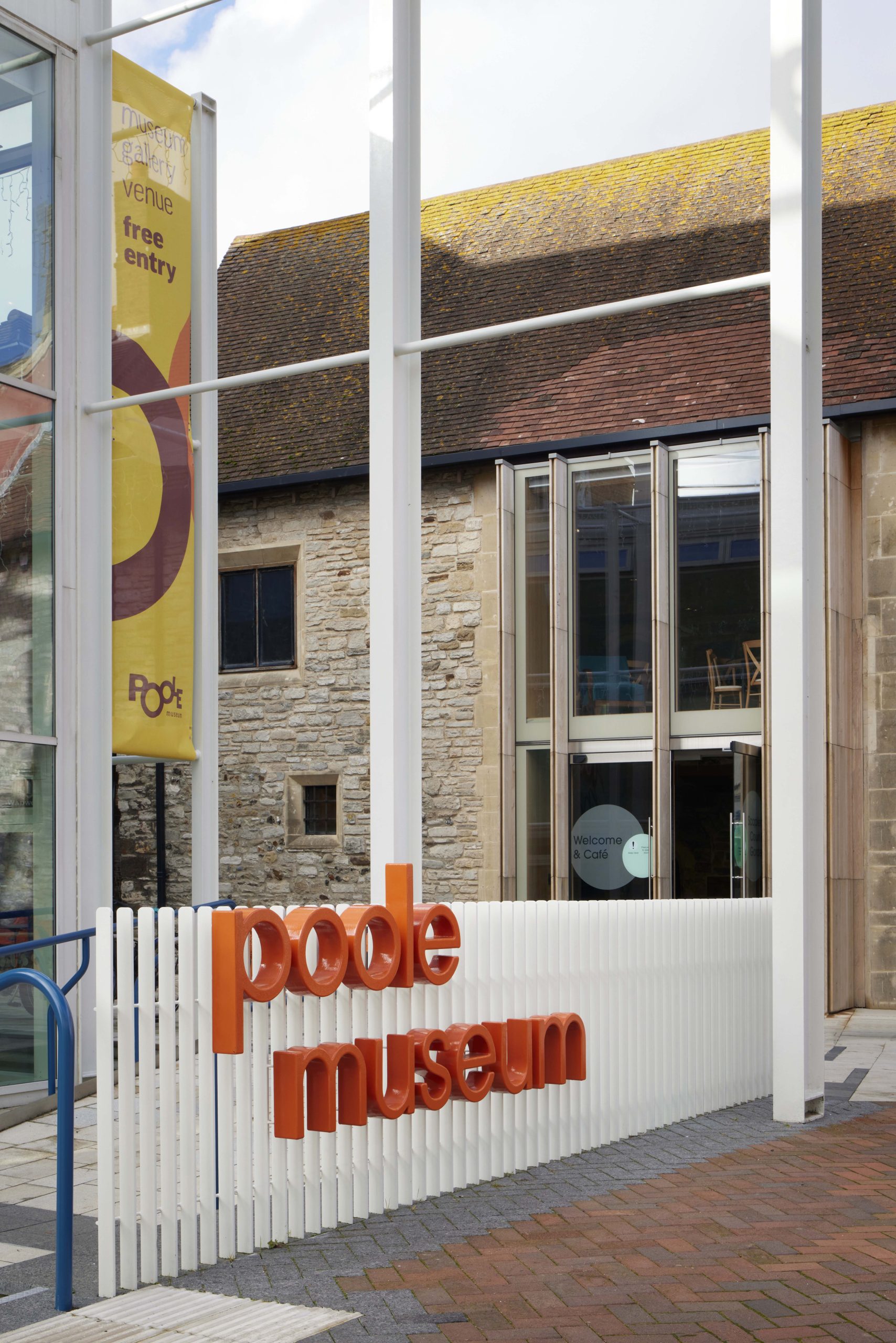
By redesigning the surrounding public realm, ZMMA has created a campus linking the Museum and Scaplen’s Court, giving both greater prominence and creating a more recognisable, memorable, and lively public destination, contributing to the wider revival of the historic High Street and the Quay.
Adam Zombory-Moldovan, director, ZMMA Architects
M&E engineer’s view
We aimed to integrate the services in a sympathetic way to complement the heritage aesthetic. The existing ceilings were opened up to showcase the historic timber joists throughout the Museum, and bare mineral-insulated copper-clad (MICC) cable and black electrical infrastructure, combined with exposed copper or black-clad insulated heating and cooling pipework, created a black, copper, timber and stone language throughout the Museum and Scaplen’s Court. The heating, cooling and ventilation plant was integrated into the exhibition fit-out to be practically invisible while ensuring correct gallery conditions and robust access for long-term maintenance.
Specific site constraints and historic requirements proved challenging in finding a suitable location for the new air source heat pumps, and the team creatively located them in the historic former jail. New energy-efficient lighting and audiovisual systems were designed to enhance the exhibition spaces. Acoustic advice was provided to help with the integration of new cooling and ventilation plant without detriment to the local noise environment. Life safety and heritage protection were also prioritised, with arc fault detection and fire-rated cabling used throughout, with innovative battery technology used to provide backup power to both new lifts on the site.
I am really proud of how we have breathed new life into these amazing buildings while keeping their original character. We’ve managed to integrate a tonne of engineering into the galleries, so you wouldn’t even know it was there. Where we haven’t been able to hide it, we’ve made it art with beautiful copper and black services interacting wonderfully with the historic timber and stone. Heritage buildings like this throw up all sorts of challenges that we’ve worked hard to overcome. The end result is an accessible, bright and exciting place to visit, which is a testament to the client, design team and countless brilliant contractors that made it all happen.
Jean Fourie, senior engineer, Max Fordham
Client’s view
ZMMA’s considered approach to unlocking the potential within our historic buildings has helped us realise inspiring spaces raising this important civic space from town museum to regional cultural centre.
ZMMA’s design has helped us maximise public space, reorganise functions and facilities to deliver the most efficient and best operation. They have helped create a rich and varied visitor experience, ensuring our buildings are fit for modern purpose and saved for a generation.
Throughout they have sensitively incorporated new interventions into historic spaces, enabled bold and thrilling displays of our maritime archaeology, and helped create new flexible spaces for engagement and income generation. The result is a revitalised museum, art gallery, and cultural centre that celebrates Poole’s rich heritage and culture and serves our diverse audiences with creativity and care.
Alison Gudgeon, senior project manager, Bournemouth, Christchurch and Poole (BCP) Council
Project data
Location Poole, Dorset
Start on site November 2020 (phase 1)
Completion November 2025 (phase 2)
Gross internal floor area 2,385m2
Gross (internal + external) floor area 3,080m2
Form of contract JCT standard building contract with contractor’s design
Construction cost £10.3 million
Architect ZMMA
Client Bournemouth, Christchurch and Poole (BCP) Council
Structural engineer The Morton Partnership
M&E consultant Max Fordham
QS PT Projects
Exhibition designer ZMMA
Interior designer ZMMA
Graphic designer ZMMA
Landscape designer ZMMA
Acoustic consultant Max Fordham
Project manager BCP, PT Projects
Principal designer The Quoin Consultancy
Approved building inspector BCP Building Control
Main contractor Greendale Construction
CAD software used Vectorworks
Lighting design Max Fordham, ZMMA
Accessibility Access Matters, DOTS Disability, Inclusive Reference Group
Archaeologist Terrain Archaeology
AV consultant DJ Willrich
Historical architectural research Richard Griffiths Architects
Exhibition contractor Marcon Fit-Out
Stonework restoration Albion Stonemasons
Environmental performance data
Percentage of floor area with daylight factor >2% 70%
Percentage of floor area with daylight factor >5% 20%
On-site energy generation 5% approximately
Annual mains water consumption Not supplied
Airtightness at 50Pa Not supplied
Heating and hot water load Not supplied
Operational energy Not supplied
Total energy load Not supplied
Overall area-weighted U-value Not supplied
Predicted design life 50+ years
Embodied carbon Not calculated
Whole-life carbon Not calculated
Annual CO2 emissions 7.69 kgCO2eq/m2
Annual carbon saving 6.12 tCO2eq (25% reduction)