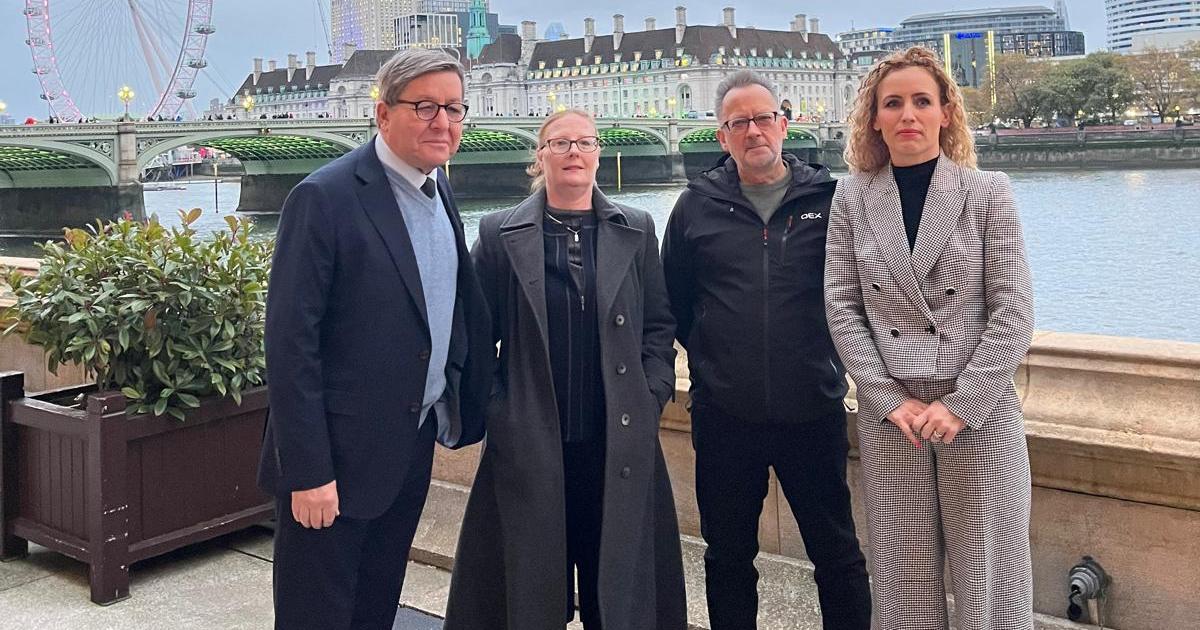
ONE of the first people I met after being elected was Pauline Jones, who came to speak to me about her daughter, Bethany.
Bethany had raised concerns about her ex-partner and asked for help more than once. Pauline spoke about those moments, and about the devastating reality that followed when Bethany was not protected and was later murdered in 2019. Sitting with a mother as she describes the loss of her child brings home, in the clearest possible way, what happens when warnings are missed and action comes too late.
That conversation has stayed with me. I often think about Bethany and about Pauline and her family, who have turned their grief into campaigning so that other families might be spared the pain she now carries. Through the Believe, React Fast campaign, named after Bethany’s initials, Pauline has pushed for a simple but vital principle: that when someone says they are in danger, they are taken seriously and helped straight away.
It is also the reason why I became an ambassador for Leeds Women’s Aid. Their staff support women and children when fear and control have taken hold of everyday life, often long before the situation reaches a crisis point. They see what it means, often in the most brutal terms, when systems respond early and when they do not.
December marked an important moment in the effort to end violence against women and girls across the country, with the publication of a new national strategy. For the first time ever, a UK Government has set a clear goal to halve violence against women and girls within ten years, and to stay focused on that mission for the long term.
This did not happen by accident. It is the result of years of pressure, persistence, and unwavering leadership from brilliant women who have refused to let these stories be ignored. Jess Phillips and Alex Davies-Jones, in particular, have brought relentless energy, honesty, and compassion to this work, listening to survivors, challenging institutions, and pushing for a response that matches the scale of the harm. This strategy is a testimony to them, and the women and families who have fought for change.
At its heart is a simple shift in mindset. Violence against women and girls being treated as a national emergency, not as something that is unfortunate but unavoidable. That matters, because it changes what is expected of every public service and every institution.
So what will actually change?
First, there is a much stronger focus on stopping abuse before it starts. Schools and youth services will be better supported to talk honestly about respect, consent and healthy relationships, and there will be tougher action to limit young people’s exposure to harmful and misogynistic content online. The aim is to challenge dangerous attitudes early, rather than waiting until harm has already been done.
We’re all navigating the complexities of this, and all want to do better; organisations such as Tender, a nationwide charity harnessing the power of drama and the arts to educate children, young people and adults about healthy relationships, are already doing brilliant things in this area. I recently dropped into a Tender Project workshop taking place at one of our local schools and saw first-hand the positive impact this is having on young people.
Second, the response to offenders will be tougher and more consistent. Police forces will have dedicated teams focused on domestic abuse, rape and sexual violence, with better training and clearer responsibility for dealing with the most dangerous perpetrators. New powers will be used to monitor and manage repeat offenders, rather than allowing them to move under the radar.
Third, support for victims will be simpler and easier to access. Instead of being passed from service to service, women will be better supported to get help with housing, healthcare, and the justice system at the same time. The aim is that asking for help does not become another ordeal in itself.
For us here, all of this matters because it strengthens the local services people rely on. It means closer working between police, councils and health services, and a clearer expectation that concerns raised by women here are acted on quickly and seriously.
Violence against women and girls is not inevitable. For Bethany. For Pauline. And for every woman and girl who deserves to feel safe, at home and in public.