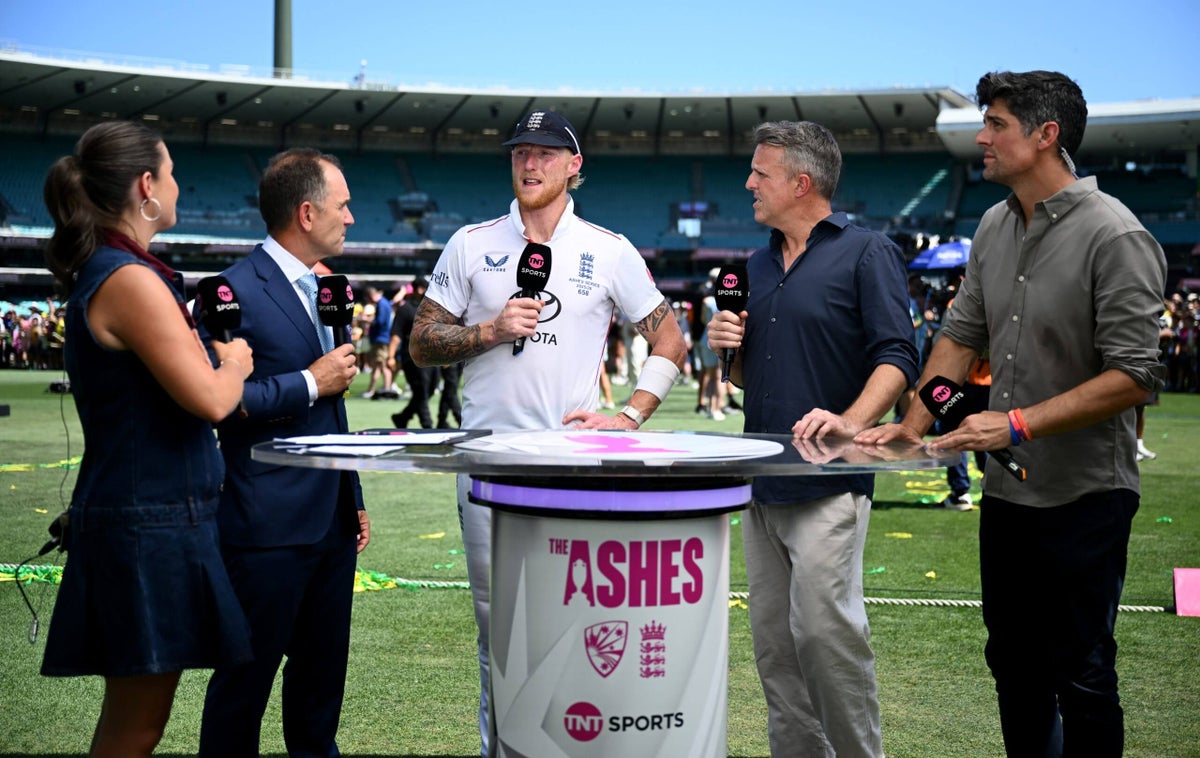
You suspect the group that convened for this Ashes series — self-proclaimed mavericks who approached it unconventionally, made plenty of mistakes along the way and ultimately produced, at best, mixed results — will be glad it’s all over.
And the England cricket team will be happy to head home too.
Yes, it’s been a rough old tour for TNT Sports, the broadcaster that acquired the rights to show the Ashes in the UK, much as its predecessor, BT Sport, had shown the previous two series in Australia.
In some respects, any alternative broadcaster that gives cricket a try is on a hiding to nothing because Sky Sports, which holds the rights for England’s domestic fixtures, has provided such exceptional coverage for the past few decades that anything else will look bad by comparison. It has become impossible to compete with the Sky cricket team’s combination of gravitas, expertise and relevant analysis, interspersed with just enough levity and lightness of touch.
Nobody at Sky will lose sleep about being usurped any time soon.
For this tour, TNT opted for a strange hybrid approach to its coverage, with a few elite former players — Sir Alastair Cook, Steven Finn, Ebony Rainford-Brent, Justin Langer, Graeme Swann, Matt Prior — on its analysis team, but combined them with commentators, Rob Hatch and Alastair Eykyn, who are more known for their work on cycling and rugby, and presenter Becky Ives, a sports all-rounder.
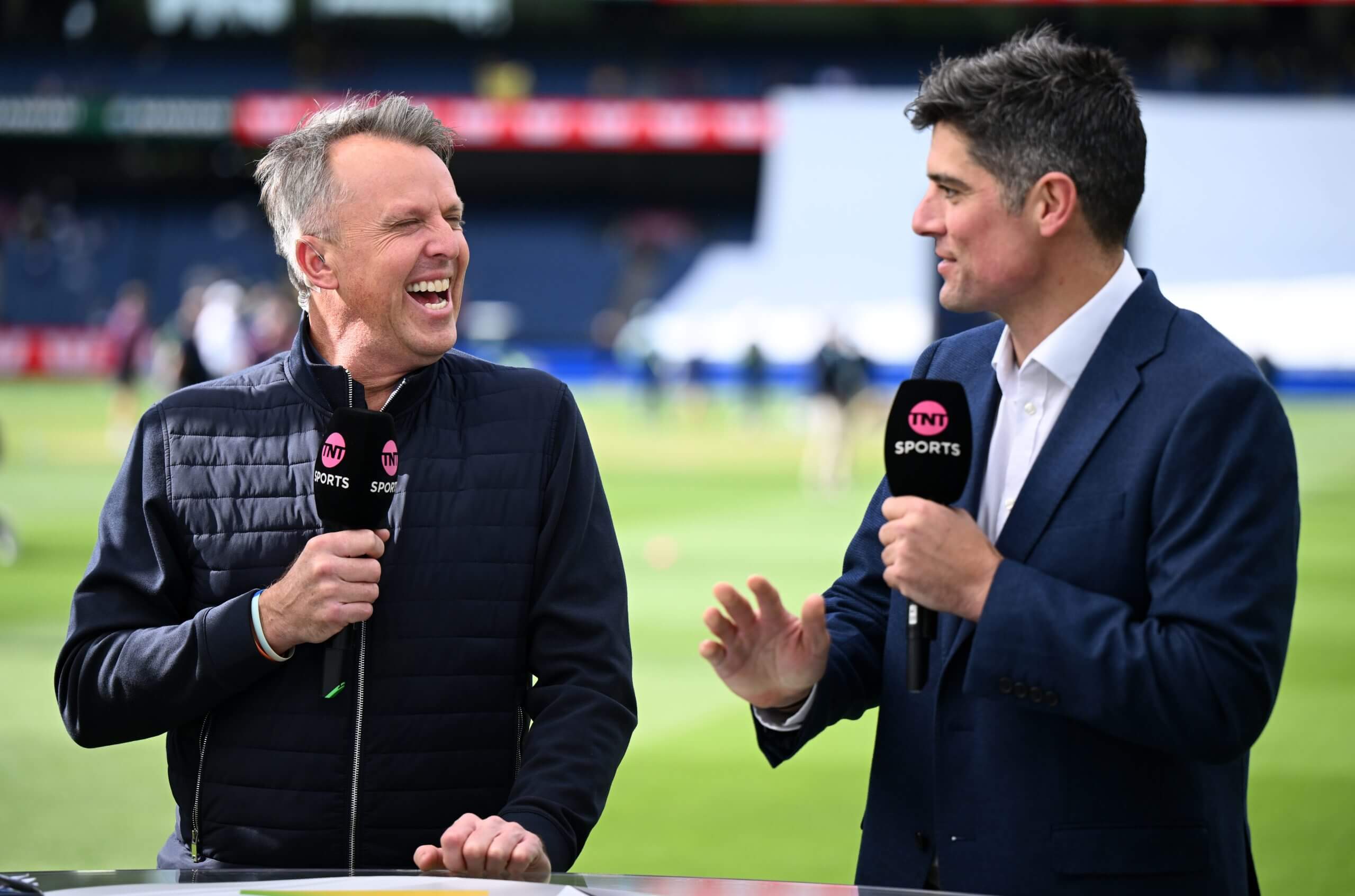
Graeme Swann and Sir Alastair Cook provided a mix of humour and insight (Gareth Copley/Getty Images)
Unusual. But that was seemingly by design. “Maverick is my favourite reference to TNT Sports,” said Scott Young, a senior vice-president at Discovery, TNT’s parent company, before the series, “because it can mean different things to different people. What it means is: we’re not going to be stale. We’re not going to be traditional; we’re not going to be stuck in one place and stuck on one story. We’re going to follow the story.”
‘Maverick’ would be one way to describe the strange mix-and-match approach to who was actually in Australia. Sometimes the commentators were working ‘off tube’ in a studio, sometimes they were in the grounds, sometimes the commentators and analysts were in completely different places. Sometimes pre- and post-play links came from the side of the field, sometimes they came from a studio. Sometimes the commentators were in the grounds, but at least partly working off monitors rather than actually looking at the action in front of them. It was an attempt to work around some unusual sound syncing problems (more on that later), but it led to a particularly embarrassing moment during the fifth Test in Sydney.
Hatch was on duty when the TV coverage showed a replay of Jamie Smith getting run out in England’s second innings, which he briefly thought was live footage. “It’s happening again, it’s happening again!” Hatch exclaimed. “Stokes goes, two run outs in two overs, England are imploding!”
This is an easy ‘gotcha’ and Hatch has been roundly mocked for it, but it’s impossible not to have some sympathy for him because it was the perfect encapsulation of how the on-air team were hung out to dry by TNT’s approach.
Here is a commentator who isn’t a specialist, when one might have spotted that this was a replay rather than live footage, working in a deeply strange and unconventional way. Perhaps he should have been more aware of events around him, but a mistake like this was inevitable.
There were other, more minor mishaps that illustrated this, too. During the first Test, Usman Khawaja’s back spasm meant Marnus Labuschagne walked out to bat as Australia’s opener when their first innings began, but the commentator — at that point not in the stadium, but working from a studio — took an age to spot this rather important detail. Had they been in the ground, they would almost certainly have been aware of it before the players were even on the field.
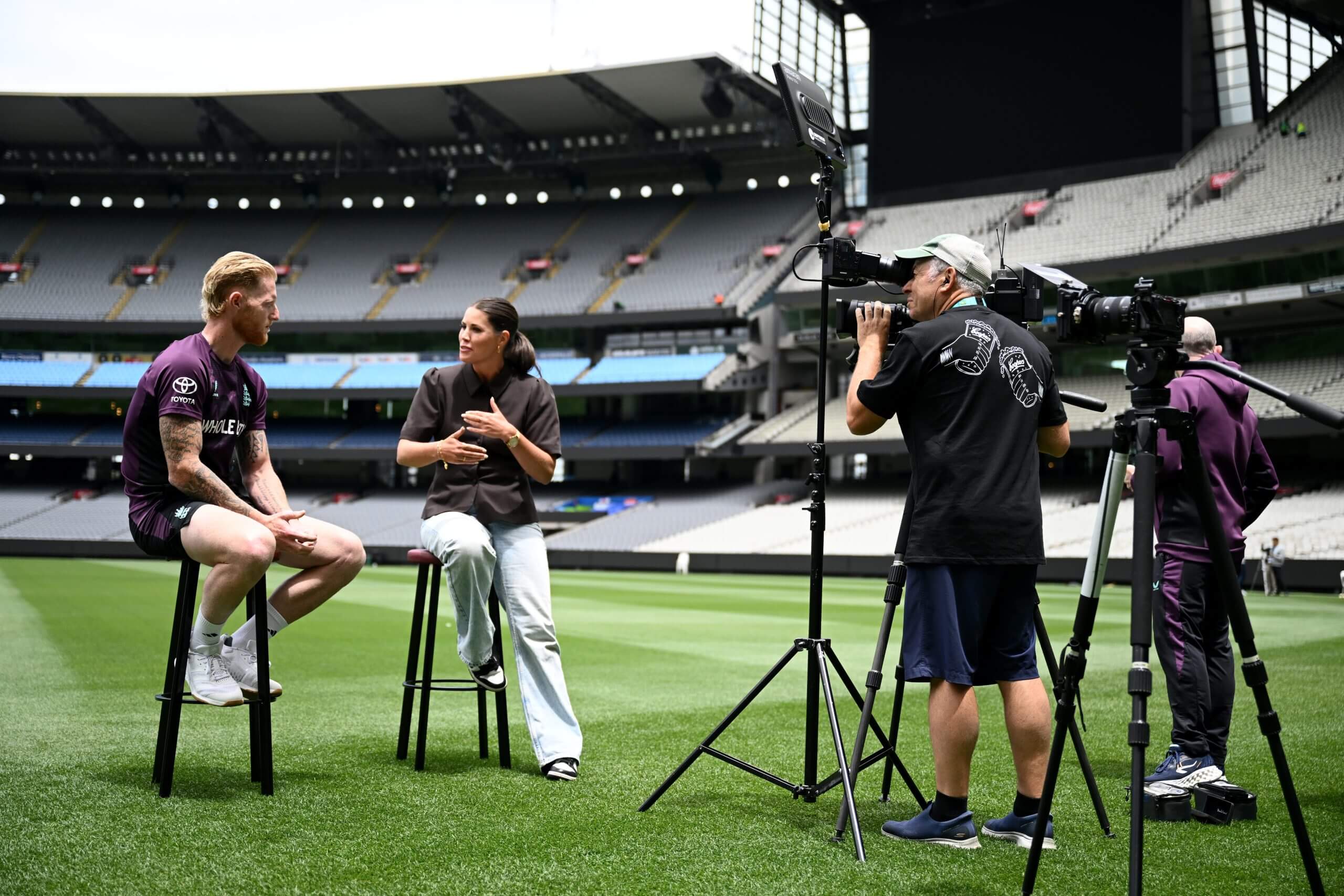
England captain Ben Stokes speaks with TNT Sports presenter Becky Ives in Melbourne (Gareth Copley/Getty Images)
The most irritating feature from a viewing perspective was a strange lack of synchronisation between audio and pictures, which meant that you would frequently hear one of the on-air team describe something that, to the viewer at least, had not yet happened. The most egregious example came during the fourth Test in Melbourne, when Josh Tongue had delivered a ball to Steve Smith and a commentator exclaimed “BOWLED HIM!”, while on the TV footage, the ball had yet to reach the batter.
That has, at least, spawned a rich stream of social media content, with wags across the world editing iconic cricket clips with the commentary coming before them. But it presumably wasn’t in TNT’s plans to become a meme, which rarely happens for good reasons.
Quite what the foul-up in the technology was is unclear, but TNT’s decision-makers were apparently confident that having people on completely different sides of the world wouldn’t be a problem. “Latency is no longer really a challenge,” Young said before the series, which does feel like the sort of thing an executive who isn’t actually involved in the nuts and bolts of TV production can airily say, then expect someone else to deliver.
By the latter Tests, they had at least found a way around one of the early problems — when graphics would appear on the screen from Australian broadcaster Fox Sports, which was providing the ‘feed’ of the coverage. Fox’s commentators and summarisers knew all about the graphics but the TNT team had no idea they were coming and were groping in the dark. This led to some surreal sequences where they would attempt to decode and describe what they were seeing in real time, without knowing the first thing about them. Eventually, they produced their own graphics, which their commentary team actually seemed aware of. They were relatively rudimentary, but it was a solution.
That only served to illustrate the point that the people who were actually fronting this coverage were doing their best, but had essentially been set up to fail. The analysts were all pretty good, even if it did sometimes feel like a 2010-11 Ashes lads reunion tour: Finn is an extremely likeable broadcaster, Cook has really loosened up since his early days on air, Prior played the ‘tell it like it is’ role pretty well early in the series and Rainford-Brent is one of the best out there. Ives is an engaging presenter and both Hatch and Eykyn clearly tried their utmost under testing circumstances.
Mountains of well deserved praise for Jacob Bethell from the team 🙌
Justin Langer may be in LOVE 😍😂 pic.twitter.com/QpIwPidNzi
— Cricket on TNT Sports (@cricketontnt) January 7, 2026
And yet it was clear at points that the latter two commentators were not cricket specialists: they obviously know the game, and even appreciate its nuances, but don’t quite have the feel for it that a specialist would. Again, it’s unfair to compare them to Sky’s coverage, given their two lead commentators are Nasser Hussain and Michael Atherton, but you don’t necessarily need people who have captained England 99 times between them to lend a broadcast some authenticity. There are plenty of specialist commentators out there who would have fit the bill.
Does any of this really matter? Do people really pay much attention to the TV coverage? Don’t we just want to see the actual sport and ignore the rest? Possibly. But the point is that there were plenty of moments, like the phantom run-out and the sound-syncing fiascos, when the coverage actively got in the way of the sport, and that’s impossible to ignore.
You can understand the desire not to splash too much cash on a production like this. This series was mostly broadcast when the target audience was asleep, and England had lost it after three Tests. The viewing figures were unlikely to be stellar, no matter the quality of broadcasting.
But there has to be a better way. It’s the most high-profile and keenly anticipated series in the sport. It’s something that a broadcaster should do properly, or not at all.