While the ministry did not specify what had been the Oreshnik’s target, shortly before midnight (22:00 GMT) videos began circulating on social media showing numerous explosions on the outskirts of the western city of Lviv.
President Volodymyr Zelensky and Ukrainian authorities confirmed that a ballistic missile had struck infrastructure in Lviv, about 60km (40 miles) from the Polish border.
The Oreshnik is an intermediate-range, hypersonic ballistic missile, meaning it can potentially reach up to 5,500km (3,417 miles). It is thought to have a warhead that deliberately fragments during its final descent into several, independently targeted inert projectiles, causing distinctive repeated explosions moments apart.
“Such a strike close to EU and Nato border is a grave threat to the security on the European continent and a test for the transatlantic community,” Ukrainian foreign minister Andrii Sybiha said.
The strike was launched “in response to [Putin’s] own hallucinations,” he added, referring to the alleged drone attack on the president’s home in December.
The EU immediately cast serious doubt on whether the strike had ever happened, and last week Donald Trump said he did not think any such attack had taken place.
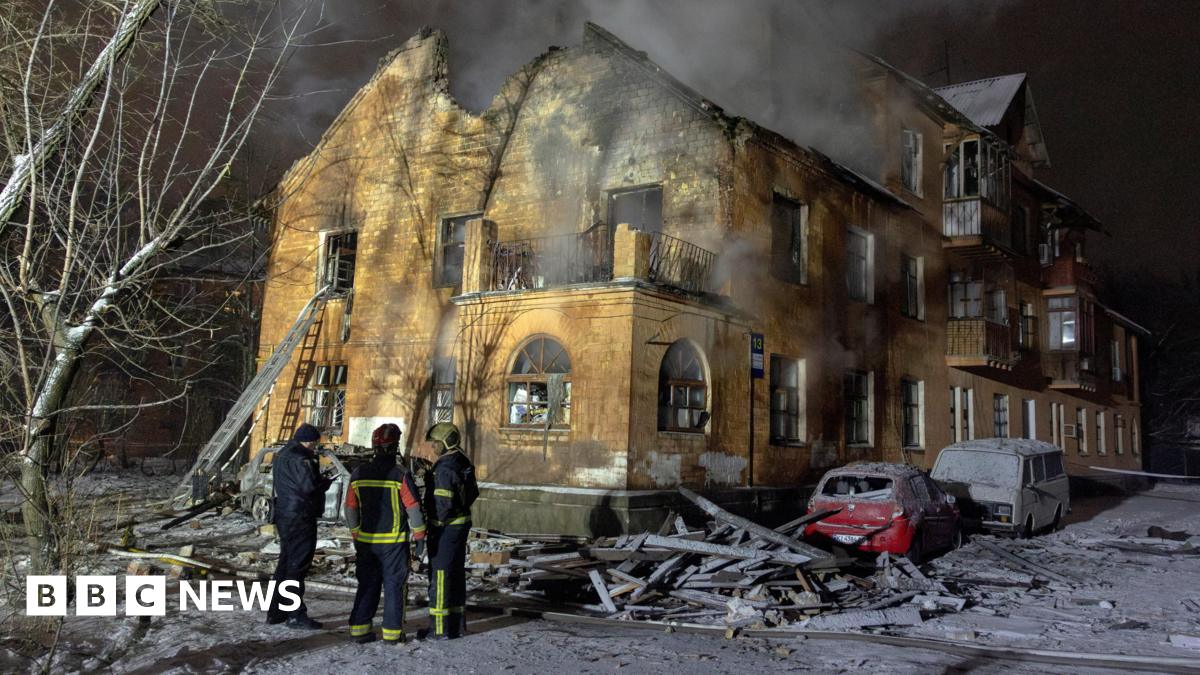
Zelensky said in addition to the Oreshnik there were 13 ballistic missiles that targeted energy facilities and civilian infrastructure overnight, along with 22 cruise missiles and 242 drones.
One damaged a building at the Qatari embassy, he added.
He accused the attacks of aiming “against the normal life of ordinary people” during a cold spell and added everything possible was being done to restore heating and electricity.