Queensland insect enthusiasts are using their cameras to help researchers study bug populations, as part of a national citizen science project.
Bug Hunt, developed by the Invasive Species Council and Invertebrates Australia, is a new program that seeks to create a nation-wide catalogue of critters using the online platform iNaturalist.
The project gathers pictures and observations from thousands of participants to create a database for scientists to monitor native species and identify invasive pests.
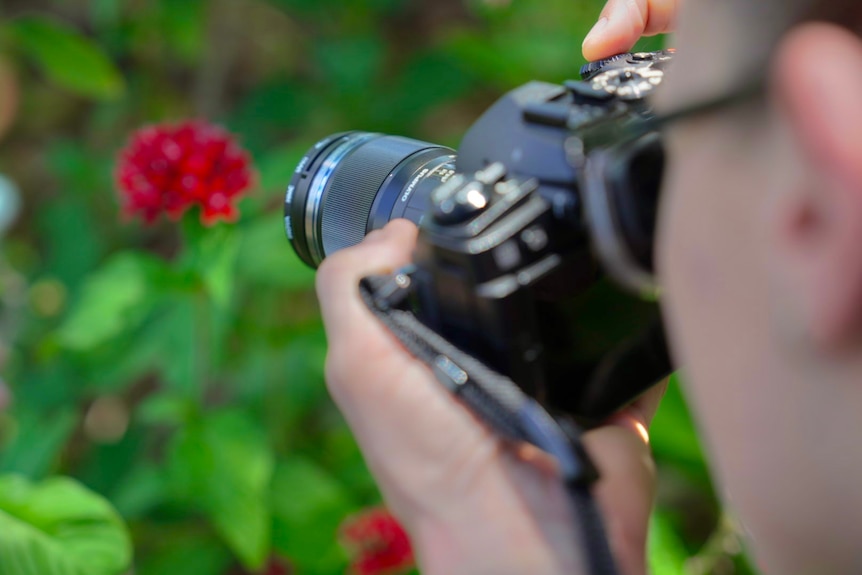
Your own backyard can be the best place to start looking for insects, Ms Irvine says. (ABC News: Lucas Hill)
Elle Irvine began photographing insects in her Brisbane backyard in 2020 and joined Bug Hunt to help build a bigger picture of Australian invertebrates.
“Because my interest started because of photography, I predominantly wander around looking for insects that I might find interesting to photograph,” she said.
“In the course of doing that, I might run across 50 other insects that I don’t really want to spend 20 minutes taking photos of, but I can take one photo and upload it as I go.”
She said the project is a great way to get people excited about insects.
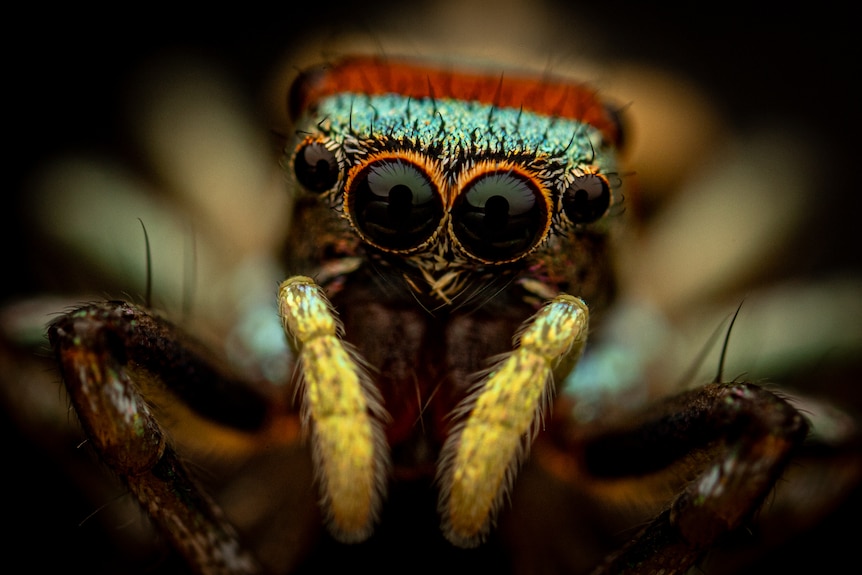
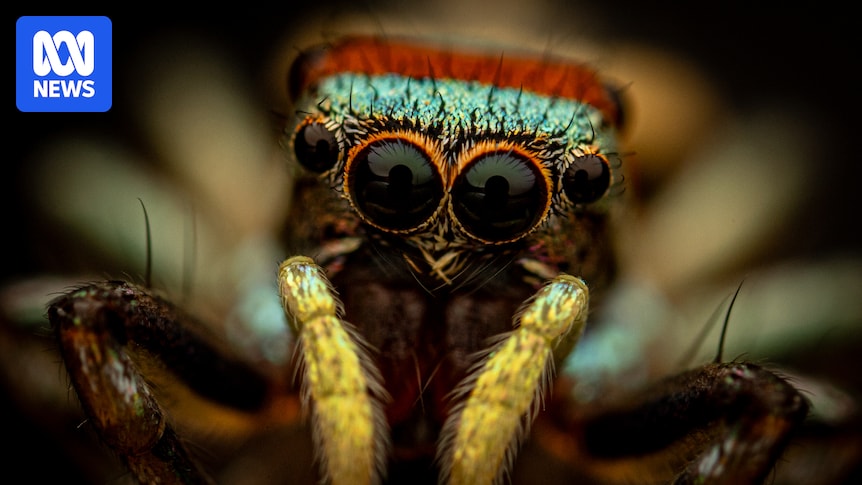
A baby iridescent jumping spider captured with a macro lens. (Supplied: Elle Irvine)
“There’s a lot of people who are really interested in the wildlife around them, but for the most part, people don’t know what to do,” she said.
“Everybody can take pictures and that grows people’s understanding.
“This gives them a really great way to get more information and to get involved as a community.”
Invertebrates Australia Bug Hunt project co-lead Alison Mellor said Bug Hunt aims to get as many “eyes on the ground” as possible.
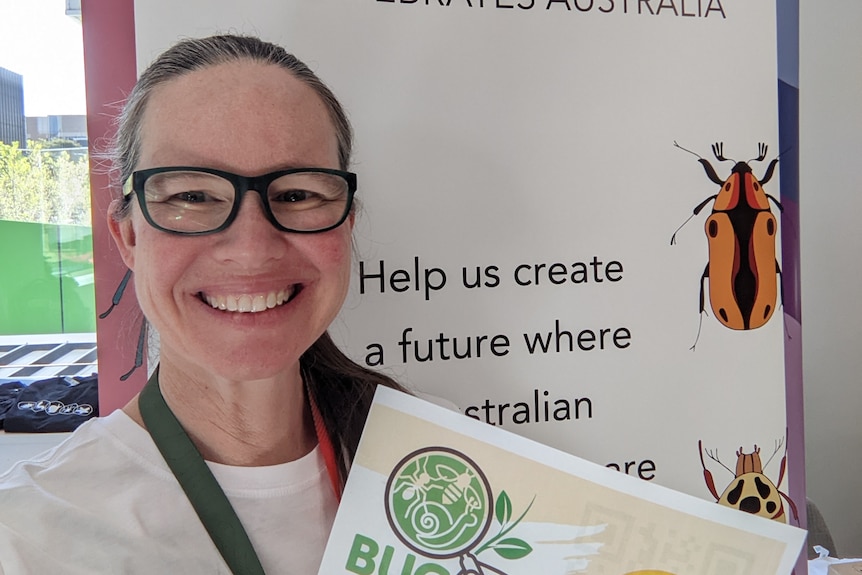
Bug Hunt co-lead Alison Mellor says the project aims to get more “eyes on the ground.” (Image: Supplied)
“Scientists can’t be in all places at all times, so we’re really relying on people just taking their phones and snapping some photographs of any bugs when they see them,” she said.
“We’re really hoping to get a good picture of invertebrates all across Australia.”
Bug hunting ‘completely addictive’
Queensland Museum’s senior insect curator Chris Burwell said citizen science projects like Bug Hunt and iNaturalist are “incredible resources” for researchers.
“It’s fantastic for tracking species where they occur throughout the year, whether they’re moving southwards due to a changing climate,” Dr Burwell said.
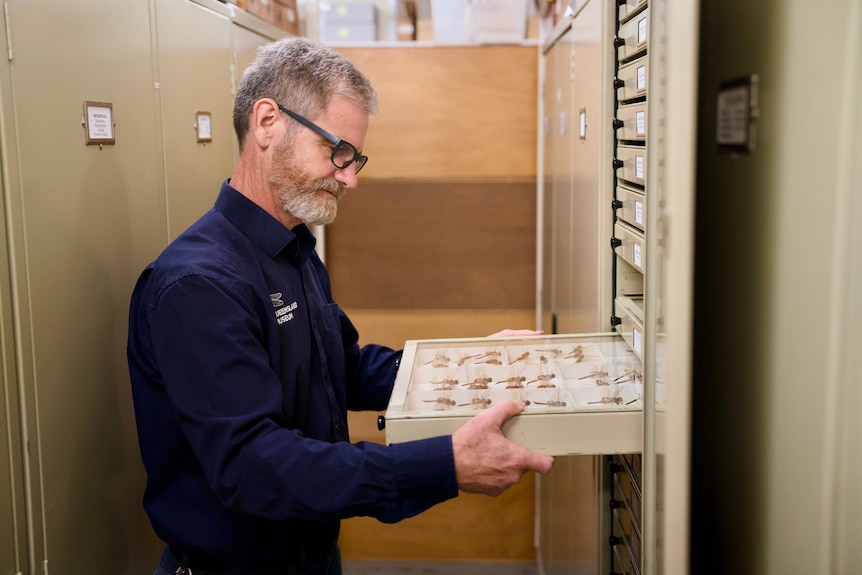
Dr Chris Burwell is the Queensland Museum’s senior insect curator. (ABC News: Michael Lloyd)
“As it’s getting warmer, we’re seeing more things coming into south-east Queensland that we haven’t seen before.
“You’ve got a whole lot of willing people that want to go out into their back garden with a camera and record where things are, so the sheer number of records is amazing.”
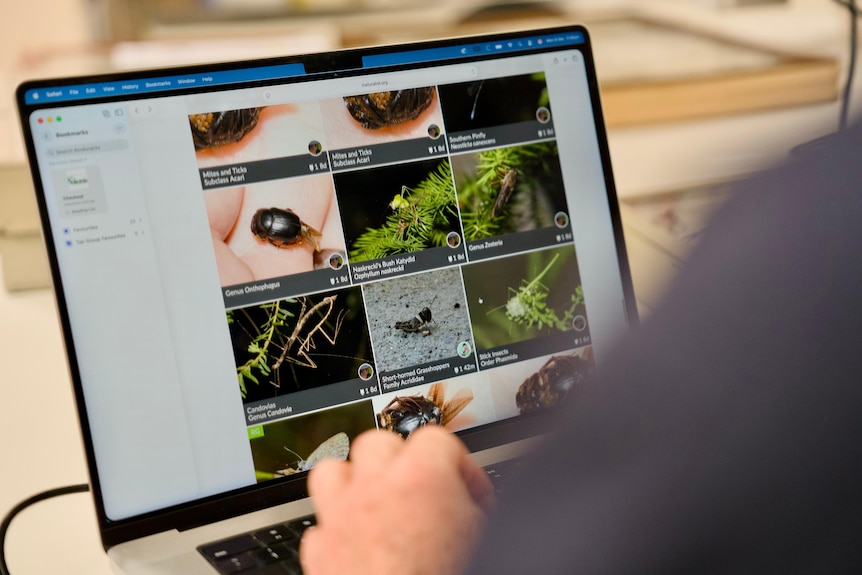
Dr Burwell is “addicted” to bug hunting, with more than 14,000 observations logged online. (ABC News: Michael Lloyd)
Dr Burwell described himself as an “iNaturalist tragic”, with more than 14,000 observations logged on the platform.
“Anything that gets people out and engaging with insects is something I’m really passionate about,” he said.
“It’s just really fun to take a photo of something, put it up online, and then somebody comes back and tells you what you’ve got in your own yard.
“It’s completely addictive if you really get into it.”
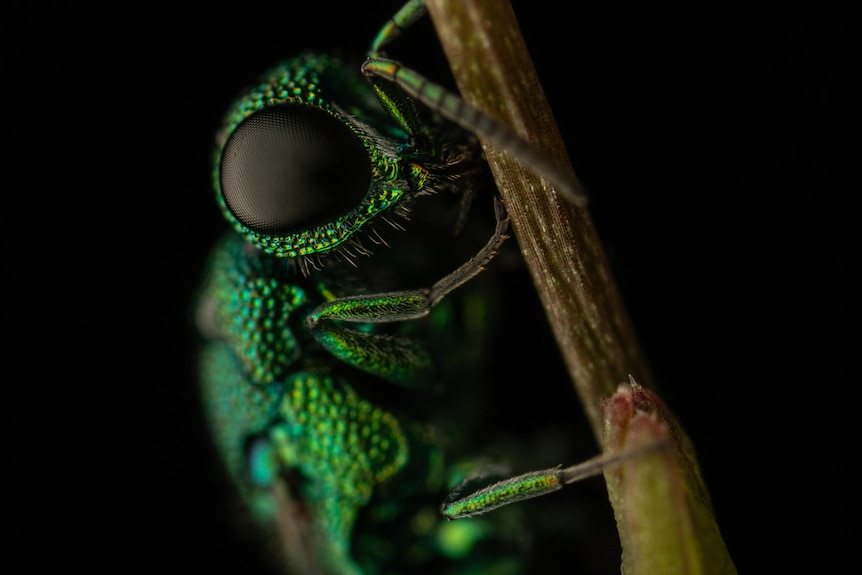
Insect photos, like this cuckoo wasp, can be uploaded to iNaturalist and identified by others online. (Supplied: Elle Irvine)
Catching invasive pests
Invasive Species Council advocacy director Reece Pianta said Bug Hunt is a valuable tool to monitor the spread of pests that endanger ecosystems.
Mr Pianta said relevant researchers and authorities will be notified if a photo of an invasive species is uploaded to the Bug Hunt page.
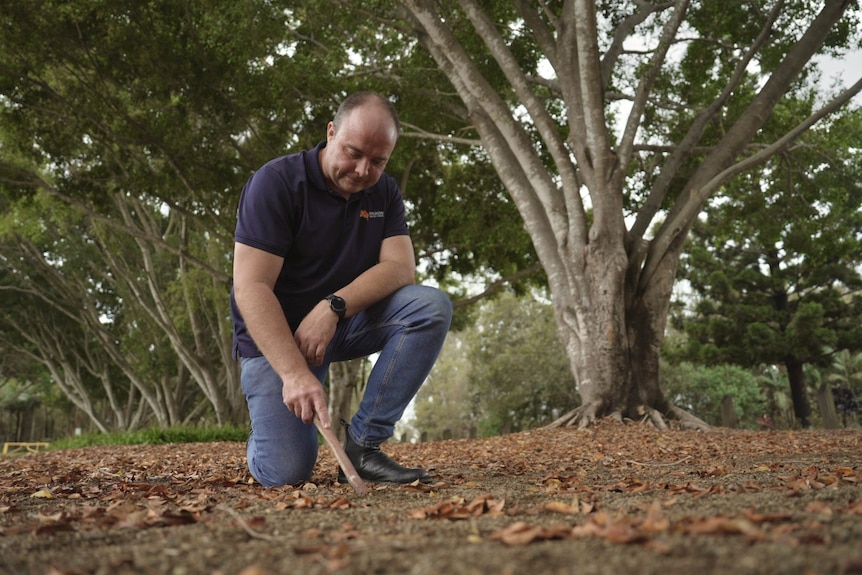
Reece Pianta says Queensland is the frontline for many invasive species. (ABC News: Lucas Hill)
“In Queensland, we are a frontline for some invasive species like fire ants, yellow, crazy and electric ants,” he said.
“You could find something that shouldn’t be out there in nature and you could do your bit to help protect our native environment.
“The holidays are a great time to get out there as a family, mapping out what’s out there and taking part as a citizen scientist.”
Bug Hunt organisers are also hoping to gather photos of native species in Queensland, including nesting bees, birdwing butterflies and Christmas beetles.
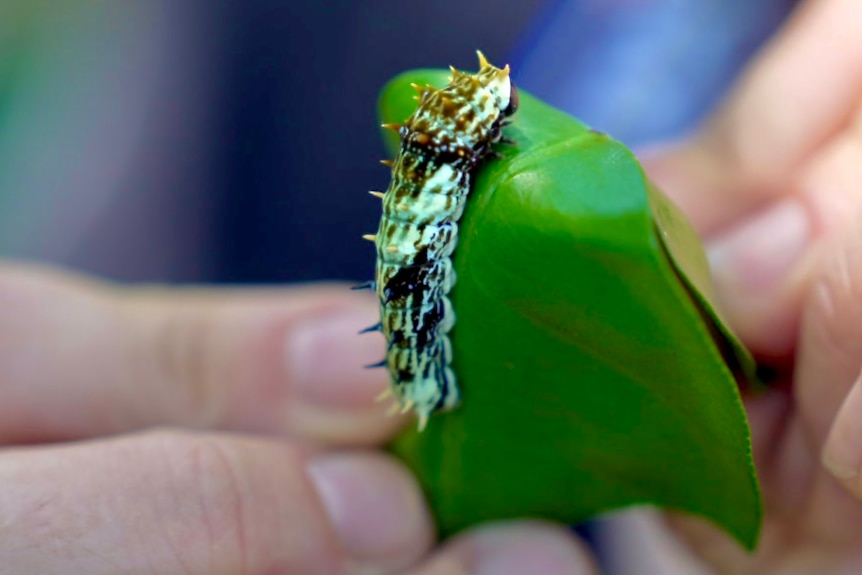
A slow-moving caterpillar might make a good subject for a beginner. (ABC News: Lucas Hill)
Tips for success
Ms Irvine said prospective bug hunters should “start really small” if they want to get involved in the hobby.
“You don’t need to head to an exotic location, or the Botanic Gardens,” she said.
“If you just start in your garden, you start to notice so many things when you’re already a little bit familiar with your surroundings.
“I started to realise I really didn’t need to leave my tiny garden, quite close to the city, to be able to find hundreds of species every day.”