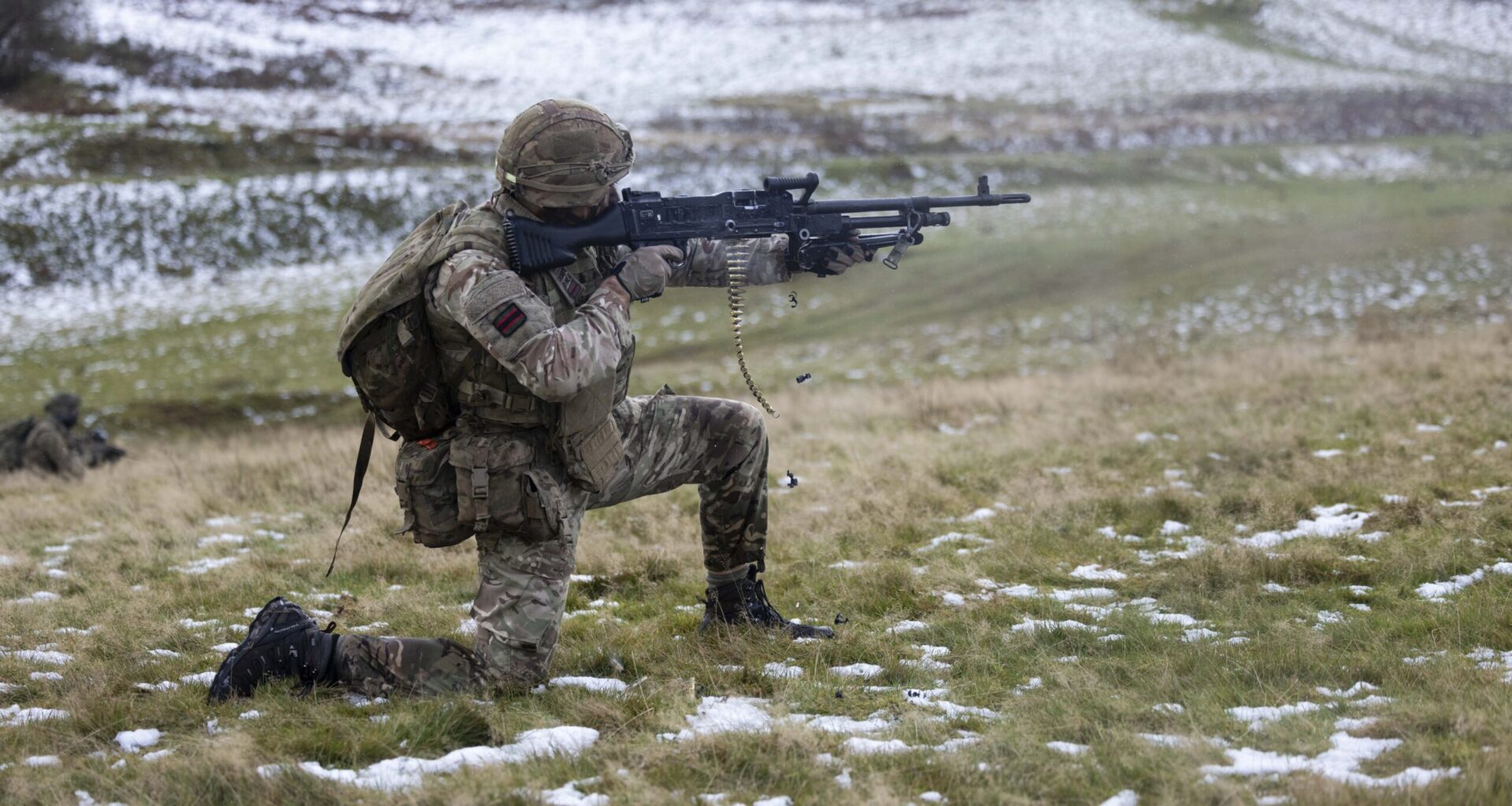
Nuclear-armed, NATO member states Britain and France have signed a declaration of intent, committing to put boots on the ground in Ukraine in the event of a ceasefire deal with Russia. An end to the brutal Ukraine war is critically needed. But this ill-conceived, rushed-through proposal risks escalating tensions with Russia, and could jeopardise bringing the brutal conflict to an end.
In a joint statement, the two NATO states – who in July also signed a joint declaration reaffirming their commitment to nuclear cooperation – said they would provide “reassurance measures in the air, at sea and on land” following a ceasefire agreement between Kyiv and Moscow, with “the proposed support of the US.”
The statement refers to “binding commitments” to support Ukraine in the event of renewed fighting with Russia, but the British government, describing the deployment as a “reassurance and regeneration force” will give no clarity about whether British troops will take part in military action against Russia. In July, both France and Britain .
These so-called “reassurance” measures would involve the establishment of “military hubs” across Ukraine while “protected facilities” would also be built to store weapons and other equipment for “Ukraine’s defensive needs.”
Speaking after the meeting, Prime Minister Keir Starmer said the ‘coalition of the willing’ group had made commitments that would pave the way for the “legal framework under which British, French and partner forces could operate” on the ground in Ukraine. However, the British government has refused to confirm the number of troops intended for the mission. However, reports indicate France could deploy 15,000 troops, with Britain supplying no more than 7,500. Plans for 10,000 British troops as part of a much larger 64,000 coalition force were viewed as unsustainable by the Ministry of Defence.
No other NATO members present at the meeting, which included Germany, Spain, Turkey, and Canada, has made troop commitments.
In response, the Russian government warned that any foreign troops bases, or military infrastructure on Ukrainian territory would amount to “direct foreign intervention” and would be viewed as “legitimate targets”.
The process of monitoring and assessing breaches in the ceasefire which would trigger the need for this ‘reassurance force’ have also not been published. Reports suggest the US would lead “high-tech monitoring of any ceasefire line” using a system of drones, satellites, and sensors. It would also oversee the adjudication of any violations by Ukrainian or Russian troops while European countries would be “represented” in this process by a special commission.
The fact that the US is arguably one of the combatants in the conflict – given its financial and military support for Ukraine and its deployment of its nuclear weapons at NATO bases across Europe – and will control the equipment to determine the ceasefire violations and have ultimate say over them, this brings into serious question the transparency and accountability of the process.
This is also deeply concerning, given it is the determination of ceasefire violations that could set in motion potentially deadly and far-reaching military action by British and French troops against Russia.
Not surprisingly, the rushed-through agreement has led former military officials and analysts to question the risks of the deployment, and argue that scale and complexity of the deployment could be similar to NATO deployments in Afghanistan.
Despite the dangerous and far-reaching implications of the agreement, Starmer has refused to make a full statement to Parliament. Instead, at PMQs on 7 January, he stated that there would be a vote in Parliament regarding troop deployment. Labour Chair of the Commons Defence Committee, Tan Dhesi said the plan “runs the risk of overstretching” Britain’s military, indicating that if MPs were to vote for the deployment this would result in even further military spending hikes.
Commenting on the plan, CND General Secretary Sophie Bolt, said:
“The deployment of thousands of troops in Ukraine by these nuclear-armed NATO member states would be a disaster. It is not surprising that, aside from France and Britain, no other NATO state has committed troops. Such a deployment increases the risks of a military confrontation between NATO and Russia. At a time when an end to this brutal confrontation is being negotiated, this announcement is undermining these efforts by increasing tensions.
The lack of clarity on the rules of engagement is also shockingly worrying given the potential for the escalation to a direct confrontation between nuclear-armed states. Far from providing the stability, and the assurance needed to end the conflict, this reckless proposal, is dangerous, unworkable and will likely prolong the war.
Just as we have seen with Starmer’s announcement to expand Britain’s nuclear capability, this is a rushed, unilateral decision that has been made without any parliamentary debate. Yet again, Starmer is forcing through reckless decisions, no doubt to please Trump and NATO, which put the British population at risk.”