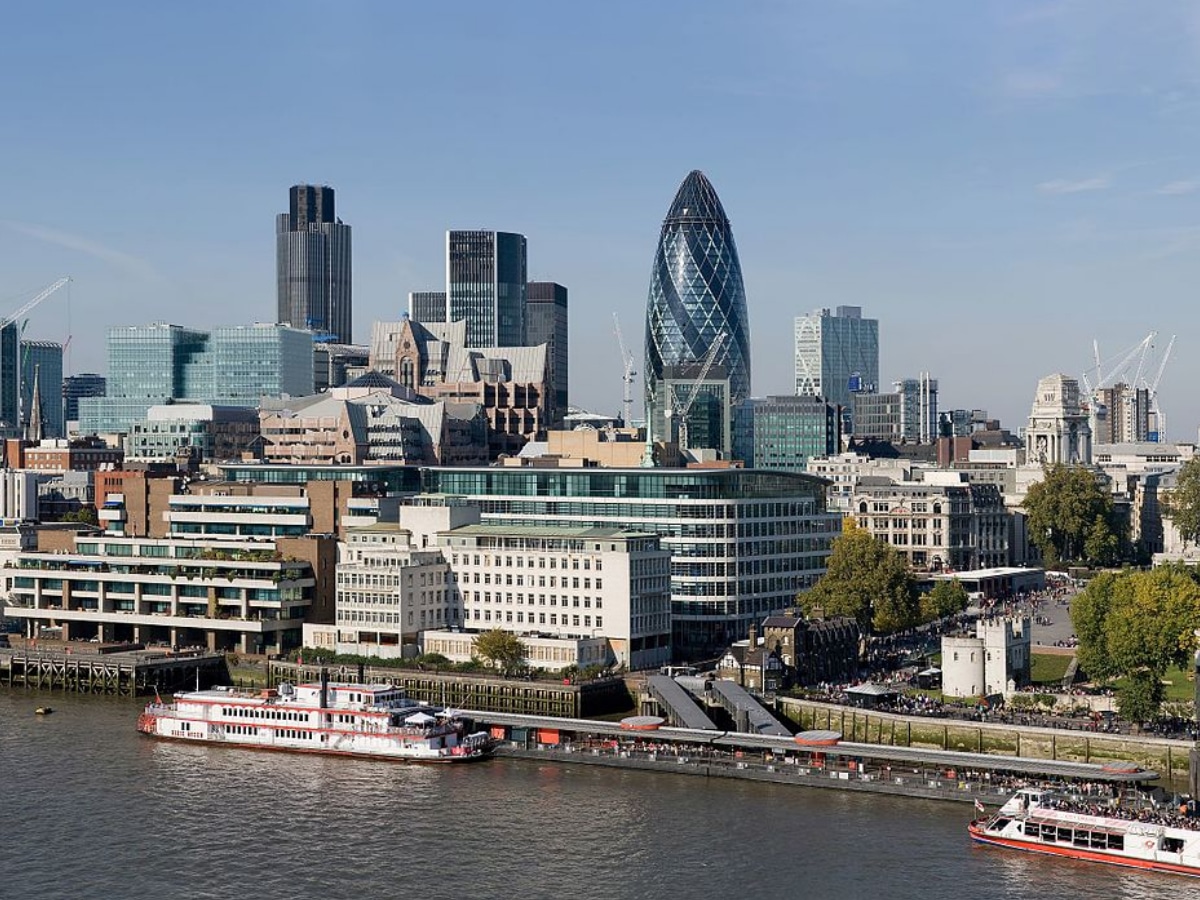
According to the Financial Times (FT), the City of London are against a return to Brussels rules having reportedly recovered its ‘mojo’ after Brexit. Following successful lobbying, it appears obedient Starmer has now excluded the financial services from moves to be closer aligned with the EU.
Calls for a “Norway”-style single market agreement with the EU are increasingly looking like old hat as UK financial services providers back Starmer decision to exlude their business from closer EU alignment pic.twitter.com/Duu717D8mY
— Derrick Wyatt’s Law and Policy Blog (@BlogWyatt) January 9, 2026
Bankers only know self-interest
FT reported that British government officials wanted “closer cooperation” with the EU in the sector but insisted that the PM had “no intention of trying to reintegrate the sector with the Brussels rule book”.
This Brexit reset lobbying followed Starmer’s latest comments on the single market, in which he suggested that decisions made regarding closer alignment must be made according to the national interest:
A government spokesperson said the UK-EU “common understanding” struck last year — which opened the way for Britain adopting Brussels rules in areas like food standards and energy — was narrowly drawn and did not include financial services.
“However the EU is the UK’s second largest trading partner for financial services and we continue to explore areas of co-operation where it is in our economy’s interest.”
This seems to have provoked fear in Canary Wharf as all they really know is self-interest.
We wrote last year about the clear priorities of Reeves and Starmer’s government and quoted Matilda Borgstrom, UK campaigner at 350.org:
Rachel Reeves’ decision to slash welfare while refusing to tax the super-rich is both cruel and misguided. Instead of making billionaires like Jim Ratcliffe – who profits from fossil fuels that drive the climate crisis – pay what they owe, she is choosing to side with the ultra-wealthy at the expense of ordinary people. A wealth tax on billionaires could fund vital support for those struggling with the cost of living – accelerating the transition to renewable energy could slash energy bills, insulate homes and create future-proof jobs. Instead, Reeves is prioritising the interests of a handful of elites over the well-being of millions. This is not just an economic failure – it’s a moral one.
FT Exclusive: Chris Rokos paid himself almost half a billion pounds last year as his macro hedge fund soared in a highly volatile period for markets. https://t.co/Eq9vOsjWqQ pic.twitter.com/j4dMVEMDGP
— Financial Times (@FT) January 9, 2026
In 2024, anti-Brexit commentator Edwin Hayward highlighted the significant impact that Brexit has had on employment in the sector:
“There are 79% fewer banking jobs in London since Brexit”
It appears Brexit deflated the financial services jobs market in London like a pin to a balloon…https://t.co/m0XuLZ7qYn pic.twitter.com/Y7dMXltJRF
— Edwin Hayward (@edwinhayward) January 16, 2024
A Brexit for the few, not the many
It’s clear that the financial sector ‘recovering their mojo’ doesn’t necessarily mean we will see recovery across wider society, because poverty has grown even as the rich have got richer. In this instance, the financial sector seemingly reacted negatively because proposed changes would benefit the wider economy over just them specifically.
Gary Stevenson is a former City banker and economist who specialises in inequality. He has long stated that the interests of those in the City’s financial sector don’t align with the wider public. Stevenson has repeatedly argued that those in the City care precious little about fixing the economy, because that isn’t actually how they make their money.
This development further suggests that a Brexit win for the financial services does not mean a win for the UK economy and its people.
Why the government and normal people are going broke (on Sky News just now) pic.twitter.com/CwZf0yFWNK
— Gary Stevenson (@garyseconomics) November 19, 2025
Featured image via David Illif