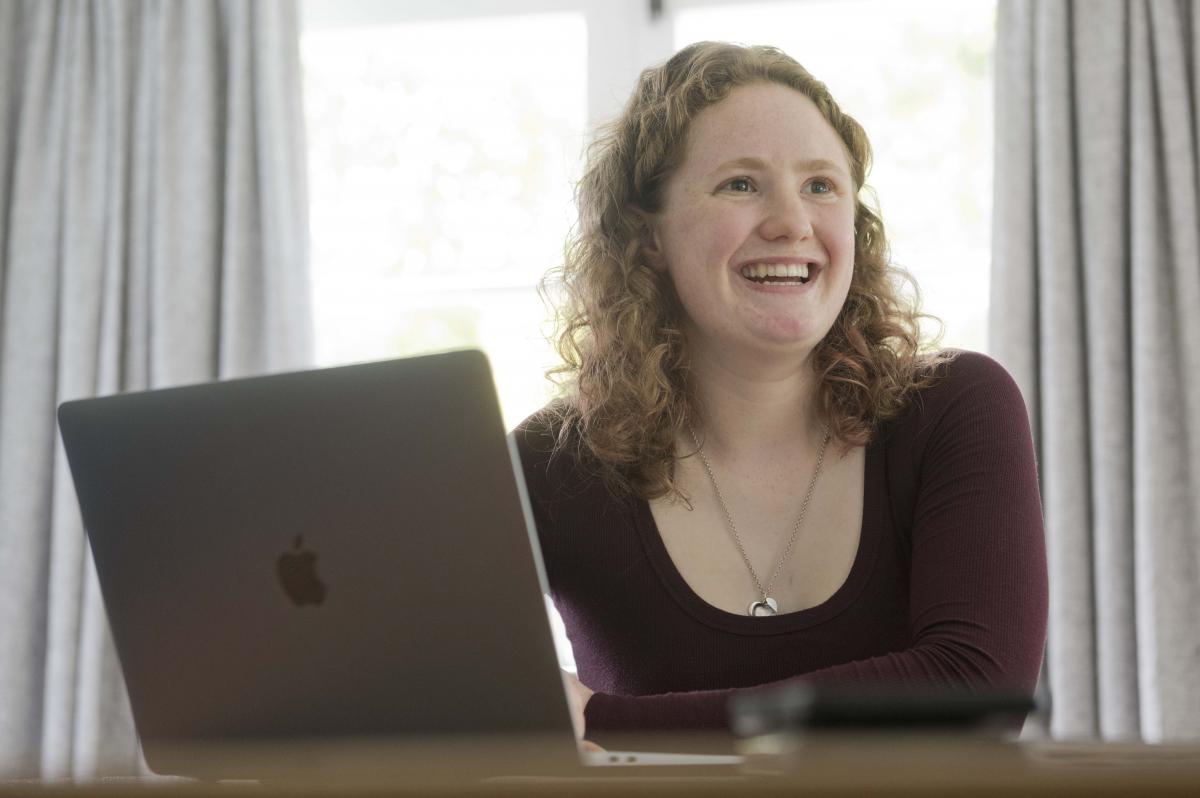
A Dunedin woman is calling for greater education on antidepressant withdrawal as she continues a years-long battle to get off one of the drugs.
University of Otago student Tabitha Hildyard said she was frustrated by her experience and wanted to see more being done to educate doctors and patients.
“Trying to have a life outside of it is quite hard,” she said.
When asked about Miss Hildyard’s experience, the Royal Australian and New Zealand College of Psychiatrists (RANZCP) identified a “dire need” for research in the area, and greater training and support for clinicians.
In September 2021, two days after her sister’s death, Miss Hildyard was prescribed antidepressants for the first time.
Then 17, the medication was intended to get her through her year 12 exams, she said.
She immediately “did not feel good”, and when she changed medication a year later, the side effects continued.
“So I changed, as per the doctor’s advice, and they put me on a different brand … again, nothing was improving.
“No-one suggested getting off or what it would look like to stop.”
She had appointments with a psychologist and a psychiatrist but had no formal diagnosis.
Nor did Miss Hildyard report any need for the medication before she was prescribed it.
In four years, she has been prescribed four different antidepressants from different doctors.
“Eventually, I did my own research and I found that it might actually be the antidepressants themselves.”
Her attempts to get off the medication in the past two years were challenging and in each case, she returned to her initial dose because of “awful” withdrawal symptoms including “fatigue, changes in appetite, disorientation [and] mood swings”.
“I planned to come to Otago and do dental. And that’s out the window because … [there is] no way could I do it on these meds.”
She is about to start her third year studying neuroscience and pharmacology, subjects chosen to better understand her experience.
A compound prescription of the medication had allowed her to slowly lower her dose from 150mg to 95mg — it cost about $250 for 90 days’ worth, Miss Hildyard said.
She was preparing to drop to 75mg, a publicly available dose, in the coming weeks.
She credited much of what she knew to online communities where people shared their experience with withdrawals.
RANZCP national chairman Dr Hiran Thabrew said patients must be fully informed of potential withdrawal symptoms from the outset.
“There is a dire need for more research in this area, as well as greater training and support … particularly around discontinuation practices and making complex patient decisions.”
Stopping antidepressants abruptly could cause significant distress — gradual tapering under medical supervision was recommended.
University of Otago (Christchurch) department of psychological medicine head Prof Richard Porter said for some people it would be easier to come off antidepressants if New Zealand had formulations, such as liquid forms, allowing gradual dose reduction.
In his experience, at least half of people coming straight off antidepressants would have some significant symptoms — for a smaller amount it would be a “really major problem”.
Royal New Zealand College of General Practitioners medical director Dr Prabani Wood said she felt awful for Miss Hildyard’s “really bad experience”.
However, in general, GPs received good training and support in managing depression and antidepressants.
She noted Miss Hildyard had seen different doctors over time — not having continuity of care could contribute to the situation and was possibly exacerbated by the GP shortage.
A Ministry of Health spokesperson said an individualised approach should be taken when prescribing antidepressants.
Patients should be informed of the benefits, potential side effects, alternative treatments, and the fact they might not work.
They were, however, a “valuable and sometimes life-saving treatment for some people”.
Regular reviews with patients were recommended.