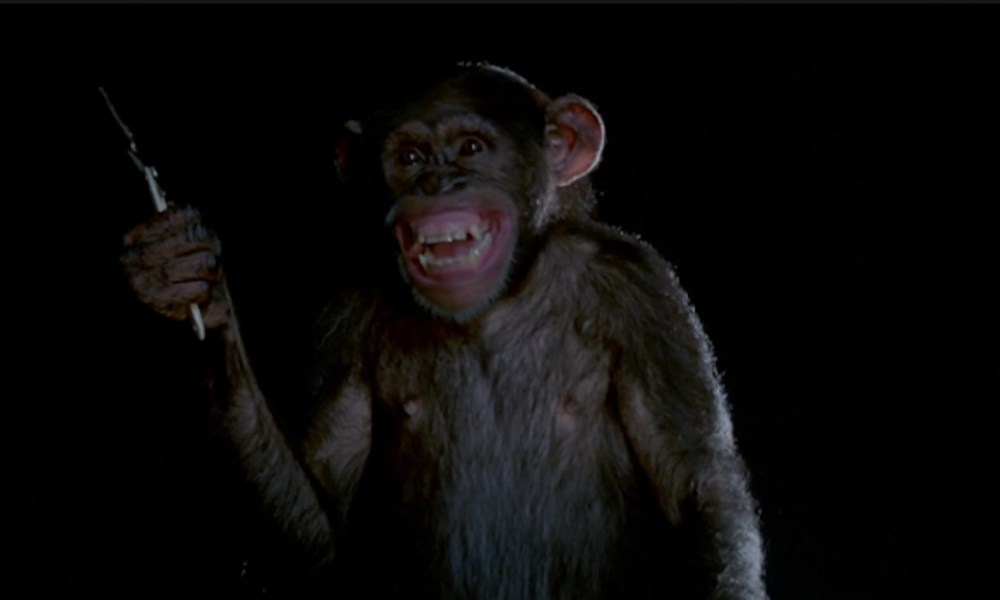
Primate is the latest horror film to indulge in the killer monkey subgenre, the likes of which have inspired some diverse, disturbing animal attack movies.
There are certain subgenres that are products of their time and are no longer seen because they’re now considered to be antiquated or impractical. Horror films that rely on animals — real animals — are increasingly problematic. This is even a greater liability when the creature in question is something that’s as temperamental as a monkey.
Johannes Roberts (47 Meters Down, The Strangers: Prey at Night, Resident Evil: Welcome to Raccoon City) ambitiously revives the killer chimp subgenre with his latest film, Primate. Primate chronicles the domestic horrors that break out when a privileged family’s pet monkey, Ben, shifts from pet to predator. Primate acts as a stark reminder that animals like chimpanzees, while often cute, are wild animals that are not meant to be pets.
Roberts’ film scratches the surface of something that’s been uniquely unpacked across different horror movies that hold up a mirror to mankind’s relationship with nature. While films like King Kong and Planet of the Apes all meet these qualifications, the following movies focus on smaller simian scares.
Link
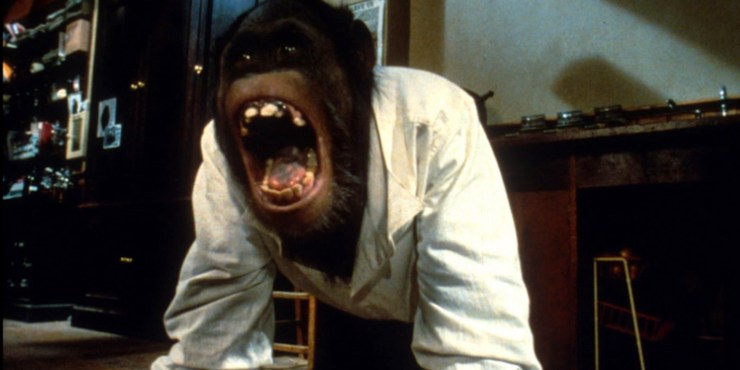
Richard Franklin’s Link is a gonzo masterpiece that’s the type of movie that just feels impossible to make, even in a post-Primate world. There are so many moments in Link, a movie that basically brings the whole “See No Evil, Speak No Evil, Hear No Evil” parable to life through mad science, that genuinely feel impossible. So much of the film’s novelty involves watching this trio of well-trained apes carry out tasks while tension builds.
Each chimp, Voodoo, Imp, and Link, develops a distinct personality as the titular Link stands out as the black sheep. These apes are often at odds with each other, but it’s also genuinely terrifying when they team up, work together, and overpower individuals. This highlights how any alleged “superiority” that humans feel over monkeys becomes irrelevant when they’re cornered by three rabid creatures who each possess eight times the strength of an average man.
Link is an effective horror villain who does a lot of the heavy lifting here. However, none of these simian shenanigans ever feel too silly because of the beautiful cinematography and art design. Additionally, Jerry Goldsmith’s carnival-esque score is perfectly eerie and reflects how both ape and man are constantly performing on a stage and forced to jump through some degree of hoops. Link’s music is such a strong recurring motif.
Link becomes an impressive tonal tightrope walk that shifts between Dunston Checks In level hijinks, where monkeys are putting phones in the microwave, and Primal Force-style carnage, where apes are tearing humans to shreds. Link is a stunning examination of humanity and culpability that doesn’t just repeatedly equate humans and apes, but has people dependent upon them for survival. One of the most extreme examples of this involves an ape punching out a rottweiler that’s attacking one of the lead characters.
In another scene, a different monkey lifts a car off the ground like a superhero so that his aggressor is trapped. Another memorable and unnerving sequence involves voyeuristic behavior from one of the more aggressive chimps, Link. Link watches Jane (Elisabeth Shue) attempt to take a bath, only to feel too uncomfortable to carry out the action while this simian invades her privacy. It’s a scene that’s absurd on several levels, albeit a moment that reflects the inherent power in these carnal creatures and that they do call the shots. A woman is absolutely the weaker prey in such a situation, even if the monkey doesn’t understand what they’re doing.
Link is definitely the must-watch film on this list and a great entry point into Franklin’s filmography. Link also continues the trend of killer monkey movies that posit the idea that humans are superior to apes and that it’s a fundamental mistake to treat them like equals. It’s a curious perspective that’s echoed in Primate. It also makes Link’s final line, “He’s a baby. He wouldn’t hurt anyone,” especially evocative and telling.
Shakma
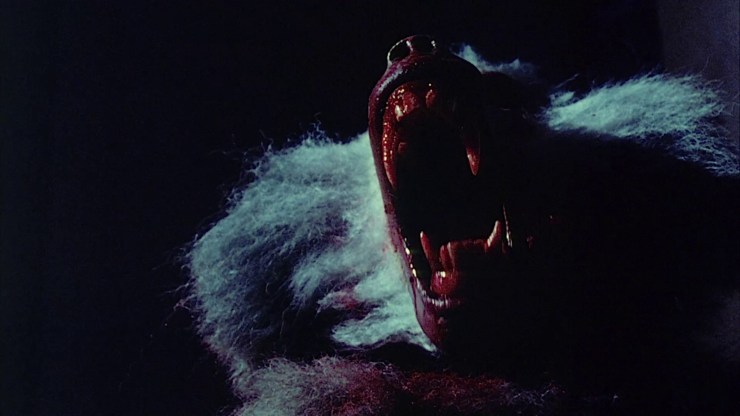
There’s a lot of common ground that’s shared between various killer monkey movies. Shakma, however, strives for something different and is endlessly authentic, even if its random nature makes the film feel like it’s been constructed by an A.I. algorithm. The basic setup involves a baboon that’s been injected with an experimental drug that’s designed to inhibit the creature’s rage, only for it to have the opposite effect.
This berserker baboon (the same baboon “actor” from The Fly, at that) that’s born out of a science experiment gone wrong is par for the course in this type of horror movie. Where Shakma establishes its personality is with its “Dungeons & Dragons from Hell” angle. A bunch of university research students decide to host an elaborate LARPing session in the very same research facility where Shakma has been let loose.
Shakma mixes the group’s high fantasy setup with the clinical, grotesque violence that’s wrought from the titular baboon. The film oscillates between the energy of an Amblin movie and a David Cronenberg film. Shakma is the perfectly deranged movie to watch between the Stranger Things finale and Primate.
Primal Rage
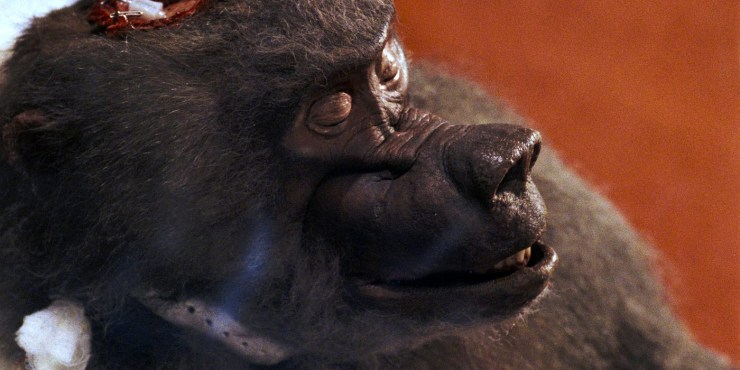
1988’s Primal Rage, not to be confused with 2018’s direct-to-TV Bigfoot movie of the same name, is a horror/sci-fi spectacle from Italian director Vittorio Rambaldi (son of the special effects legend, Carlo Rambaldi). Primal Rage is the best worst movie you’ve never heard of, and it deserves to be mandatory viewing, not just after a screening of Primate, but every Halloween season.
Primal Rage doesn’t attempt to reinvent the wheel. A break-in at a research lab leads to a rabid baboon bite that prompts a full-on outbreak that spreads at the local Florida college’s Halloween party. Primal Rage’s secret weapon is that it never takes itself too seriously, which perhaps makes it easier to believe that the film’s script was originally about people turning into tigers.
This overlooked cult classic gives the audience exactly what they want, with its over-the-top physical effects and gore, ridiculous lo-fi costumes that go so much harder than what’s necessary, and a soundtrack that bleeds the ’80s. It’s hard to watch Primal Rage with a bunch of friends and not have a great, dumb time. The scares may not be as palpable as they are in Primate, but the deaths still deliver.
There are plenty of moments in Primal Rage where it feels more like Meatballs or some bawdy sex comedy. There’s still a darkness that repeatedly reveals itself. The film’s monkey mayhem is contained to the movie’s introduction, but the “rage virus“ that infects and carries across the campus still taps into an animalistic quality for the rest of the picture. It’s perhaps the ultimate example of blurring the lines between man and monkey as the former literally starts to become the latter.
Phenomena
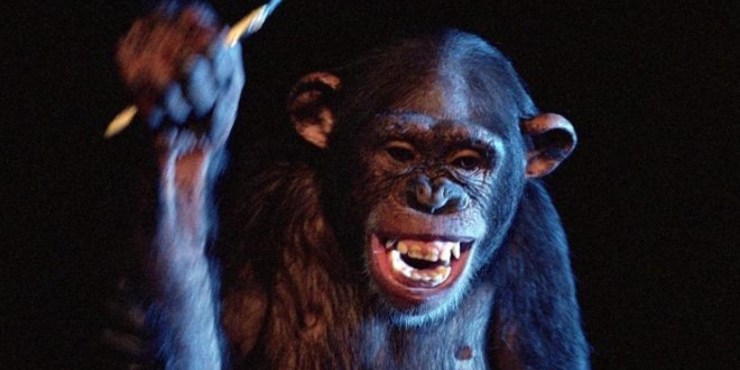
Phenomena, also known as Creepers in some markets, is one of Dario Argento’s most interesting ’80s offerings. Argento takes his typical giallo influences and combines them with the burgeoning psychic sci-fi horror trend that was taking over the decade in films like Carrie and Friday the 13th Part VII: The New Blood. In Phenomena, a young socialite at an all-girls boarding school, Jennifer Corvino (played by Jennifer Connelly in one of her very first roles), uses her psychic powers to stop a serial killer.
Jennifer’s powers allow her to communicate with insects, which is decidedly different from the telekinetic fare that filled up the ’80s. This also leads to an absolutely disgusting scene in which Connelly’s Corvino is submerged in maggots. One wonders how a chimpanzee who is handy with a blade works into Phenomena, but that’s what makes its use of a monkey all the more impressive.
Inga the chimp is a savior, not a sinner, as Argento wryly subverts several genre norms. It’s hard to imagine that Phenomena’s Inga wasn’t on Jordan Peele’s mind when constructing Nope’s Gordy sequence. Phenomena is the best psychic serial killer giallo monkey movie you’ll ever see.
Monkey Shines
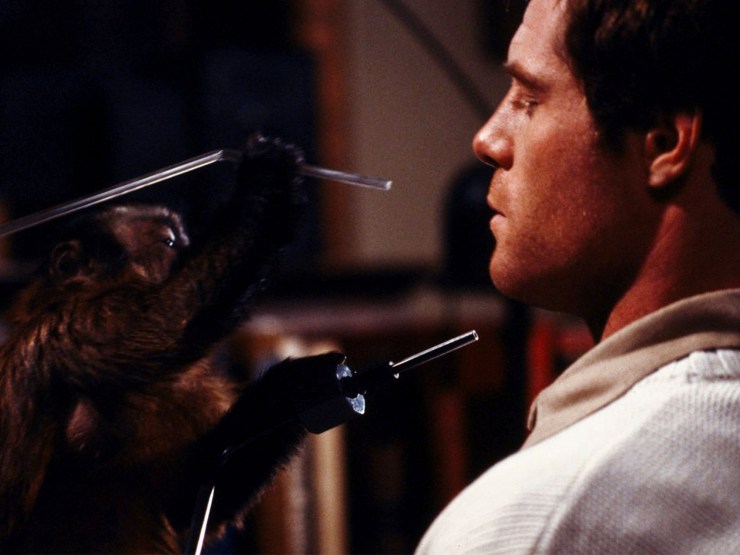
George A. Romero’s Monkey Shines is by no means a good movie, but it’s absolutely a great movie. So much of this film is built upon the popsicle stick foundation of broad sci-fi lunacy rather than any hard science. At the same time, Monkey Shines embraces this madness, and its chaotic storytelling is in many ways a testament to Romero’s hubris in the late ’80s. Monkey Shines was notably Romero’s first studio film, and, much like John Carpenter, it’s easy to see how this skin doesn’t feel natural on the filmmaker.
Monkey Shines is notable for arguably popularizing the absurd “helper monkey” trope that persisted through the ’90s. The movie examines an athlete, Allan Mann (Jason Beghe), who suffers a terrible accident and becomes paralyzed as a quadriplegic. A capuchin helper monkey is suggested to lighten Allan’s load, but because this is a Romero Film, of course, the monkey has been subjected to extreme experiments and brain injections.
Audiences need to suspend a lot of disbelief for Monkey Shines to work, but the idea of Allan sharing a telepathic link with his monkey, Ella, is at least something original. Allan is confined to a chair, but Ella becomes a living embodiment of his rage and id, who can actually get revenge on those who have wronged him.
Monkey Shines is a wild ride, but absolutely worth it. It’s another movie that attempts to equate man and monkey before tearing them apart, only the schism present is forced upon Ella by man and not some natural disaster like rabies, as it is in Primate. Monkey Shines doesn’t disappoint with its chimp hijinks, but Beghe progressively chewing the scenery as he loses it is more entertaining than any monkey.
Other Dumb Monkey Fun: The Lawnmower man (Director’s Cut), Primal Force (1999), Congo.
Primate is in theaters now.