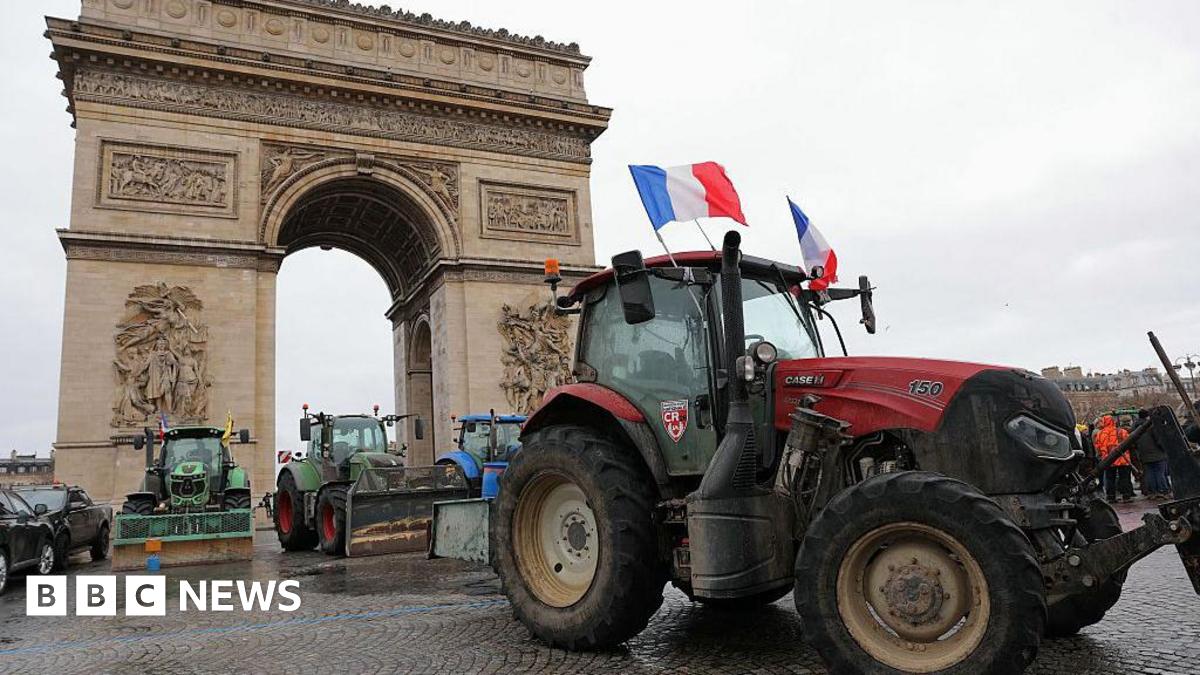
Von der Leyen said the Commission had listened to the concerns of farmers, and had acted on them including through introducing “robust safeguards” to protect their livelihoods in the agreement.
As well as boosting trade and political ties, the European Commission said the deal would help fight climate change, through commitments to halt deforestation and ensure a “reliable” flow of raw materials, critical for the global green transition.
The Commission expects the deal to save local companies €4bn ($4.7bn, £3.5bn) a year in export duties.
South American countries boast deposits of gold, copper and some of the critical minerals required for renewable and battery technology.
Cecilia Malmström, a former European commissioner for trade who led EU trade negotiations for five years, told World Business Express on BBC World Service that parts of the trade agreement could be suspended if Mercosur countries failed to stick to their commitments around environmental protection.
“[This agreement] is also a very strong geopolitical signal today to other powers who do not appreciate rule-based trade in the same way as we do,” she said.
On Friday afternoon a broad majority of EU member states confirmed their support for the free trade agreement, but it will still require approval from the European Parliament before it can take effect.
Jack Allen-Reynolds, deputy chief Euro-zone economist for Capital Economics, said voting was expected to be close in the parliament.
However, he said the larger issue was how much of an impact the deal would have, and pointed to the Commission’s own estimate that it would raise EU economic output by just 0.05%.
“The bigger point though is that even if the agreement is eventually implemented, it will be macroeconomically insignificant,” he said.
“And because it will be phased in over 15 years, these benefits won’t arrive until 2040 at the earliest.”