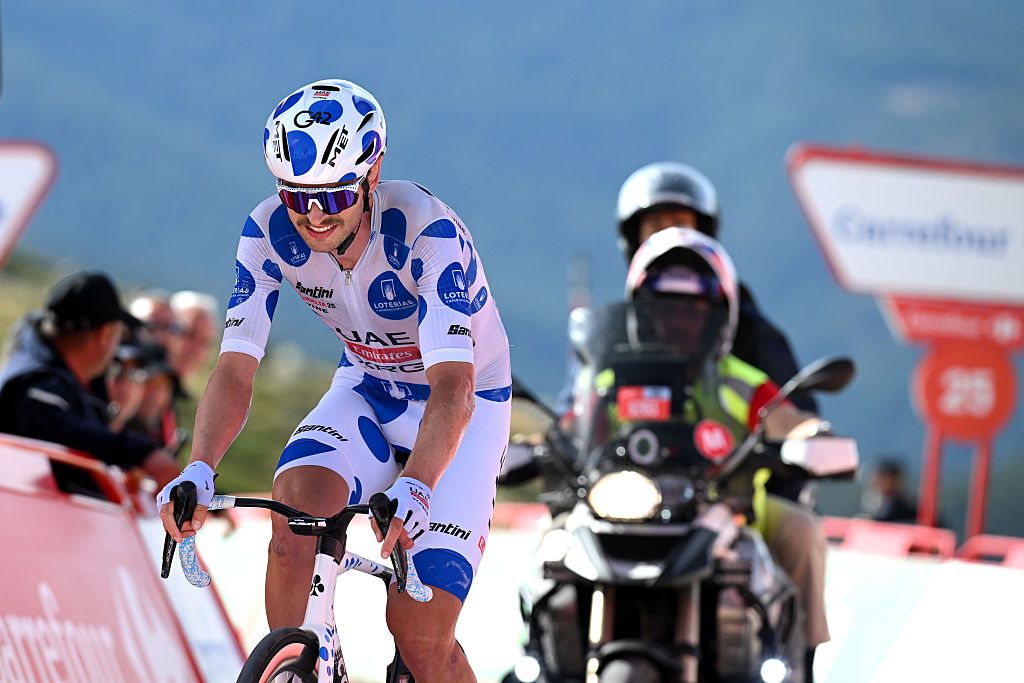
Few Australian racers have been as successful in the past five years as newly crowned National Time Trial Champion Jay Vine – and that’s despite some massive setbacks along the way. What’s more, arguably even fewer have had such an unorthodox pathway into the highest levels of the sport as Vine did.
The story of Vine turning pro at Alpecin in 2021 as a reward for standout success at the Zwift Academy e-racing, rather than on real roads, has been recounted many times now.
You may like
What’s more, that economic challenge, as Vine sees it, is only one of the major obstacles compared to some years ago. In an era when riders like teammate Tadej Pogačar are winning the Tour de France aged 21, or Juan Ayuso (Lidl-Trek) makes it onto the podium of the Vuelta a España aged 20, the trend of searching for ever-younger racers seems unstoppable. That trend is not benefiting Australian cycling at all, he says.
You may like
“Unless you’re [up-and-coming British cycling star] Cat Ferguson…or unless you’ve got a European connection, it’s really difficult. Or [unless] you’re incredibly talented and you just win everything.”
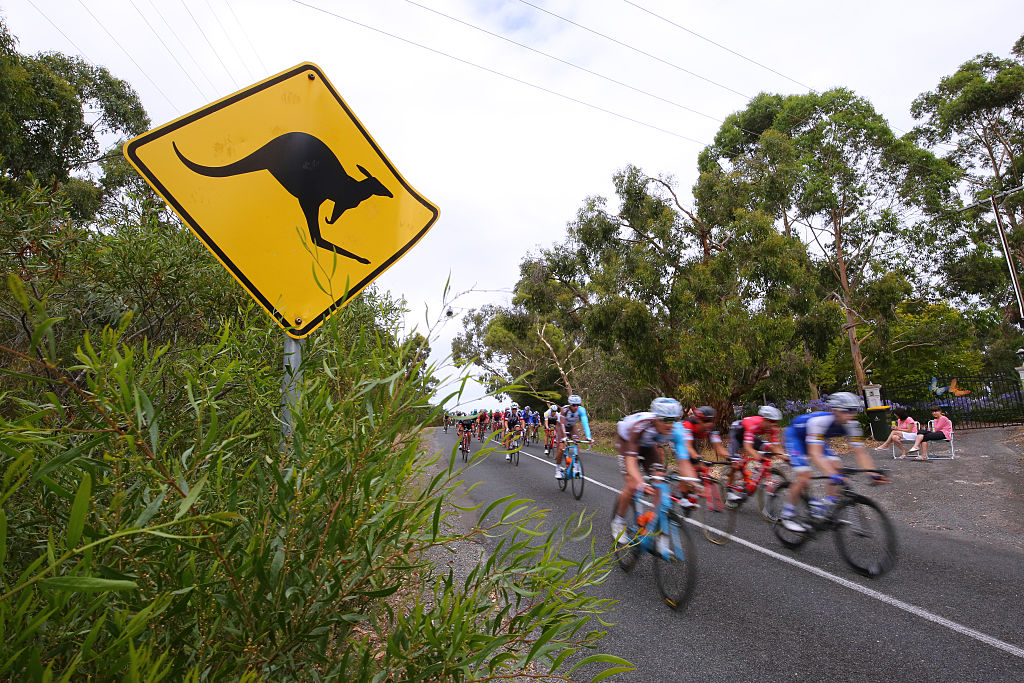
Race action in Australia (Image credit: Getty Images)A deep-rooted problem?
Nor, Vine believes, is it as simple as getting to Europe and starting to race, as he can testify himself. To rewind to April 2021, Vine made an immediate impact on his pro debut at the Tour of Turkey, finishing second on the Elmali summit finish. Later that year, he would catch the eye of many cycling fans again at Lagunas de Neila during the Vuelta a Burgos. Put it all together, and it meant that riding fast uphill was never the problem for him.
Rather, back then, as Vine told Cyclingnews in an interview in 2023, if he had faced a steep learning curve when he turned pro with Alpecin, his strength-sapping lack of race craft at the time could in part be attributed to apparently chronic deficiencies in the racing scene back home.
“In Australia, in a bunch of say 60 guys max, there’s really only five guys who are on the verge of turning pro, and they can do whatever they want in the bunch, they can go from last wheel to first, no problem. It’s like putting [Fabian] Cancellara in a junior race, he can do whatever he wants,” he said in 2023.
“Then you come over here, and you have 70 Cancellaras, so you can’t just do whatever you want. You’ve got to work the race tactically and use your teammates. Riding in the bunch without using massive amounts of energy, that’s the biggest thing. I knew I had a lot to learn.”
Fast forward five years and Vine has obviously moved on enormously – witness his steadily improving palmares in specialities as varied as double success in the Australian National time trial title and then snapping up four mountain stages of the Vuelta a España – and counting.
But to judge from Vine’s words, the lower level of racing compared to Europe remains endemic to the Australian peloton. On top of that, there’s been a drop-off in interest in Australia, he says, in organising racing as well, which you could argue makes a vicious circle even more of a closed one, too.
“It’s getting harder and harder for clubs to put on races, especially when there’s not that groundswell of riders wanting to do it,” Vine says.
“So when I was racing amateurs in my local club” – in the latter part of the last decade – “there was a core group of five to ten guys. But that A-grade sort of half of it moved into Masters and got older, and families and all that sort of stuff, and then half of them racked it, and then that next wave of cycling riders are still 12 to 15, so they haven’t gotten into that group yet.”
“I think Cycling Australia’s trying to resurrect the support for the under-19s and under-23s. But I mean, we’re signing people that are under 19 now into the WorldTour, so you sort of need to start when they’re 12. Unfortunately.”
Furthermore, as a pro of over five years standing in Europe, he’s also not overly convinced of the idea that the criteriums raced in Australia – one of the most resilient sides of the sport as they minimise the costs and difficulty of getting approvals and traffic management – can really contribute overly to a rider’s progress on the other side of the globe. Equally worryingly, he believes is that the number of races across his country is dropping across the board, too.
“Even in my local region, I know a bunch of state handicaps have sort of stopped running because the people that run them have moved on, and they haven’t been taken up by other people to continue running them. The crit scene seems to be still pretty popular, but you know, for someone wanting to go professional in Europe, crits are almost worthless.
“A lot of the racing in Australia is actually pretty ordinary for European stuff, so it’s disappointing. I think trying to get to Europe as quickly as possible is the best way of doing it.”
On the plus side, once a rider is established, like Vine, the benefits are anything but minor, he says, given the way wages have risen considerably over the last few years, particularly in the biggest teams.
As he puts it, “I’d also swing it the other way in that the reward’s a lot better as well, right? I mean, there’s not much money in cycling, but the money in cycling has gone up. You know, there’s lots of pressure on young riders, but we’re also being paid professionally now.”
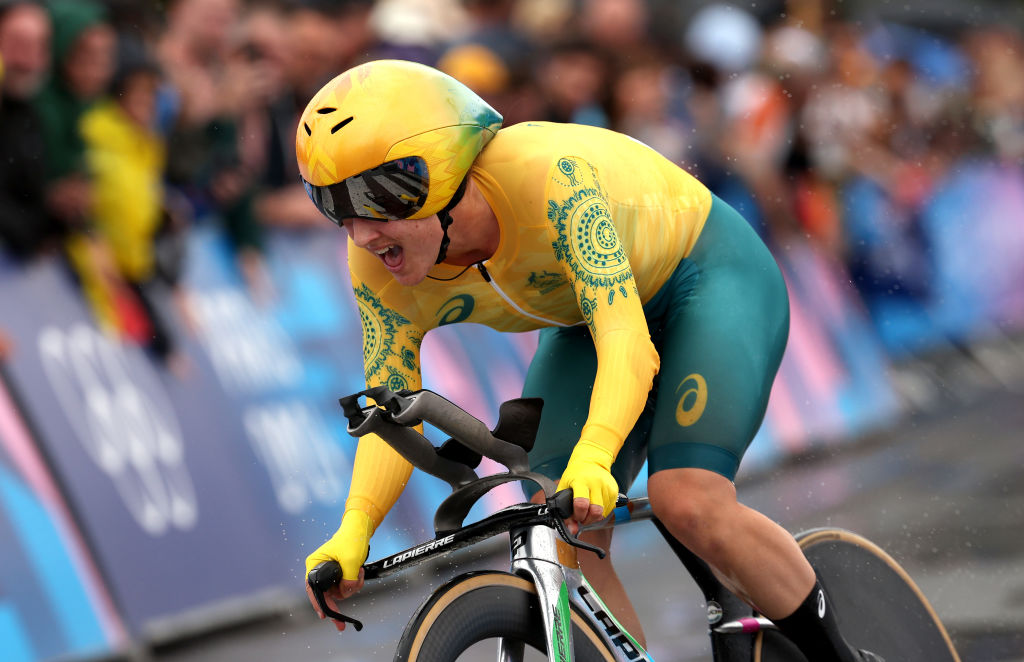
2024 Olympic Games elite women time trial: Grace Brown speeds to gold (Image credit: Getty Images)A massive drop-off – and a solution?
However, while the current panorama in Australia in terms of pros racing abroad is flourishing at present, Vine is adamant that the future risks being a very different story indeed. The combination of all the factors he’s highlighted would seem to paint a very dramatic story in the mid-to-long term.
“The statistics probably don’t show it because we’ve probably still got the same amount of young riders getting signed to WorldTour teams as before, and we’ve got probably the most ever Australians in the sport currently at the professional level,” he says.
“But there could be a massive drop off when the guys that are currently 30 to 35 start retiring.” – Vine himself is 30 – “I don’t think there’s gonna be 10 riders that all of a sudden get signed in the next three or four years.”
Countries with more recent full-scale road racing success like Australia, which only really began to move forward in that side of the sport in the 1980s with Phil Anderson, tend to be more vulnerable to rises and drops in popular interest.
But there can be moments when the arrival of a major new star or a win in a major race like the Tour de France can create a significant uptick in coverage and, ultimately, inspire young people to start out in the sport.
Vine agrees this kind of standout success can only be beneficial, but he argues that it’s a long-term fix for something that is already hitting the red alert zone in a much closer time frame. He also points to such programs to bring on younger riders already being at least partly in place.
“I’d suggest that’s still like a 15-year solution,” says Vine as, while he acknowledged there are programmes in place, he pointed to the benefits of a different era where there were European scholarships “where you have 6 guys, like the old AIS [Australian Institute of Sport] team: most of those guys are still in the professional peloton.”
At the same time, he points out, the solid results for the Olympics in Paris will likely also have created an increase in budget, with the Australian Sports Commission allocating $15.86 million Australian to the sport body in the 2025/26 financial year. As Vine puts it, “Government funding for Cycling Australia will have gone up, and then they can start throwing that around, hopefully at the road side of the sport and Grace Brown” – the winner of the individual time trial in Paris – “did a crazy amount of stuff with her gold medal, too.”
“So hopefully we get some funding for both sides of the sport, men and women, and we’re able to put teams in Europe to get them racing and get people signed up.”
It can’t be overstated that creating a definitive solution to all of these woes in the making is in no way straightforward. But if Vine’s warnings about the long-term predicament Australian cycling finds itself in turn out to be true, then there looks as if there is precious little time to lose all the same.