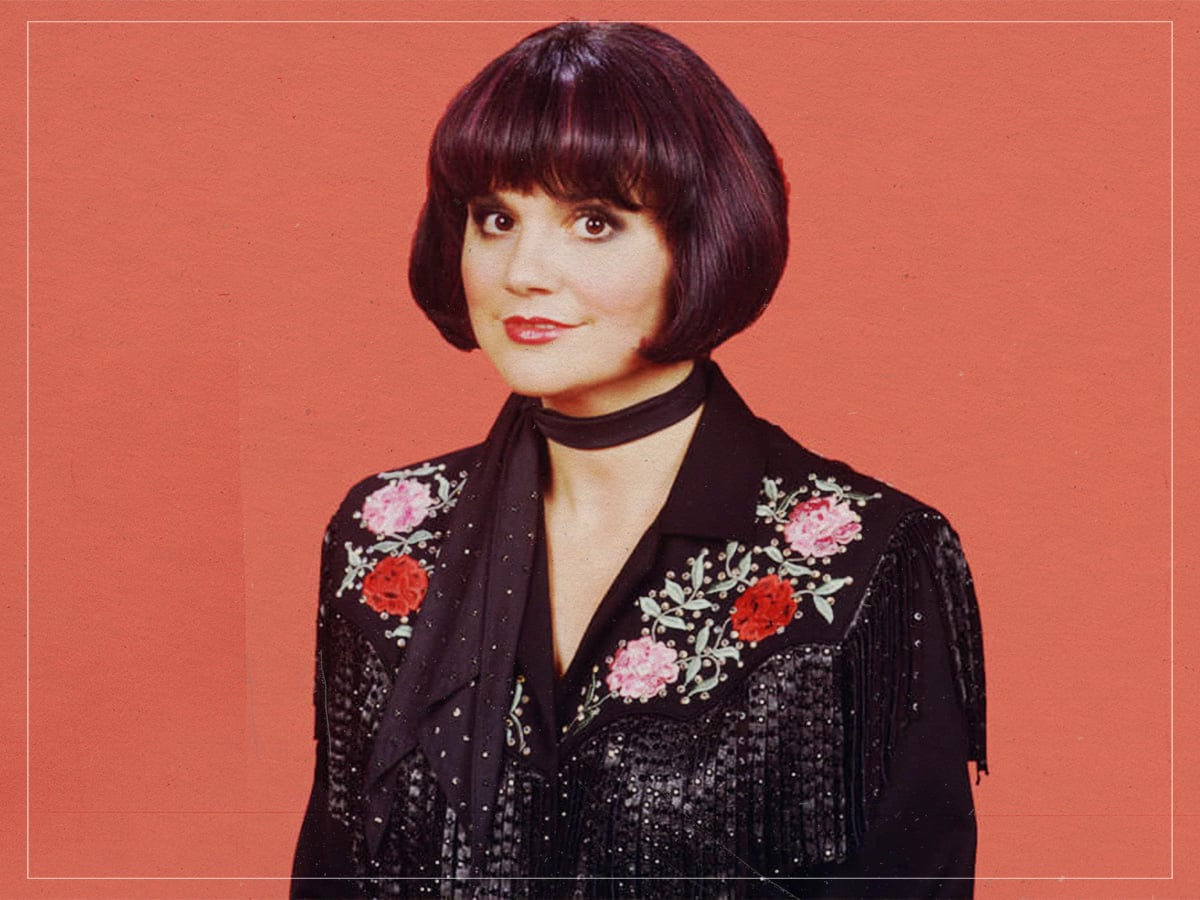
(Credits: Far Out / Linda Ronstadt)
Fri 9 January 2026 18:48, UK
When people caught Linda Ronstadt performing with The Stone Poneys at the Bitter End, most people were immediately drawn to her easy stage charisma and gorgeous vocals.
When you look at Ronstadt’s trajectory through her perspective, it’s hard to imagine that, during these seminal moments, she didn’t exactly see herself as the talent that she was. She loved to sing, and in some way, knew that she had something that kept others captivated. But she didn’t see herself the same way she saw her own heroes, feeling like her offering was anything but a match for those who actually knew what they were doing.
Ronstadt has admitted why she doesn’t like her own music on numerous occasions, saying that she had problems with listening to her voice for the longest time, and that she didn’t feel like she truly became the kind of singer she wanted to be until much later in her career, after most of her greatest and most celebrated material had already been released.
But these remarks come more as a surprise because of how good Ronstadt already was back when she’d perform at the Bitter End and then when she became a vital figure in the burgeoning scenes at The Troubadour. During these moments, she made a name for herself without being one of the louder or more towering figures and connected with many people who would become crucial figures in shaping her own sound.
One of whom was Peter Asher. Asher had discovered Ronstadt at the Bitter End when he’d walked in one night and immediately saw her for what she was: an awe-inspiring figure who belonged up on stage. Asher later said that she was “the epitome of California hotness in every respect”, adding, “Then she turns out to be one of the greatest singers you’ve ever heard in your life, just nailing these incredible songs with emotion, with control and a big amazing voice. I was overwhelmed.”
He hadn’t signed her right away, mainly because he wasn’t sure the timing was right with managing James Taylor’s sister, and Ronstadt not being entirely happy with her current team. But they eventually reconnected, and Asher was the essential ingredient needed to push Ronstadt’s career forward. According to Ronstadt, her success is owed to him.
“I don’t think I would’ve got anywhere without Peter,” she said. “He walked into the Bitter End with his wife one night, and we were doing a lot of Cajun stuff. I don’t know if my band was very good. I honestly can’t remember who was in it.”
The record that helped Ronstadt to build momentum was Don’t Cry Now, which she’d already started by the time Ahser came on board. But it was Heart Like a Wheel that really did it, pushing Ronstadt to new heights and establishing her as a pivotal voice in country rock. However, while Ronstadt says that Asher had a lot to do with that, Asher himself says that the effort went both ways.
In fact, according to Asher, people often get the wrong idea about Ronstadt’s involvement because she rarely writes her own music. But with those records in particular, she had a heavy hand in choosing the material based on what she thought would work, which, ultimately, was the main element that ensured its success and longevity.
As Asher reflected, “One of Linda’s remarkable abilities is finding songs that she can do and then wrestling a whole new meaning and intensity out of them. When she sings a song you can believe it. I don’t listen to lyrics that much—I’m much more listening to the melody. But in her case, when she sings those words she’s got some example in mind.”
Related Topics