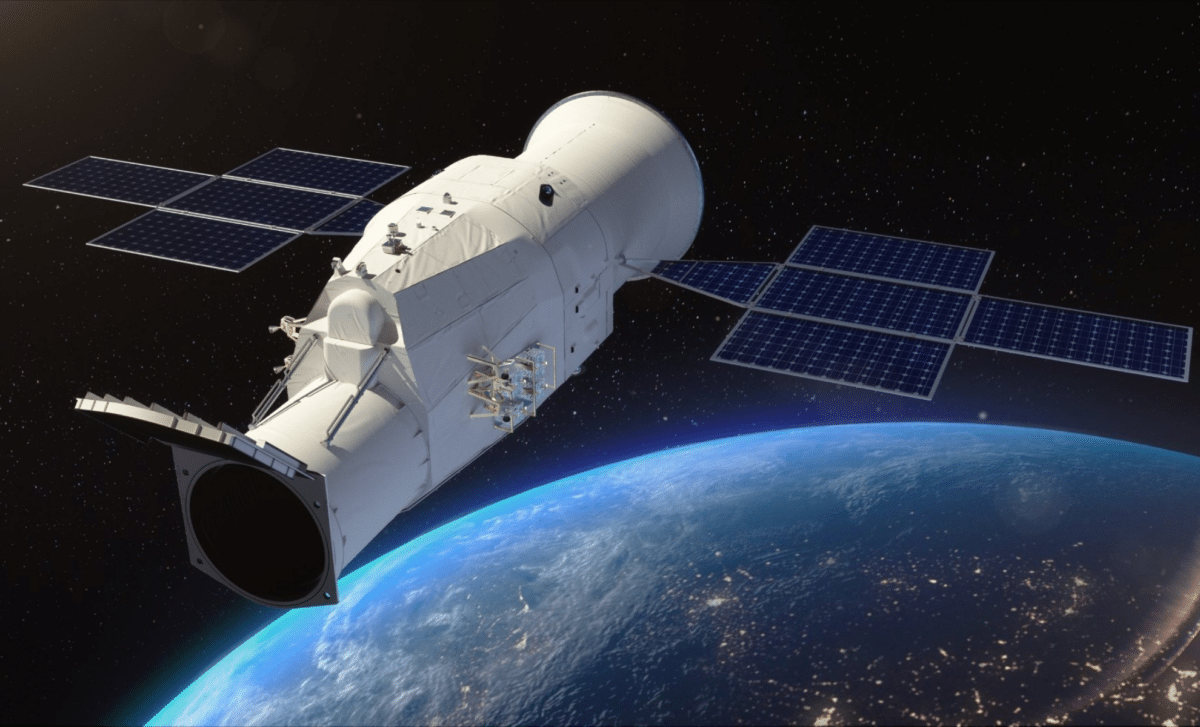
China has achieved a significant milestone in the development of its Chinese Space Station Telescope (CSST), also known as the Xuntian Space Telescope. The successful completion of a high-quality scientific data simulation marks a crucial step in preparing for the telescope’s future launch. This major achievement lays the foundation for what is expected to be one of China’s most prominent space astronomy projects, poised to deliver substantial contributions to the fields of astrophysics, cosmology, and beyond.
A Digital Rehearsal for the CSST
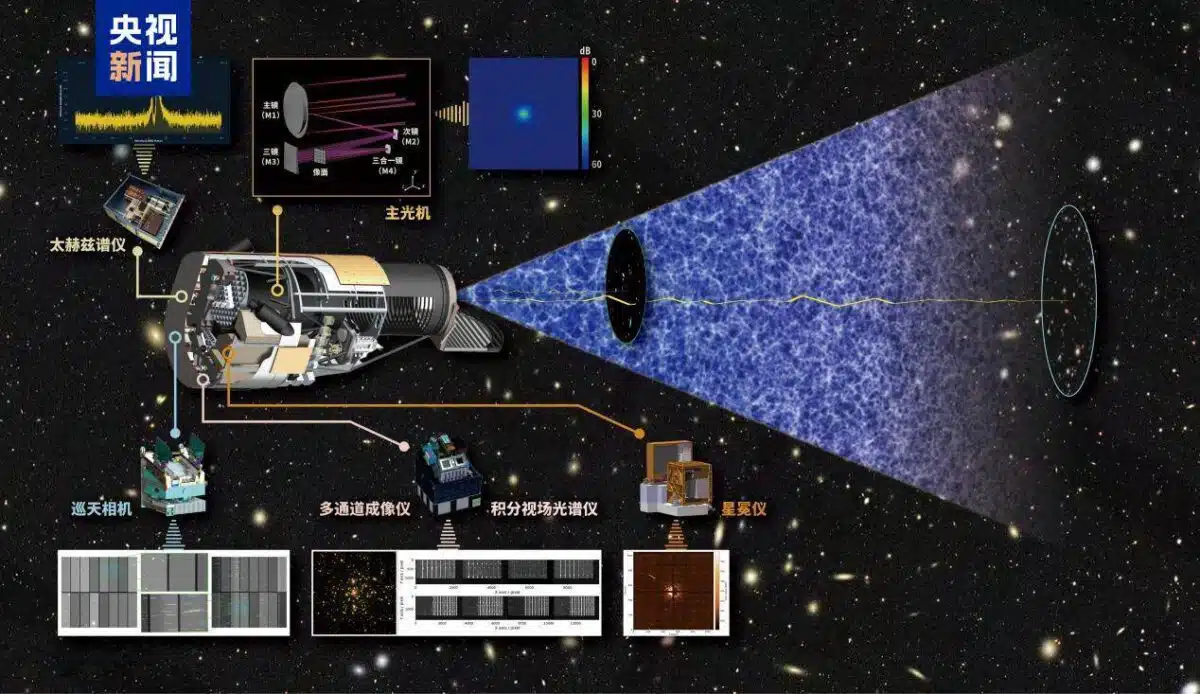
Before any space mission can take place, a crucial step in its preparation involves comprehensive testing and simulations, ensuring that all systems and instruments function as expected. For the CSST, China’s researchers have developed a comprehensive simulation suite for its main optical system and observation terminals. According to CGTN, this suite is designed to simulate the telescope’s scientific output with unprecedented accuracy, producing high-quality, pixel-level simulation of the observation data.
The importance of this simulation cannot be overstated.
“The work provides clear expectations for the CSST’s capabilities in the direct imaging of exoplanets, offering technical guarantees for scientific output in this frontier field,” said Ji Jianghui, a researcher at the Purple Mountain Observatory.
This simulation suite helps verify the telescope’s capabilities, ensuring that the data generated will be reliable and significant once the telescope is launched and operational in space. With this “digital rehearsal,” the CSST’s systems can be thoroughly tested and optimized, addressing potential issues before the mission even begins.
 The Chinese Space Station Telescope, also known as the Xuntian Space Telescope. /CMG
In essence, the simulation serves as a validation process for the telescope’s scientific goals, enhancing the understanding of its observation strategies. It is a critical step in ensuring that when the CSST begins its mission, it will be able to deliver high-resolution, large-area, and multi-color imaging of celestial bodies, which will help drive forward discoveries in fields like cosmology and fundamental physics.
Enhancing Scientific Discoveries Through Precision Imaging
One of the most exciting features of the CSST is its advanced optical systems, which will allow it to conduct detailed imaging of various astrophysical phenomena. Equipped with a 2-meter aperture primary mirror, the telescope will have a large field of view, ensuring that it can capture wide areas of the sky with great precision. It is designed to cover a broad range of wavelengths, making it an ideal tool for studying various objects in the universe.
The CSST’s large field of view and high-quality imaging will help scientists study galaxies, stars, planets, and even the Milky Way in greater detail. The data gathered by the telescope will be instrumental in exploring the universe’s most mysterious and far-reaching phenomena, including the study of exoplanets.
“This offers reliable data support for the development of data processing systems, scientific pre-research and post-launch scientific operations,” said Li Cheng, a professor at the Department of Astronomy at Tsinghua University.
With its ability to gather vast amounts of data, the CSST will be capable of performing large-scale, multi-color imaging surveys. These surveys will play a pivotal role in the study of the universe’s most distant objects, providing new insights into the structure and evolution of galaxies, stars, and planets. The telescope is expected to offer groundbreaking discoveries that could alter our understanding of the cosmos.
Ensuring Seamless Integration with the Chinese Space Station
The CSST is not a standalone project. It is an integral part of China’s space station, designed to operate independently in orbit while also having the ability to dock with the station for maintenance, supply, and upgrades. This seamless integration with the space station will allow the CSST to be a long-term asset for space-based scientific exploration.
The telescope will be able to conduct detailed observations of selected celestial bodies and capture high-resolution images of exoplanets, star systems, and galaxies. The CSST’s ability to perform detailed spectroscopic surveys will also enable scientists to gain deeper insights into the composition of these distant objects, offering a clearer picture of their physical properties and behaviors. As part of China’s broader space program, the CSST will not only serve as a tool for fundamental research but will also provide an invaluable resource for future space missions and collaborations.