Stay informed with free updates
Simply sign up to the Retail & Consumer industry myFT Digest — delivered directly to your inbox.
Had Labour MPs been tempted to defy dry January and enjoy a pint or two in pubs in their constituencies, the chancellor’s latest Budget U-turn may not have come as a surprise.
For the past six weeks, pub landlords have been railing against changes to business rates relief in England, claiming that higher costs from April will force many establishments to call last orders for the final time. More than 1,000 local boozers put up signs banning Labour MPs from entering, uniting rival parties in a pile-on to “save the pub”.
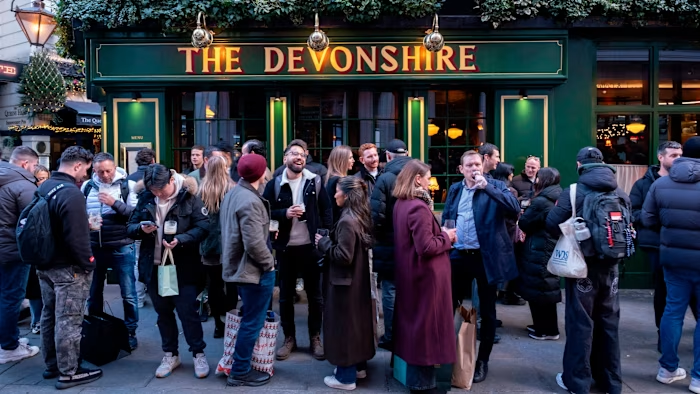
Great British pubs, they have variously claimed, are the beating heart of our communities; an irreplaceable cultural institution and sacred “third space” where people can eat, drink and be merry (assuming they can still afford to get a round in) away from work and home. As the protest reached sixth-pint levels of hyperbole this week, the Treasury folded, promising yet-to-be-announced tax concessions. But this will not be the end of a battle that signifies Labour’s pitiful understanding of British businesses.
The British Institute of Innkeeping claims that only one in three of its members was trading profitably even before the November Budget, due to significantly increased employment costs already announced. But just one in 10 pubs said they would be able to turn a profit after April’s rise in their rates bills and yet more increases to the minimum wage. Many have already cut jobs and reduced trading hours to stay afloat, leading the institute to predict “significant closures in every community”.
Pub landlords I spoke to this week tended to quantify the size of coming rates increases in terms of how many staff roles they would have to cut — and recent changes mean younger team members are the most at risk. Why hire someone with no experience who requires supervision when you could spend around £2 more per hour for an experienced worker?
The Licensed Trade Charity, which supports pub staff, reports a significant shift in people under 25 seeking help after losing their jobs. As more pubs abandon lunchtime trading and open at 4pm, working parents who had structured an 11am to 3pm shift around the school run have also lost out.
Adam Brooks, who owns and runs the Three Colts in Buckhurst Hill, Essex, won’t be removing the “No Labour MPs” sign on his pub’s door until the extent of the rates climbdown is known. “The pub industry is on its knees,” he says. “Many are still repaying Covid loans, myself included, and had any cash reserves wiped out by the energy crisis. The national insurance hike means we make as little as 15p on a pint, but are being taxed into oblivion.”
Passing higher costs on to customers is challenging. There’s no end of people queueing up to defend the pub, but ask them why they don’t visit their local more often, and they’ll say it’s too expensive. You’d be lucky to buy two drinks in a London pub for much less than £20.
The next problem ministers face is limiting any rates U-turn to pubs when the same pressures are being felt by other hospitality businesses, as well as music venues and high street retailers. Take a step further back, and while online operators channel a bigger share of consumption, our ratings system is still incapable of fairly taxing the digital economy, something that successive governments have failed to address.
It’s true that some pubs face a particularly steep jump from previous rating valuations in the middle of the pandemic, which were depressed by lockdowns causing trade to cease. The FT reported this week that smaller pubs face comparatively bigger rises than large pub companies such as Mitchells & Butlers and Greene King as lower multipliers are applied to properties valued above £500,000. Will promised concessions favour smaller operators?
I strongly suspect the passion of both politicians and punters when it comes to saving the pub applies less to the private equity owned chains and more to the humble local — pubs in rural areas arguably provide the most community benefits alongside a pint. The Pub is the Hub, a non-profit organisation set up 24 years ago by King Charles, has helped many stay open by adding shops, Post Office counters and other services to boost trade.
“Dry villages” mourning the loss of their pubs also know how badly closures can affect house prices. But pubs are businesses, not charities. And as tempting as it is, we can’t blame all of the trade’s woes on the government. If you really want to save the pub, then I urge you to pay a visit to one that deserves your custom instead of splurging on the latest supermarket wine or beer deal. So long as you’re not a Labour MP, you will be assured of a warm welcome.
Claer Barrett is the FT’s consumer editor; claer.barrett@ft.com; Instagram @Claerb