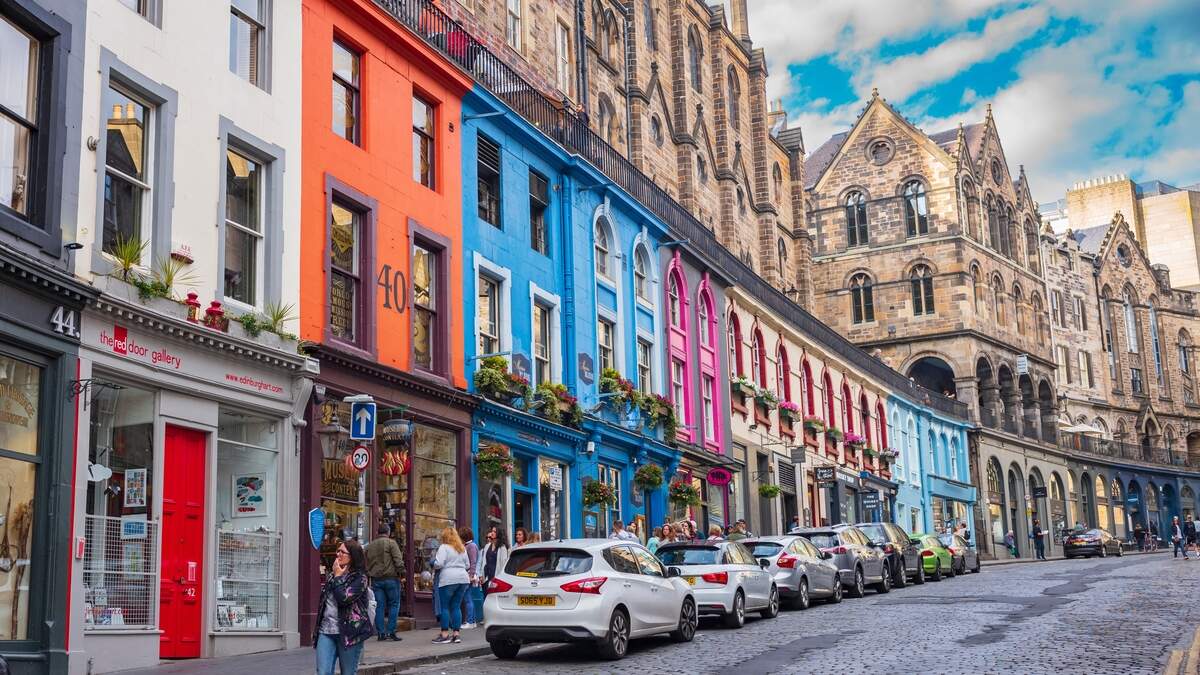
Later this year, holidaymakers will be able to jet off to nine new destinations directly from Luxembourg airport.
To make holiday planning easier, we have asked Luxembourg residents who are originally from those destinations to share tips and local knowledge.
First up is Edinburgh, the capital of Scotland, known for its castle, quaint cobbled streets, cultural scene, whisky, bagpipes and an all-round friendly vibe. And, of course, it’s where J.K. Rowling wrote the Harry Potter books.
Edinburgh is full of charm with plenty of cafés, bookshops and independent shops. Many of the museums and galleries are free of charge and there are also several nearby golf courses.
Gilly Mathieson, a mother of four who moved to Luxembourg in 2012, shares her best advice on where to stay, what to do and the must-try local delicacies of her home city. A former BBC journalist, Mathieson worked for more than a decade as communications manager at Luxembourg for Finance, and while living with stage four cancer for over six years, she is now focusing on building a new career in health communications, with a particular interest in cancer research, advocacy and public engagement.
In which areas would you recommend staying?
The New Town is always a wonderful base, with its elegant Georgian architecture and calm but central atmosphere. Gleneagles Townhouse, on St Andrew Square, is a beautiful option, stylish, relaxed and full of character. Nearby, The Scotsman Hotel, set in the former Scotsman newspaper building, has a wonderful sense of history, a spa and even a private cinema. I once hosted a charity screening there for a BBC documentary, and the hotel was incredibly generous and supportive. You can still feel the spirit of journalism in the building.
At the bottom of the Mound sits The Balmoral, a true Edinburgh icon with a beautiful spa and a reputation as a discreet celebrity favourite. Just outside the city centre, Prestonfield House offers theatrical luxury in a dramatic setting beside Arthur’s Seat.
There are plenty of independent shops and coffee bars dotted around © Photo credit: Shutterstock
I also love the area around the Meadows, Bruntsfield, Morningside and Merchiston, where we used to live. It’s a wonderful part of the city if you want to feel part of everyday local life, leafy, relaxed and very community-minded. You can walk easily through the Meadows into the city centre, passing cafés, bookshops and independent shops along the way.
Parts of this neighbourhood are sometimes affectionately known as “Writer’s Block”, because so many writers have lived or worked nearby. It’s not unusual to bump into authors such as Alexander McCall Smith, Ian Rankin or even J.K. Rowling in the area. When we lived there, they quite literally walked past our front door. It has a quietly literary, creative feel.
There are lovely Victorian flats, guesthouses and small hotels in Merchiston and Bruntsfield, often better value than staying right in the centre, and plenty of relaxed local restaurants in the evenings.
If you’re on a budget, Travelodge has several good central options. The Haymarket Travelodge is in a beautiful old Victorian building that used to be the city’s youth hostel and often offers very good-value family rooms. During summer, university accommodation such as Pollock Halls or Destiny Apartments can also be excellent value.
Which restaurants, cafés or bars would you recommend?
There are so many great places, depending on where you’re staying. In Bruntsfield and Merchiston, Montpeliers is a long-standing local favourite, relaxed, buzzy and reliable. That whole stretch into town has excellent options, from Nepalese and Thai restaurants to independent cafés.
For bakeries, you shouldn’t miss Lannan Bakery (often affectionately called Lannan Pantry). It’s famous for its exceptional pastries and coffee, and at weekends you’ll almost always find a queue down the street. It’s one of those places where you end up chatting to people while you wait, picking up tips about what’s going on in the city, a great way to get a feel for local life.
If you’re vegetarian or just want something light, the cafés in the national galleries are excellent, serving soups, salads, baked potatoes and very good scones.
Near the Castle, The Witchery is wonderfully theatrical and romantic, and also offers good-value set lunches. Close by, The Outsider is one of my go-to places. Ask for a window table for beautiful views of Edinburgh Castle. It has a great atmosphere and very good-value menus.
Just down the Royal Mile, Deacon Brodie’s Tavern is a reliable choice for a pub lunch or dinner, popular with journalists and locals, with good food and a wide range of Scottish beers and IPAs.
In Stockbridge, I’d strongly recommend Stockbridge Eating House, a much-loved neighbourhood restaurant.
For something quick and very Edinburgh, the baked potato shops on Cockburn Street or along the Royal Mile are great, with fillings like haggis or vegetarian haggis.
For drinks, the new listening bar at the Caledonian Hotel, inspired by Japanese listening bars, is a real highlight, vinyl playing, great cocktails and a relaxed, stylish atmosphere. Along George Street, Tigerlily is a long-time favourite, and the Harvey Nichols Forth Floor Bar is great for views and drinks.
One place I tend to avoid is Rose Street. It’s famous for pub crawls and can be fun if that’s what you’re after, but it’s not really my scene as I don’t drink alcohol!
Which local delicacies must people try before leaving?
You really can’t leave Scotland without trying a few classics. A good Scottish pie is essential, as is haggis, neeps and tatties.
Soups are a big part of Scottish food culture, especially Cullen skink (smoked haddock soup) and Scotch broth. In autumn, look out for venison, which is excellent in Scotland.
Seafood is another highlight: proper fish and chips, and when in season, scallops or langoustines. You might also come across Arbroath smokies, a traditional hot-smoked haddock.
For something sweet, try cranachan, tablet (a crumbly Scottish fudge), Empire biscuits and a good old vanilla slice. You also have to try Irn-Bru, the bright orange drink famously “made from girders”.
Scotland’s sweet treat, tablet or fudge © Photo credit: Shutterstock
You can even find Irn-Bru ice cream at Luca’s Ice Cream in Morningside, a real local institution that’s also very family-friendly, serving full Scottish breakfasts, macaroni cheese, fish and chips, and all the classics.
Scotland is also known for excellent single-malt whisky, local gins, and a growing number of craft breweries. And while not traditionally Scottish, Edinburgh has outstanding Indian, Nepalese and Himalayan restaurants, which are now a core part of the city’s food culture.
What would you suggest people do?
The first thing I always say is: walk, walk, walk. Edinburgh is made for walking, and you’ll naturally pass museums and galleries as you go, most of them free.
Start by walking from Edinburgh Castle down the Royal Mile to Holyrood Palace. From the Castle, walk down the Mound to the National Gallery of Scotland, which has a wonderful collection and a great café. From there, stroll through Princes Street Gardens, then head into New Town, browsing shops and galleries around Dundas Street.
Keep walking to Stockbridge, and on to the Royal Botanic Garden, which is free and beautiful in every season, with a lovely café. Nearby is the Scottish National Gallery of Modern Art, set in landscaped grounds my children used to call “Teletubbyland”, with a strong modern collection and a great café.
If you’re visiting with children, all the museums are worth exploring, especially Dynamic Earth, which is very engaging. Film lovers should look out for screenings at the Dominion or the Cameo. Theatre lovers are spoiled for choice with the Festival Theatre, the Lyceum and the Playhouse.
You can also visit the National Library of Scotland or wander around the University of Edinburgh’s historic buildings near the Meadows. Above all, just keep walking, Edinburgh rewards curiosity!
Remember that the weather changes constantly: sunshine, cloud and rain can all appear in one day, so bring a jacket or umbrella. That shifting light is part of what makes the city so beautiful.
Are there any neighbouring regions you would recommend visiting?
There are many wonderful places close to Edinburgh, but I have a personal soft spot for the East Neuk of Fife, as my parents live just outside St Andrews, so I always encourage people to go there if they can. There’s also a really easy direct bus from Edinburgh Airport to St Andrews every two hours, and it costs around £12, which makes it surprisingly simple and affordable.
St Andrews itself is a beautiful university town with beaches, coastal walks and rich history. The surrounding villages are full of fantastic links golf courses, including Kingsbarns, Elie and Crail. One I particularly recommend is Crail Golfing Society, founded in 1786 and recognised as one of the oldest golf clubs in the world. It has two beautiful coastal courses and sits beside a historic fishing village. It is a non-profit, membership-run society, and despite welcoming players from all over the world and flying the flags of visiting players’ nationalities, we’ve never seen a Luxembourg flag raised. Despite its heritage, it’s very welcoming and surprisingly affordable, with a strong junior section. My twins were members there until my son died. He was so very proud to be a junior member.
St Andrews and the stunning coastline © Photo credit: Shutterstock
Both Crail and St Andrews have excellent practice facilities and driving ranges, with friendly professionals who are happy to teach beginners.
Beyond golf, the East Neuk of Fife is wonderful for walking and exploring. There’s a stunning coastal path linking St Andrews, Crail, Anstruther and Pittenweem, with harbours, beaches and cafés along the way.
From St Andrews, it’s also easy to visit Dundee, home to the V&A Dundee, and a city known for its history of “jute, jam and journalism”.
If you want to explore further without driving, companies such as Rabbie’s Tours or Haggis Adventures offer excellent three- to five-day trips to the Highlands, the Trossachs, Perthshire and the islands. They’re well organised, good value and a great way to see Scotland’s landscapes.
If I had to recommend just one nearby region to add to an Edinburgh visit, it would be St Andrews and the East Neuk of Fife, welcoming, historic, beautiful and full of character.
When is the best time of year to visit?
Any time you can come is a good time to visit Scotland. The weather is famously changeable. Sunshine, rain and cloud can all appear in one day, but that’s part of its charm.
That said, May to September usually offers the best weather. August is extremely busy in Edinburgh because of the Fringe Festival, and accommodation prices rise sharply, so you need to book well in advance. If you visit in August, it can be a good idea to stay outside the city and travel in by train.
Outside Edinburgh, August can actually be quieter, as Scottish school holidays are mainly in July. September is often ideal: the weather can still be lovely, crowds thin out and prices drop.
One final tip if you’re travelling on a budget: check the website Itison for voucher deals on meals, afternoon teas and activities across Scotland. It’s something I’ve used for years.
And if anyone ever wants more advice, they’re very welcome to reach out to me on LinkedIn.
Luxembourg is home now, but Scotland is where my children were born and where I spent most of my life. It’s a country with a strong sense of community, where people look out for one another and make you feel truly welcome.