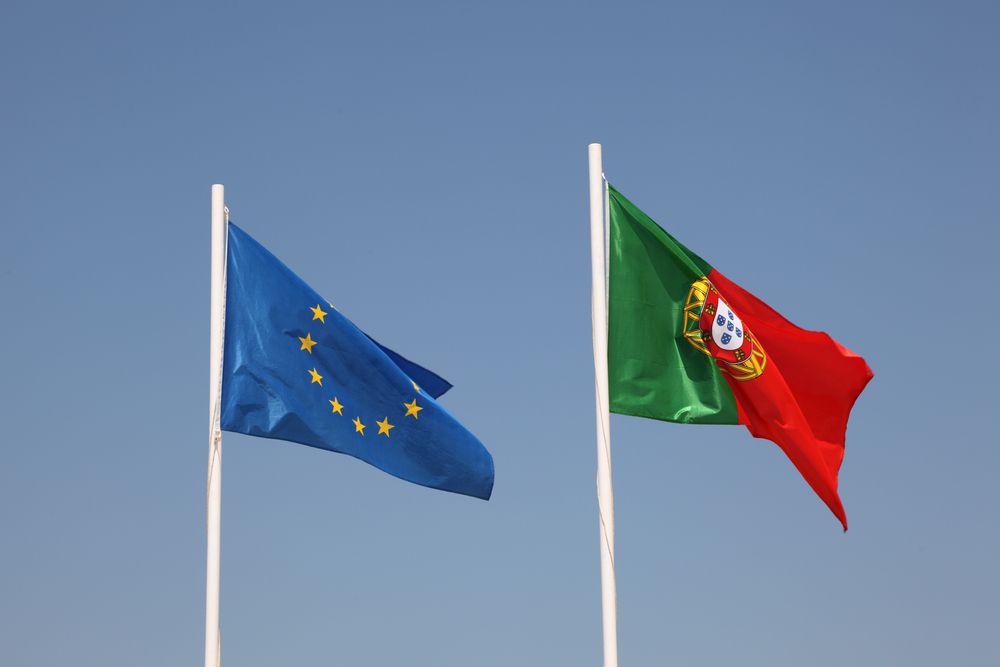
The country’s accession was then followed by a prosperous chapter of modernising the Portuguese economy, building infrastructure and improving overall health, education, and living standards.
As Prime Minister Luís Montenegro said, when he spoke in June at the ceremony in Lisbon celebrating the 40 years since Portugal signed the Treaty to Join the European Communities, “Portugal has had one of the most remarkable development trajectories in contemporary Europe. A path that can be measured through the effective improvement in quality of life, the opportunities created, the horizons broadened.”
Through these past four decades, the European Commission has noted Portugal as a key player in strengthening Europe’s global reach. The Commission especially highlights Portugal’s work with the Lisbon Treaty and the country’s unique partnerships with Africa and Latin America.
The founding principles of the EU
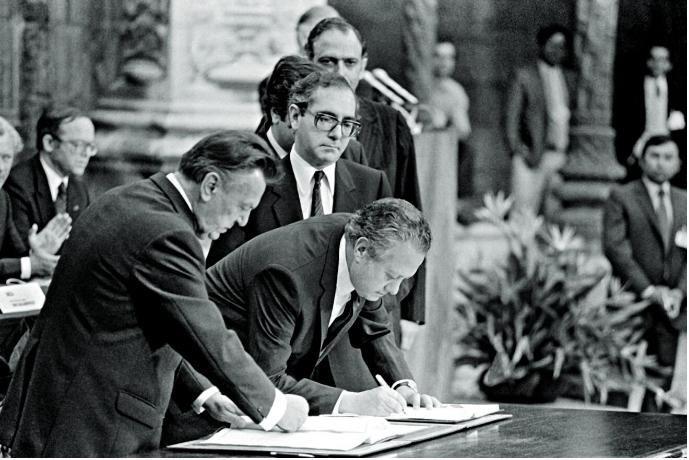 Credits: Lusa; Author: Alfredo Cunha;
Free mobility and free trade are often seen as the principles most associated with the benefits of being a member of the European Union. Every EU citizen has the freedom to live, study, work or retire anywhere in any of the 27 member states. According to EU programme data, more than 55,000 Portuguese students have attended universities across the EU between 2021 and 2024 through the EU-funded Erasmus+ exchange programme.
Cited as one of the union’s key achievements, the EU is the largest trade bloc in the world. It is the world’s biggest exporter of manufactured goods and services, and the biggest import market for over 100 countries. Being a member of the EU has deepened Portugal’s trade links worldwide. Global goods exports grew from €2.8 billion in 1986 (7.3% of GDP) to €21.6 billion in 2024 (7.6% of GDP).
Solidarity in times of crisis
When time suddenly stands still in the event of a natural disaster or national emergency, the Civil Protection Mechanism is activated, calling on all EU countries to assist the country in need. The aid delivered can vary from medical supplies and shelter items to specialised teams such as firefighters or search and rescue teams.
Portugal has worked closely with other EU countries to mobilise emergency relief through the Civil Protection Mechanism since its establishment in 2001. And since 2016, Portugal has activated the mechanism 14 times itself, particularly during recent forest fire seasons. In September 2024, several EU countries sent a total of 11 firefighting planes to assist Portugal during the national wildfire emergency.
Portugal’s EU-funded national plan
Portugal’s Recovery and Resilience Plan is a national programme financed under the EU’s NextGenerationEU framework. It supports recovery from the COVID-19 crisis and strengthens economic and social resilience. The total value of Portugal’s plan is about €22.2 billion in EU support, including roughly €16.3 billion in RRF grants and about €5.9 billion in RRF loans. Portugal’s plan is backed by the EU borrowing and disbursing the funds, with money paid out to Lisbon as milestones and targets are met.
Joining the EU forty years ago might have been a “strategic wager to speed up economic development and consolidate our democracy”, as Prime Minister Luís Montenegro has said, “yet also the confirmation of Portugal as an integral part of a democratic, developed, and solidary Europe.”