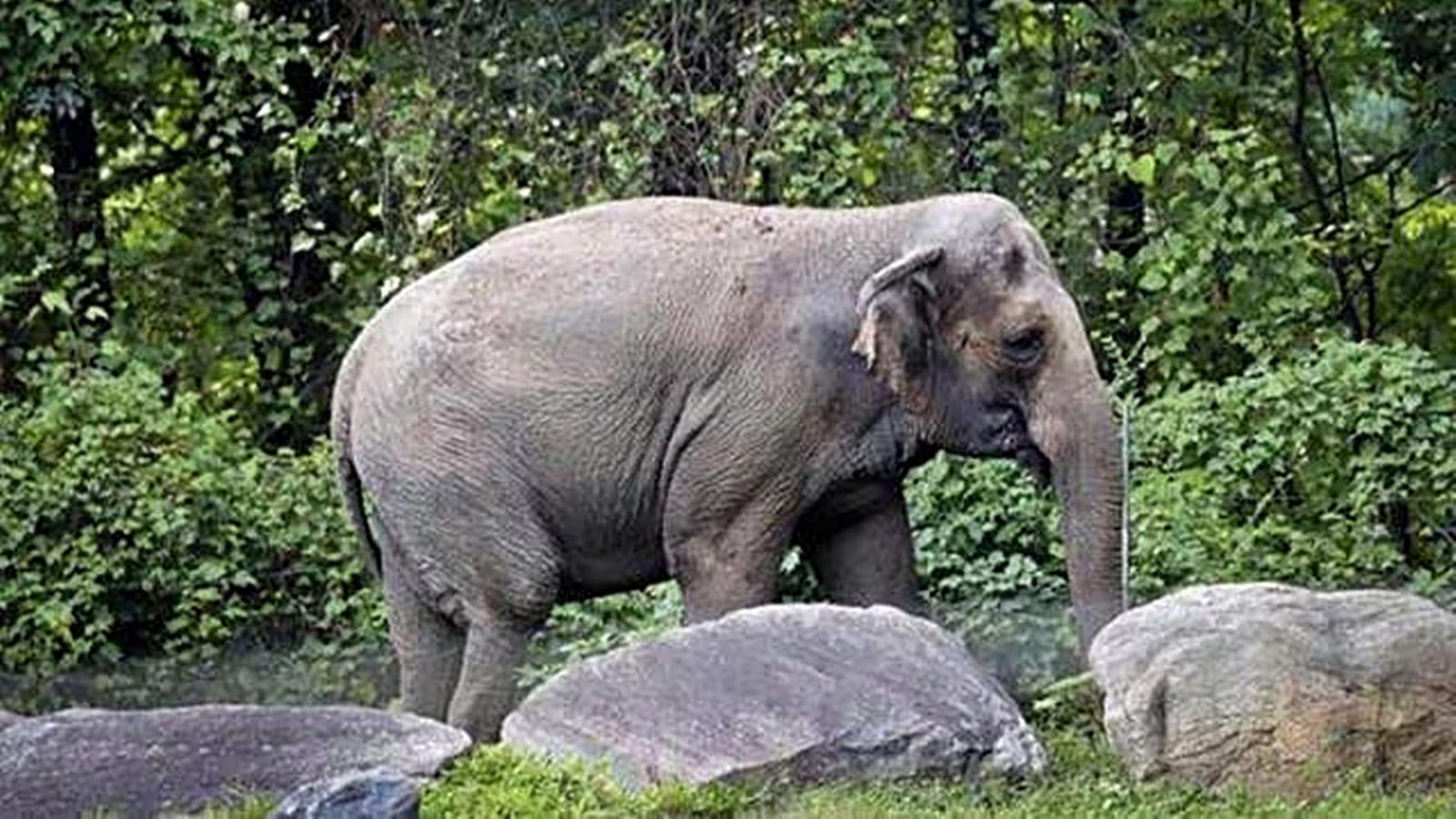
We knew Craig was in the area. Sana, our guide at the Amboseli National Park, had told us that the superstar African pachyderm had been lingering near our camp for over a week. It was November 2017, and we were in Kenya for just ten days — a narrow window in which wildlife encounters can feel both accidental and destined.
November marks the beginning of the rains in Amboseli, when the plains turn lush and green almost overnight. There are usually fewer travellers during this season. For us, though — Malayalis shaped by monsoon rhythms—the rain felt familiar rather than inconvenient, making the Kenyan landscape in November feel not just beautiful, but deeply welcoming.

As I was sipping my favourite blackcurrant-flavoured Kenyan coffee around 7 a.m., Sana came running toward me, hugged me, and said with barely contained excitement, “Craig is about ten kilometres west of our resort. We’ll see him by noon.” It was our third day of waiting for the mighty tusker.
When the news came that Craig had passed away at the age of 54, two hours before sunrise on January 3, it landed with a deeply personal weight — the quiet shock of losing someone dear to the family, unexpectedly. Even now, my eyes well up as I remember the sight of him walking toward our jeep, slow and majestic, his presence commanding without effort. The last of the great African super tuskers was already slipping into history, even as that memory remains vivid.
Amboseli National Park is rich with wildlife — lions, cheetahs, zebras, crocodiles, wildebeests, giraffes, vast herds of elephants and varieties of birds — but there was one presence that mattered more to us than all the rest: Craig, the world-famous super tusker.
Sana handed me a beer bottle bearing Craig’s image and said, “Craig is not just an elephant. He is a living testament to our fight against poaching. There is no other elephant alive on Earth with tusks as large as his.” In Amboseli, where sustained anti-poaching efforts have helped protect some of Africa’s largest elephants, Craig became a symbol of what that vigilance made possible.
After breakfast, we set off into the forest in the jeep. The driver, perpetually dancing with joy; Sana, gently restraining his excesses like an elder brother; and then my wife, Reena, and I. It was raining.
Sana’s phone rang, and he spoke quickly in a language we didn’t understand. After a few sentences, he hung up. Suddenly, he told the driver to change course. When she asked why, he said, “A friend’s jeep broke down and needs repairs.”
Anxiety rippled through us. How much time would this detour cost — and would we still see Craig?
Kilimanjaro loomed in the distance, its peak a silent sentinel. Our jeep crossed streams flowing from its slopes, while hundreds of zebras and wildebeests grazed nearby. Giraffes stretched their necks, reaching for leaves of the heavens. Ten to fifteen jeeps of visitors were gathered nearby, watching a cheetah resting in the shade with her four cubs. Our driver didn’t slow down. Half an hour later, a knowing smile played across his lips as he pointed to the left. There, standing alone in the distance, was Craig — majestic and commanding, with one of his world-famous tusks brushing the ground like a silent testament to his immense presence. His calm demeanour was as renowned as his size, as if guided by an innate sense that he must remain composed in front of humans — for the survival of African elephants. Sana told us, “I was joking, no jeep was to be repaired, he spotted Craig and informed me.”
Sana instructed the driver to move closer. We were now within two hundred meters of Craig. He stood there, his enormous ears fanning outward, as if soothing the entire world with their calm presence. Sana said, “There were many attempts to hunt Craig, but he survived thanks to the vigilance of honest watchers in the National Park. One of his tusks alone weighs about fifty kilograms.” Perhaps the most photographed African elephant in the world was peacefully grazing in front of us. What an unforgettable moment it was!
Kenyan forest officials say Craig was born in 1972 to the great matriarch Cassandra of the CB family. He passed away peacefully, as he had lived — gentle, calm, and fully in command of his world. Having lived as long as an African elephant can in the wild, he left behind countless descendants, ensuring his legacy continues in the herds of Amboseli and beyond.
I am from Kerala, where about nine hundred domesticated Asiatic tuskers live in chains. They are never allowed to mate, sentenced to perpetual celibacy. Thinking of their life-long miseries makes me realise how lucky Craig was — to live a full life, free in the wild, unaware of just how much the world loved him. Farewell to the great elephant.
Gopalakrishnan is a writer, broadcaster, and founder of the podcast, Dilli Dali