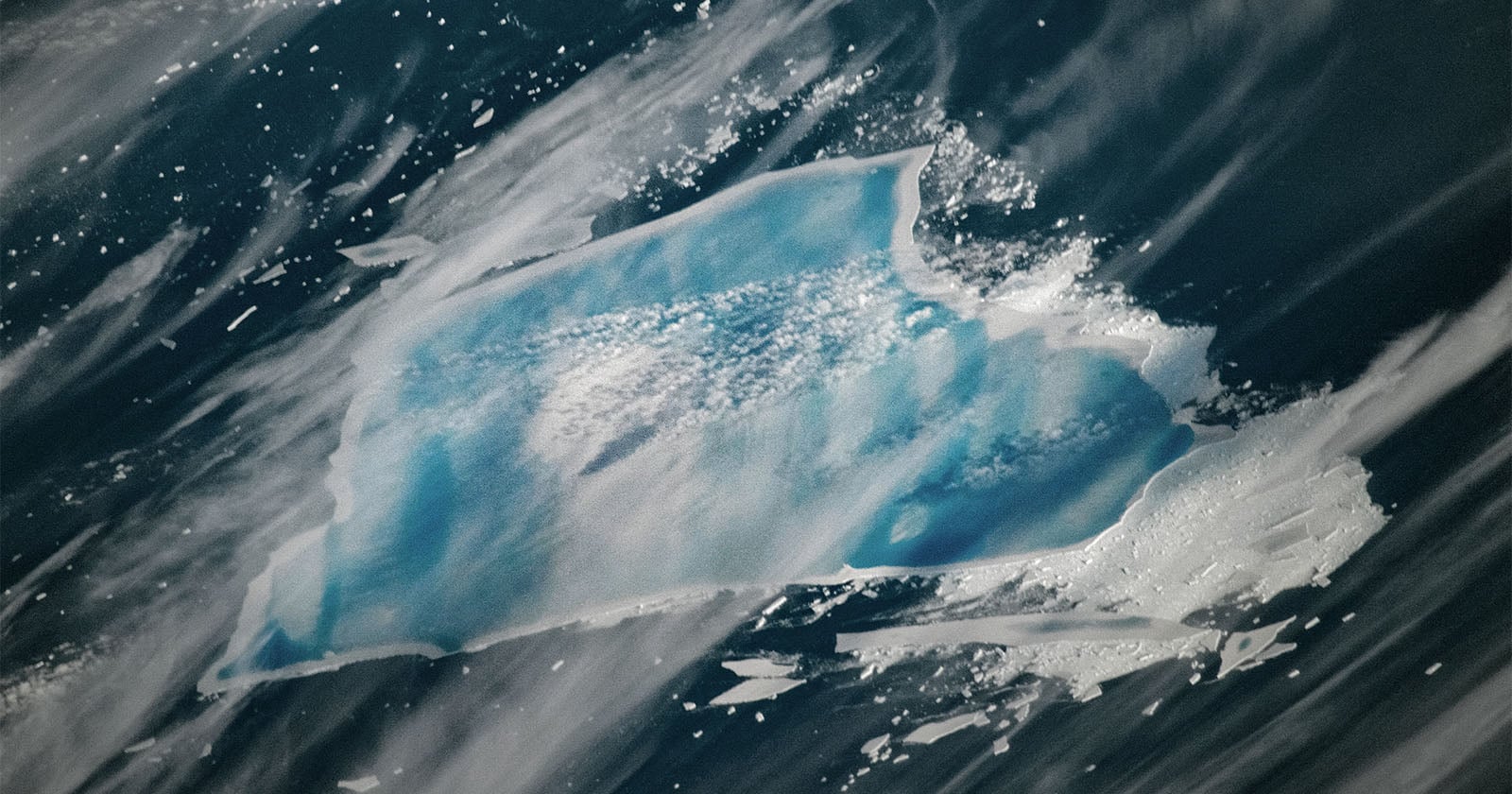
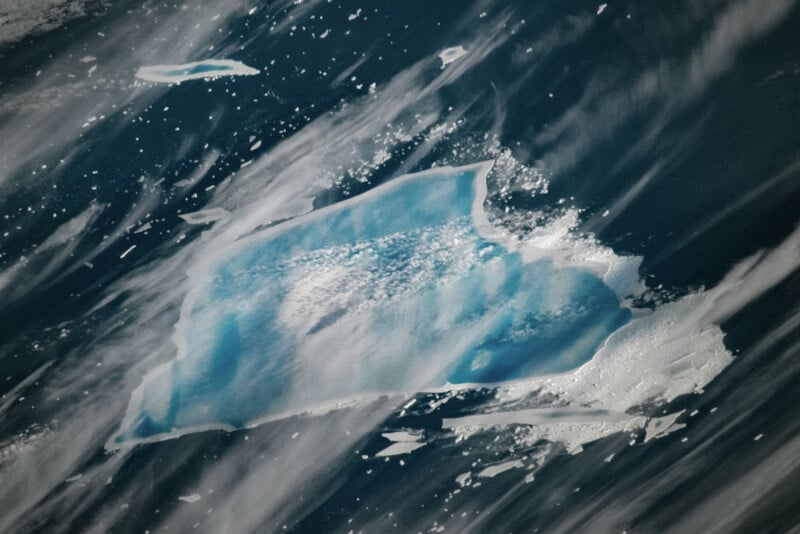
 A NASA astronaut about the International Space Station captured this photograph of iceberg A-23A on December 27, 2025.
New photos of one of the world’s largest icebergs show it has turned bright blue, which, despite its beauty, is not good news for the once-great “megaberg.”
Iceberg A-23A splintered off from Antarctica’s Filchner Ice Shelf way back in 1986, NASA explains. At the time, the iceberg was about 4,000 square kilometers, over twice the size of Rhode Island. Now, estimates put its size at 1,182 square kilometers. Recent photos of it, captured from space by NASA satellites and an astronaut aboard the ISS, have alarmed scientists. The iceberg is now a vibrant blue, a sign of impending disintegration.
When the Moderate Resolution Imaging Spectroradiometer (MODIS) aboard NASA’s Terra satellite captured an image of iceberg A-23A on December 26, 2025, scientists noted its bright blue surface, indicating pools of blue meltwater, which signals ongoing disintegration of the iceberg as it moved into relatively warm conditions in the southern hemisphere — after all, it is summer there now.
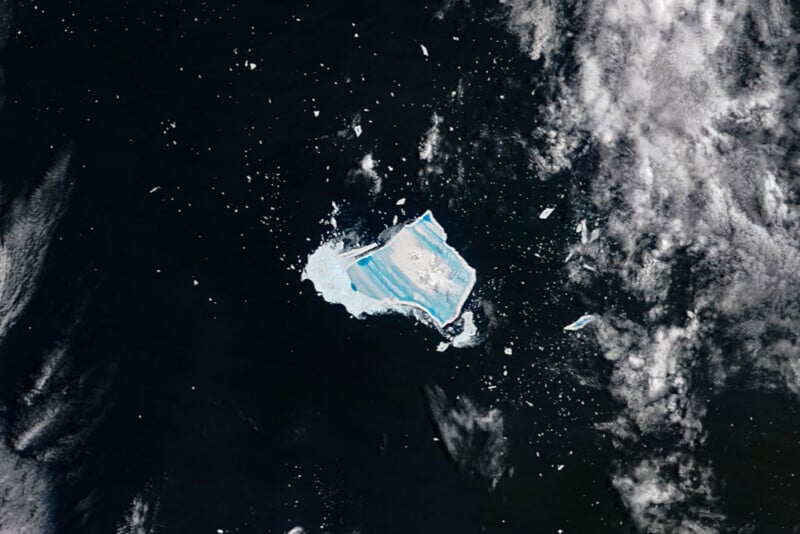 NASA’s MODIS camera aboard the Terra satellite shot this image of iceberg A-23A on December 26, 2025.
The following day, an unnamed NASA astronaut aboard the International Space Station pointed their camera down toward Earth and captured a portrait of iceberg A23-A in what is likely its final weeks of existence.
The new images also showed evidence that the iceberg had “sprung a leak,” as NASA put it.
“The white area to its left may be the result of what Shuman described as a ‘blowout.’ The weight of the water pooling at the top of the towering iceberg would have created enough pressure at the edges to punch through. The blowout may have allowed meltwater to spill tens of meters down to the ocean surface in what researchers call a ‘freshwater discharge plume,’ where it mixed with the mélange of ice bits floating next to the iceberg,” NASA explains.
These signs indicate that iceberg A-23A, which has been floating in the ocean since Ronald Reagan was in the White House, is just “days or weeks” away from complete disintegration.
“I certainly don’t expect A-23A to last through the austral summer,” says retired University of Maryland Baltimore County scientist Chris Shuman.
This once-great “megaberg” has had quite the journey over the past four decades, and has helped scientists learn much about icebergs.
“A-23A faces the same fate as other Antarctic bergs, but its path has been remarkably long and eventful. It’s hard to believe it won’t be with us much longer,” Shuman added.
Image credits: NASA