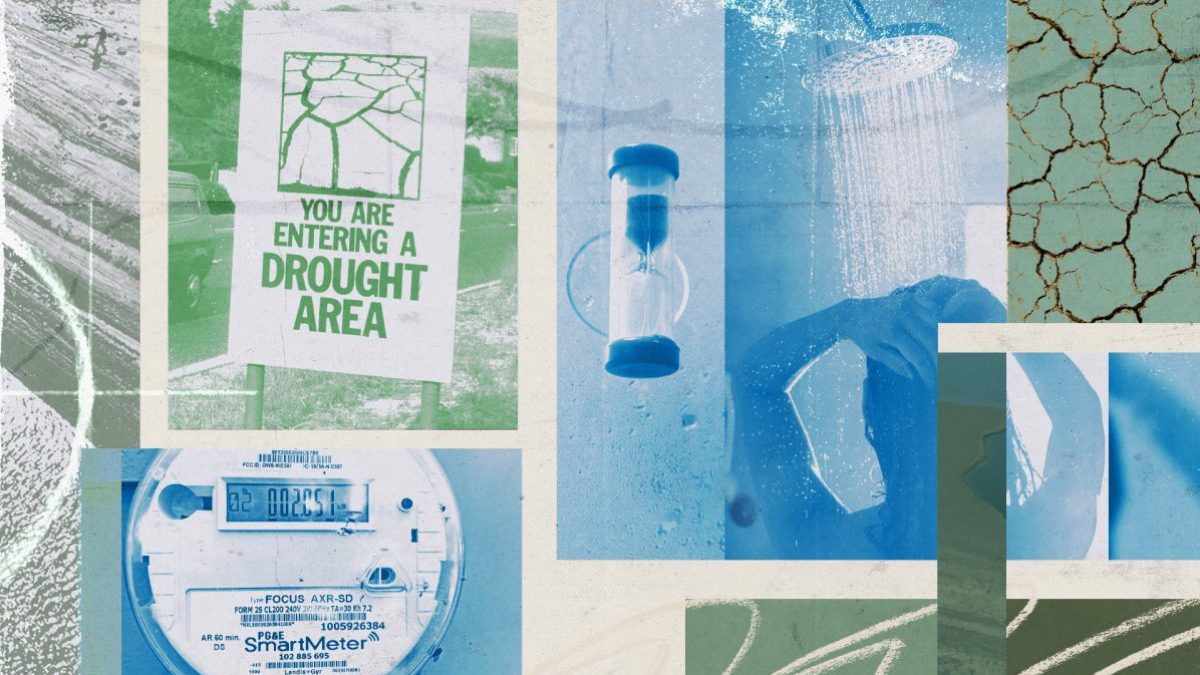
Ofwat will launch a £75m national education campaign on water use this summer, with the hope it can have the same impact as bids to reduce drink-driving or smoking
Timed showers and seasonal water tariffs are among the measures being trialled to avoid England running out of water in the next 25 years.
Climate change, population growth and poor planning around infrastructure such as reservoirs have put the country’s water supplies under unprecedented pressure, experts have warned.
Planning to reduce the country’s water consumption in the long term is now ramping up, with some water companies trialling “seasonal tariffs” where customers are charged more in the drier months, while academics are testing measures which could encourage people to take shorter showers.
This summer, the regulator Ofwat will also launch a £75m national campaign to educate the public on water use, with the hope it can have the same impact as previous behavioural campaigns to reduce drink-driving or smoking.
How close is England to running out of water?
Drought was declared across the majority of England and parts of Wales in 2024, leading to hose-pipe bans, restrictions on farmers and environmental impacts.
Wet weather over winter has helped in most regions, but parts of South East England remain in drought, with some reservoirs below 60 per cent full.
What happens next depends on the weather over the coming months; a wet start to the year could bring reservoir and groundwater levels back to normal, but more dry weather could see areas facing restrictions again.
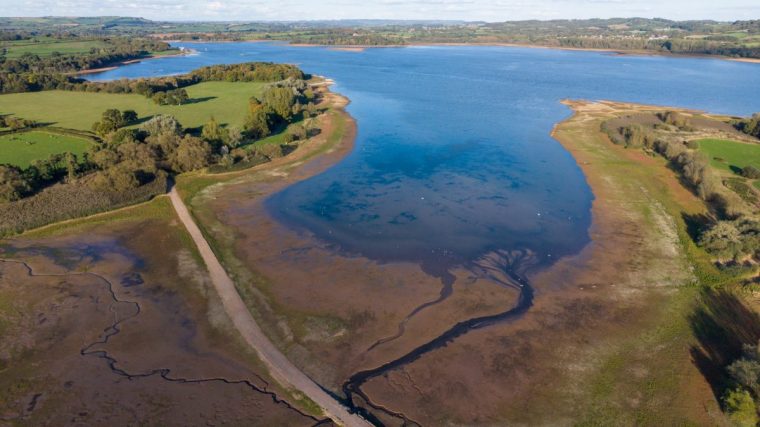 Low water levels at Chew Valley lake reservoir near Bristol, as many areas of England were placed under drought conditions (Source: Getty)
The prospect of a two-year drought has drawn comparisons to the summer of 1976, when prolonged dry weather resulted in thousands of homes in Yorkshire and East Anglia having their water supply replaced with communal taps, known as standpipes, in the street.
Experts stress the UK is still a long way from this scenario and is more prepared for drought than it was in the 70s. However, officials fear risks of severe water shortages remain if nothing is done to curb our water use.
Jim Hall, professor of climate and environmental risks at the University of Oxford, said there is currently a roughly one per cent chance of such water shortages occurring in a given year in England. This means water companies are currently prepared for a worst case scenario of a one in 100-year drought.
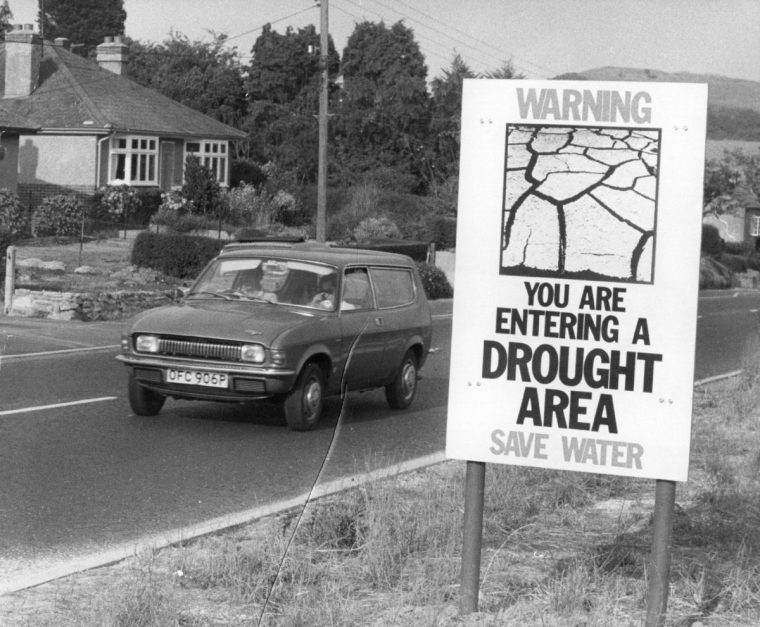 A public information notice warning about the 1976 drought in the Bridport, Dorset (Source: Getty)
However, with climate change bringing more extreme weather, including drought, to the UK, water companies are being asked to step up their preparedness. The Environment Agency (EA) has set the industry a target to become resilient to a one in 500-year drought by 2040.
“We’re talking about planning for something that’s pretty rare, but that’s what governments should be worried about, because the consequences will be so great,” Hall said.
Boosting England’s water supply
The EA has predicted that England faces a shortfall of nearly 5 billion litres of water per day by 2050, which is over a third of the amount of water currently consumed by the public.
A three-pronged approach is currently underway to address this problem.
Firstly, water companies must address leakages in their pipe networks. Roughly a fifth of the UK’s water supply is currently being lost to leakages and firms have been set a target to half leakages by 2050.
Secondly, companies are investing in infrastructure projects to boost England’s water supply.
This includes nine new reservoirs that are due to be built by 2050. They will be the first major reservoirs to be built in England since 1992, shortly after when water companies were first privatised.
How to make England use less water
However, these water industry investments are expected to meet only half of the 5 billion litre deficit by 2050. The rest of the shortfall must be met by reducing the amount of water England uses.
Compared to the rest of Europe, England uses a lot of water. The average person in England uses around 150 litres of tap water per day, while countries like Germany, France and Spain use closer to 130 litres.
Reducing household water use is therefore a crucial part of the puzzle in ensuring England has enough water to meet its needs.
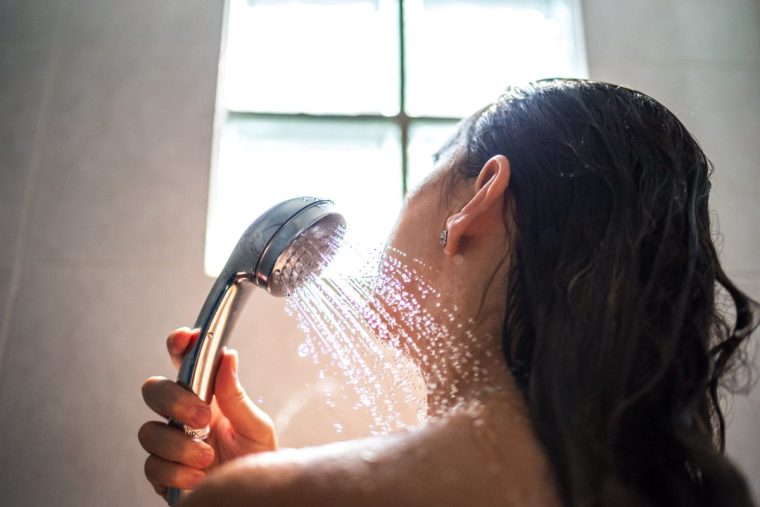 Trials are examining how people could be encouraged to take shorter showers (Source: Getty)
But encouraging people to change their habits isn’t easy.
“People have got so much on their mind, expecting them to pay constant attention to water as well is quite a lot to ask,” Hall said.
Academics, industry and policymakers are trying to solve the question of how to make English people start caring about their water usage.
It is understood Ofwat’s £75m “water efficiency campaign” will take inspiration from the energy sector, which is seen to have successfully changed Britain’s relationship with energy consumption through innovations such as smart metering and demand-based tariffs.
Water companies, including Anglian Water and South West Water, have been trialling the idea of a “seasonal tariff” that would see customers charged more for using water in the summer months to educate people on the need for conservation.
A project is currently underway at the University of Sussex to test the most effective psychological approaches to encourage people to use less water.
Professor Benjamin Gardner, co-lead for the project, said they have seen interesting results from putting timers in people’s showers to “pay attention to a behaviour that they do on autopilot”.
Gardner emphasises that behavioural change must be accompanied by technological innovation.
“I think the solution is going to be how can we a tap into voluntary behavior change mechanisms…but also how can we change the structures in the environment, and the products that people use, the appliances that people use, so that they can actually do what they do day to day in the same way, but using less water,” he said.
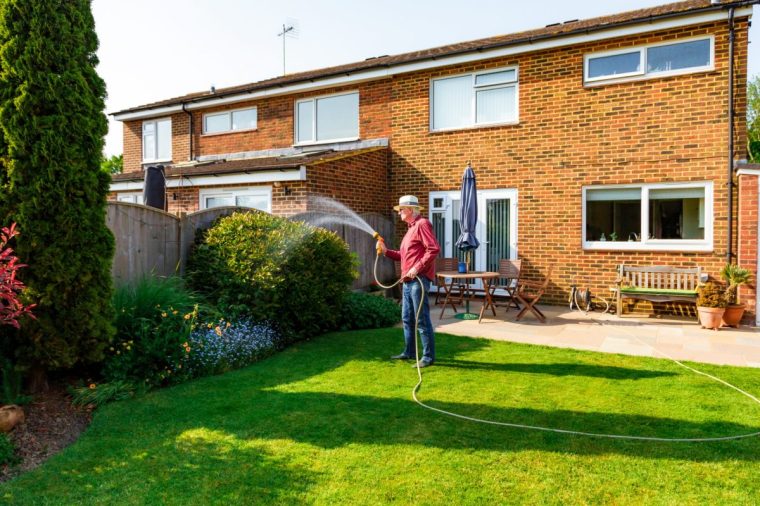 Water firms are trialling “seasonal tariffs” in a bid to conserve water during summer (Source: Getty)
Water-efficient dishwashers, washing machines and showerheads are already making their way into our homes, but industry is working to push this further.
An industry coalition called the 50L Home, with members including Proctor & Gamble and Ikea, has recently launched in the UK, having first trialled its concept in Los Angeles.
Frantz Beznik, global head of sustainable innovation at Proctor & Gamble, said they have so far managed to get daily water usage down to 87 litres per person through innovations that include a spray that washes your dishes without needing to run the tap.
He said he believes they can get this number down to at least 70 litres per person in the UK by introducing some other technologies such as those that reuse so-called “grey water” from showers and washing machines into activities that don’t need drinking-grade water, such as flushing toilets.
The race is on
While the innovations are there to reduce England’s water usage, questions remain over whether they will be rolled out in time to save the country from a future of shortages.
Water companies are already reporting challenges in meeting their targets for building reservoirs, with Thames Water reporting that its new reservoir in Oxfordshire could cost billpayers up to £7.5bn, three times the original budget.
Some are also sceptical about the impact of behavioural change campaigns on the public. Individual campaigns run by water companies have previously done little to shift the dial on consumption habits.
“It’s going to be hard to get the scale of reduction which is being put out there by the Environment Agency. If you look at the trajectory, per capita usage is going down, but not at the rate of what is required,” Hall said.
We may still be a long way from the taps running dry in Britain, but water shortages are already starting to bite.
Your next read

Essex & Suffolk Water has been forced to introduce a moratorium on water connections for businesses in the Hartismere area until 2033, which has impacted several breweries.
Housing applications have been rejected in Cambridgeshire due to concerns over the local water supply.
More restrictions like this are likely in the future unless Britain learns to live with less water.