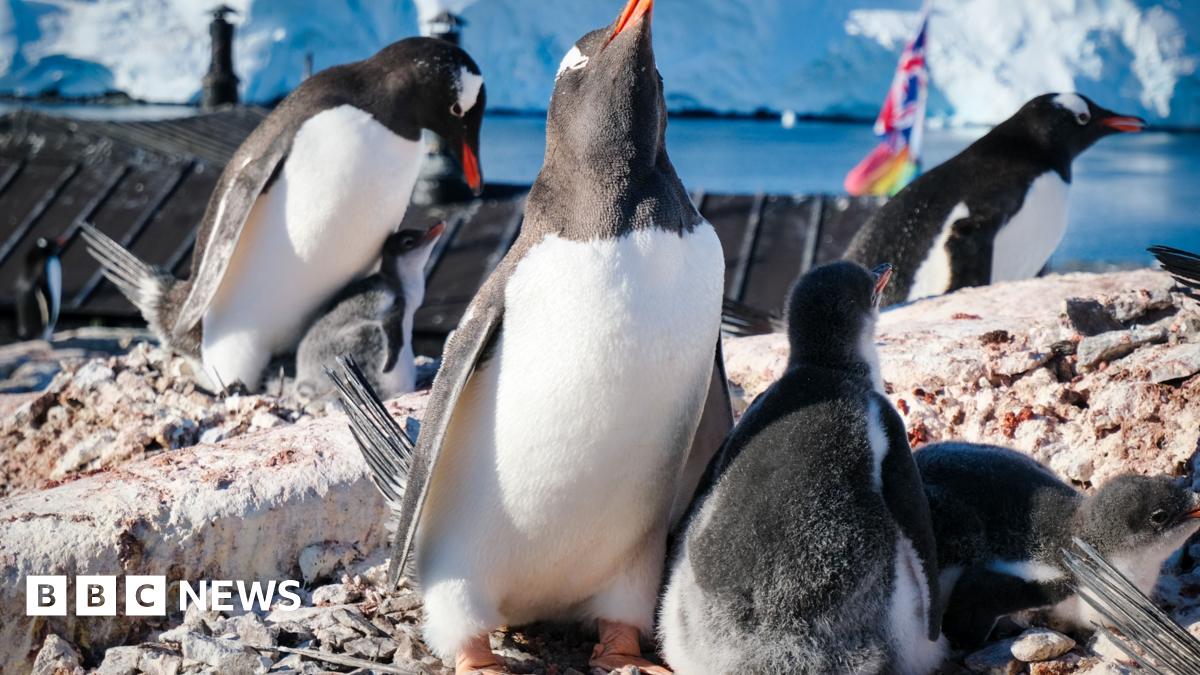
Gentoos are the third-largest member of the penguin family, after emperor and king penguins, and an important part of the ecosystem in Antarctica.
They can live for 15 to 20 years in the wild, mate with the same partner each year and are the world’s fastest underwater birds, reaching speeds up to 22mph (35km/h).
With some 774,000 gentoos in the wild, the species is regarded as stable.
“We’re only really focused on the immediate number on the island,” explained Watson.
“I’m particularly interested in the number of nests, the number of eggs, then eventually the number of chicks and the number of chicks that make it through to maturity.
“Obviously, climate change is a concern. This region of the world is one of the fastest warming places on the planet.
“And even though the species in itself isn’t in decline, it’s still important for this kind of data to be collected.”
The information will be collated in a longer-term study by the British Antarctic Survey, external, which has a much broader understanding of everything happening on the peninsula and the continent.