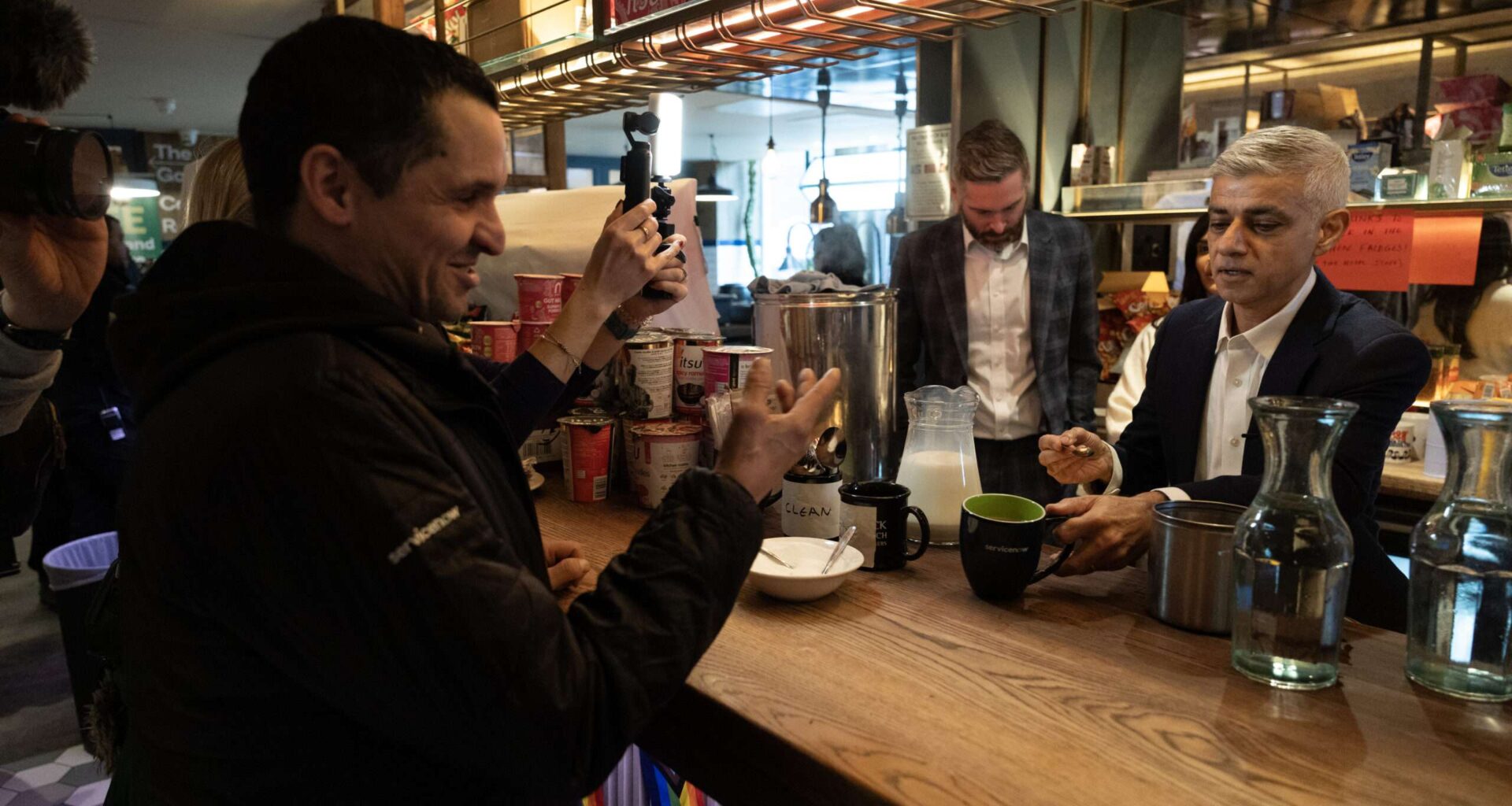
The Mayor of London has vowed to ‘turn the tide’ on rising levels of homelessness in the capital as figures show rough sleeping has increased by 63 per cent since he took office.
Sir Sadiq Khan said he was determined to prevent people being forced to sleep on the streets “at source” with a strategy that focuses on prevention and early intervention.
The number of people sleeping rough has increased from 8,096 in 2015/16 to 13,231 – a 63 per cent increase, according to the Combined Homelessness and Information Network (CHAIN).
However, the Mayor said he was “confident” of bringing numbers down, and doubled down on his manifesto pledge to end rough sleeping entirely by 2030.
Sir Sadiq spoke to the Local Democracy Reporting Service (LDRS) during a visit to a homeless hotel in East London, where charities Crisis and St Mungo’s are providing up to 180 rough sleepers with accommodation and other support due to £200,000 of funding from City Hall.
The extension hotel, which usually only provides support over the festive period until the new year, will give guests a private room, three meals a day and expert advice from staff and volunteers until January 21.
“Over the last nine and a half years, we’ve supported 20,000 rough sleepers,” he told the LDRS in an exclusive interview. “Three quarters of those have stayed off our streets, so that’s good.
“The problem is there are more and more new people coming to our capital city [and so] more and more people are ending up on our streets. That’s why I’m determined to prevent, at source, somebody becoming a rough sleeper in the first place.”
He said that London, as a capital city, attracted people from across the country to sleep rough in, with charities noting that homeless individuals may see themselves as having a better chance to access vital services in the capital.
Sir Sadiq also noted that London still had a better record overall than the UK, where rough sleeping is estimated to have spiked by 111 per cent since 2016 when it came to tackling homelessness.
“Never before in an eight-year period have so many rough sleepers been taken off of our streets,” he said. “Never before have so many been kept off our street.
“It’s the issue of more and more people coming onto our streets and that’s why we’ve published a plan of action to end rough sleeping for good by 2030. That includes things like ‘Ending Homelessness hubs’.
“We’ve also invested in additional homes through ‘Homes Off The Street’, clearing homes for people to go to once they’ve spent some time in a hospital and so forth. We’re also trying to change the rules in relation to verification. At the moment, the rules are perverse. You must be on the streets, bedded in before you’re entitled to support.
“That can’t be right. There’s almost an incentive to be rough sleeping because you don’t get support without being a rough sleeper. So we’re trying to change the verification rules as well. So with the plans in place, I’m confident we can turn the tide of rough sleeping.
“We’ve done it before. During my mayoral seat, during the pandemic, we did it. But also during the 2000s with the last Labour government, we did it. I’m comfortable we can do it again.”
However, Crisis’ Director of Policy, Francesca Albanese, suggested that one of the major barriers faced when it comes to rehousing rough sleepers was a lack of affordable housing in London.
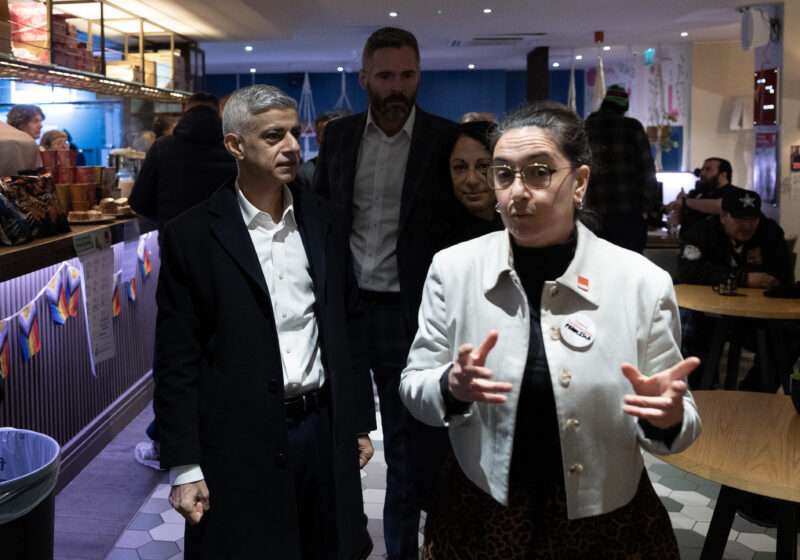 Mayor of London, Sadiq Khan visits a Crisis Extension Hotel in London. Facundo Arrizabalaga/MyLondon
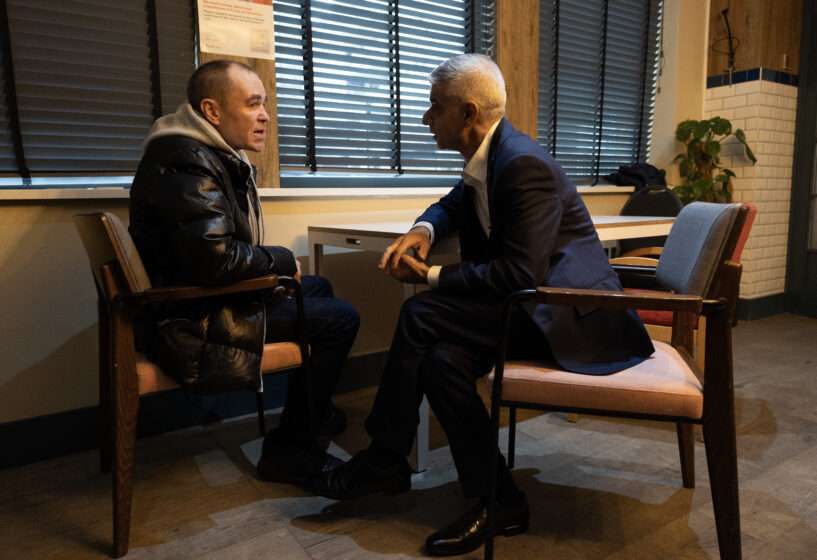 Mayor of London, Sadiq Khan visits a Crisis Extension Hotel in London, Facundo Arrizabalaga/MyLondon
 Mayor of London, Sadiq Khan visits a Crisis Extension Hotel in London Facundo Arrizabalaga/MyLondon
The Mayor has been criticised for failing to keep up with targets agreed with ministers – even after they were slashed last year – with data from the Greater London Authority (GLA) showing that developers made just 1,239 starts on affordable homes from April to September 2025, compared to 3,991 in the the previous financial year.
“Both the GLA and the government have got strategies to address homelessness and rough sleeping and they’re really welcome,” Ms Albanese told the LDRS.
“So they’ve focused on prevention, they’re focusing on people who have long-term needs.
“What I would say needs to be different is we need more genuinely affordable housing now. That is the biggest barrier we face, both within our services at Crisis, but also the needs of the guests in this hotel.
“So, yes, there is commitment to building more social housing, but in London the targets have been dropped recently, and we need those to increase in terms of access to social housing.
“We need affordable housing, now. In London less than four per cent of homes are affordable and that would make a massive difference now in terms of what people need and to help people move out of homeless into a home of their own.”