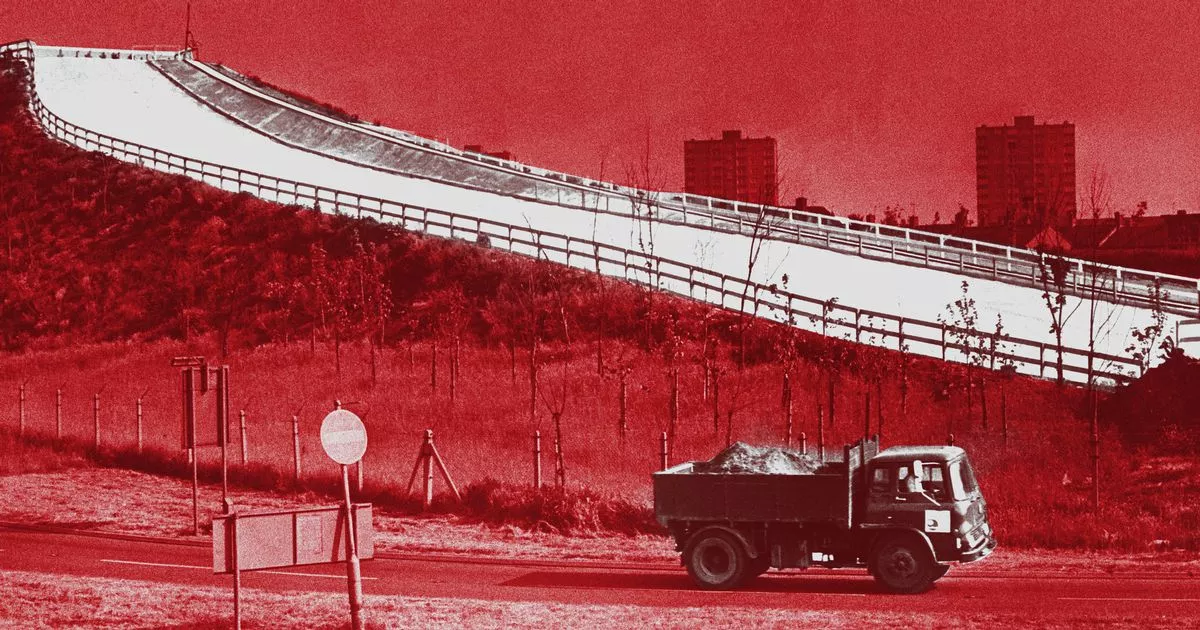
The Kirkby ski slope was a monumental white elephant, which became part of a wider story involving corruption, the waste of millions of pounds of public money, and a toxic heap of trash piled up on the side of the M57.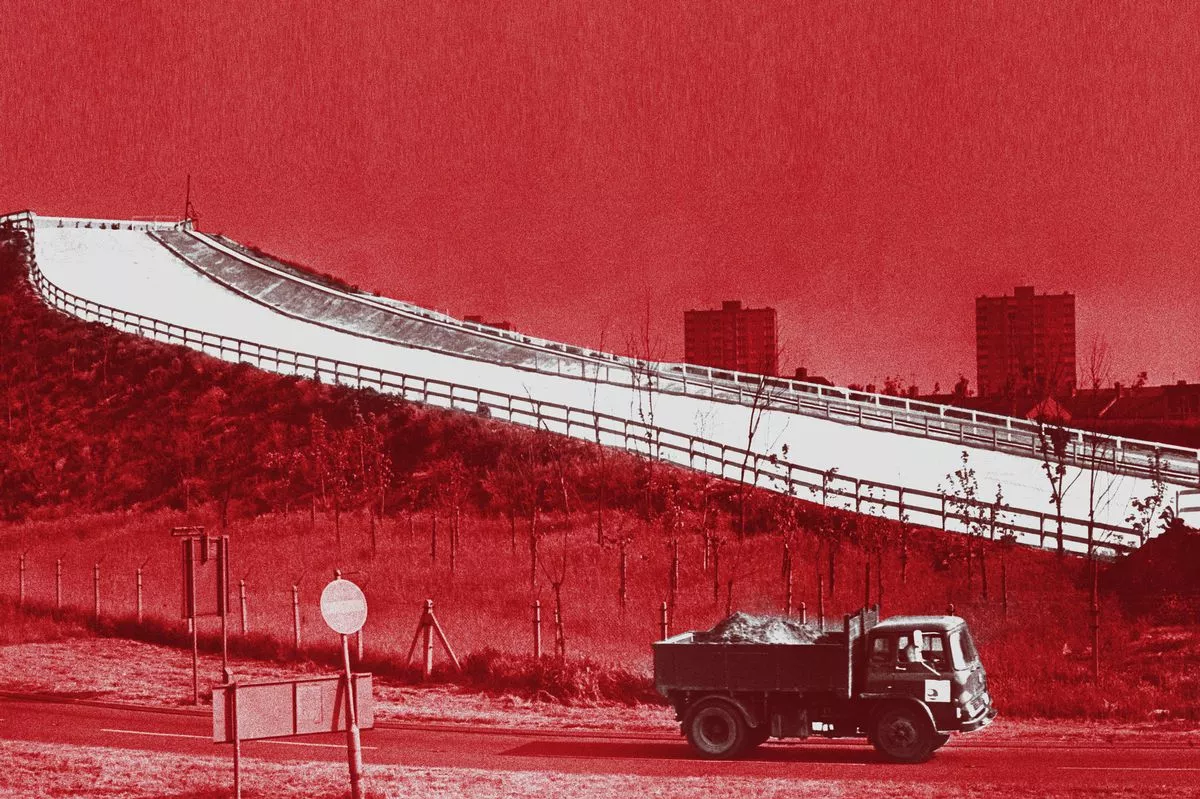
Dominating the Kirkby skyline, the new artificial ski slope in Bewley Road, Friday 5th April 1974.(Image: Mirrorpix)
It’s a story which has become part of scouse folklore, but behind the absurdity of the Kirkby ski slope fiasco, lies a devastating tale of malpractice and corruption, which still casts a long shadow over the town.
According to local legend, it all started in a Kirkby pub, with three men huddled over a table, discussing ideas for the future. It ended five years later with all three men convicted of corruption, reputations ruined, millions of pounds of public money wasted, and a toxic heap of trash piled up on the side of the M57.
Those three men were Dave Tempest, the leader of Kirby District Council, the council’s Chief Architect, Eric Stevenson, and a man called George Leatherbarrow, a local building contractor. Together, they concocted plans to regenerate Kirkby, but behind the headline grabbing housing schemes and infrastructure proposals, they were illegally rewarding themselves with multi-million pound contracts, fast cars, first class trips away, and expensive house extensions.
However, to understand the full context of what happened in Kirkby during the 1970s, we have to return to the post-war housing boom of the 1950s, and slum clearances in and around Liverpool city centre.
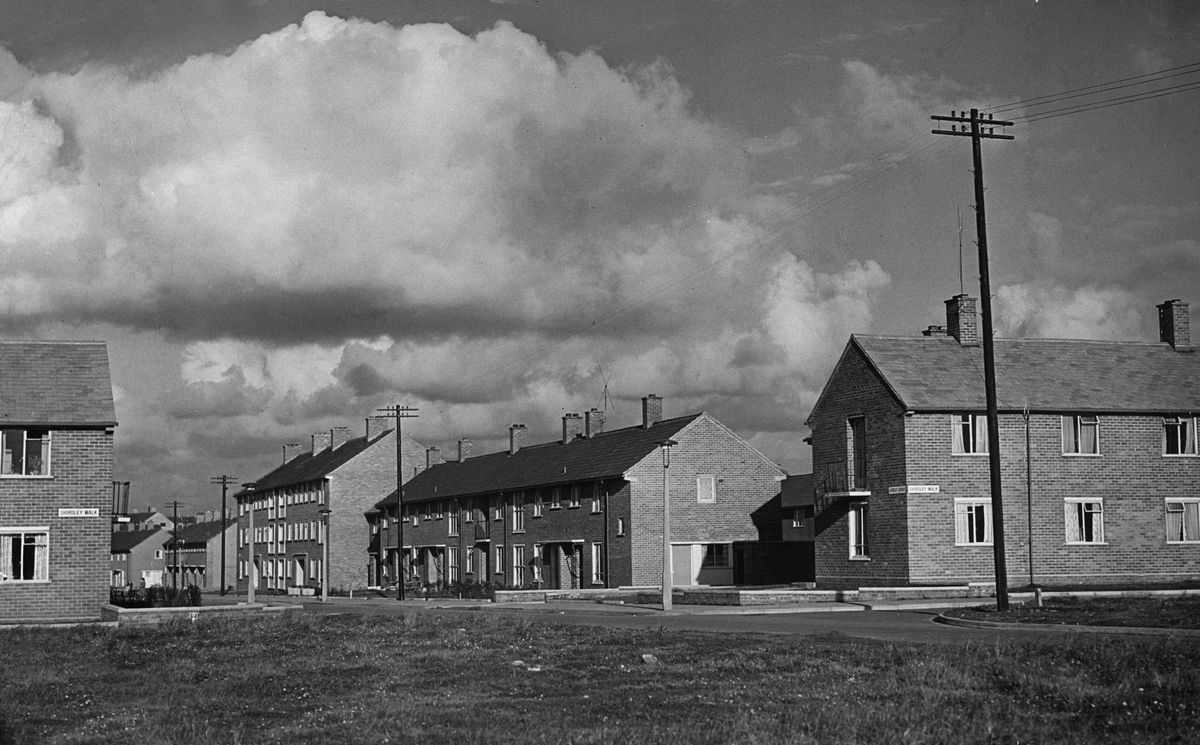
New houses built on Shirley Avenue and Shirley Walk in the town of Kirkby, Merseyside, part of the new estates being built in the town. 29th October 1953.(Image: Mirrorpix)
During the decade leading up to the 1960s, Liverpool Corporation bought land to build new housing estates, relocating tens of thousands of people from overcrowded, damaged and squalid tenements, into newly-built homes, including tower blocks advertised as ‘cities in the sky’.
People were sold on the idea of modern living, but many found themselves uprooted from close-knit communities and supplanted miles out of the city they once called home, often without access to transport, local amenities or public services.
Perhaps the best example of these ‘overspill towns’ was Kirkby, which before the Second World War, was defined by its rural landscapes and undulating farmlands. However, during the postwar era, the town underwent a transformative change, establishing itself as one of Merseyside’s most prominent industrial sites, and by the start of the 1960s, Kirkby was the fastest-growing town in England.
However, the rapid building methods often resulted in design and construction faults, whilst an investigation found that Kirkby’s policy-makers and planners held considerable responsibility for failing to ensure proper resources and implementation of the town plan.
By the 1970s, the dream lifestyles promised by the ‘new worlds’ in towns like Kirkby, were beginning to look a lot like the ‘old worlds’ which had been demolished and left behind. Many of the tower blocks in Kirkby were considered unsafe and had dire living conditions, social problems were widespread in the town, including high levels of unemployment, all leading to significant protests, including a 14-month rent strike.
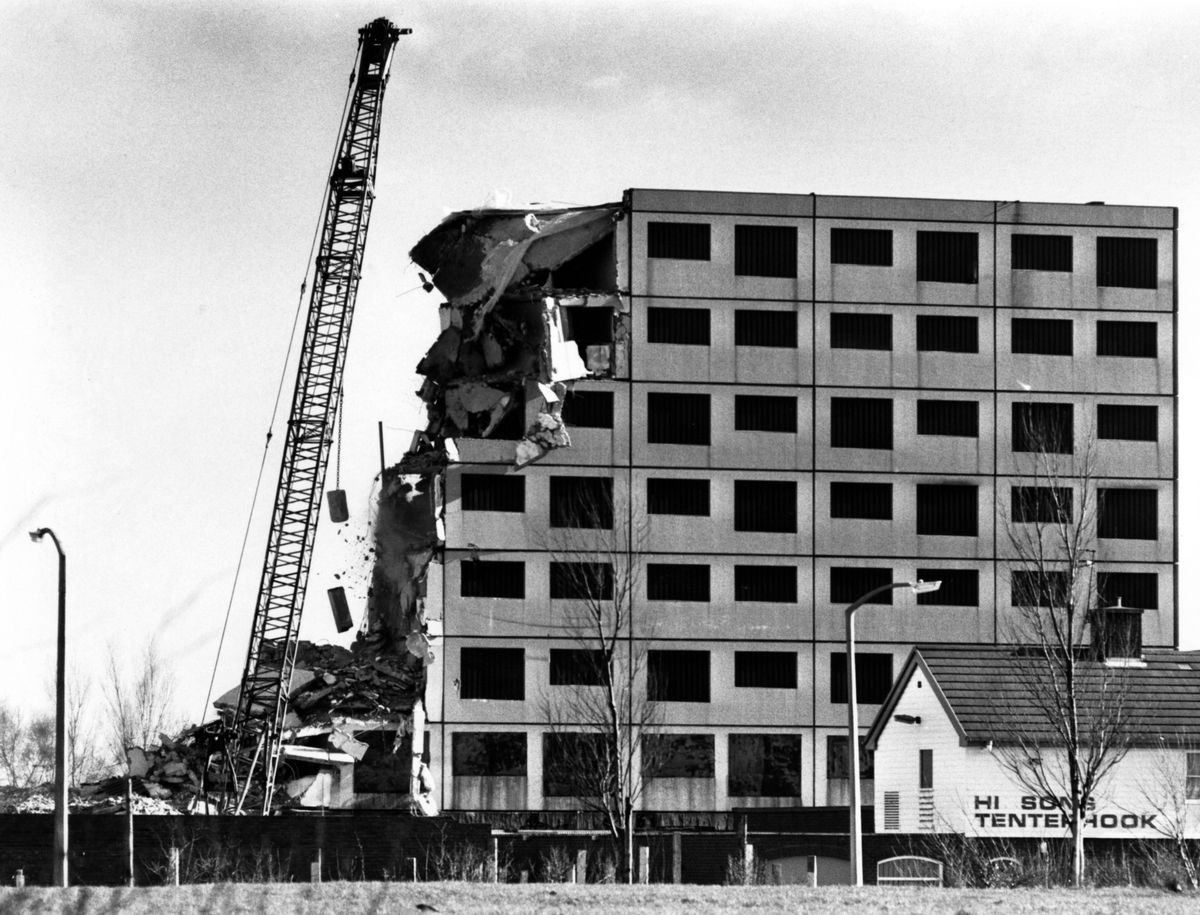
Radshaw Court Flats on the Ravenscourt Estate, Kirkby, in the process of being demolished. 21st February 1989.(Image: Mirrorpix)
Against this backdrop, it was clear Kirkby needed significant investment, and innovative solutions to complex problems. The regeneration of the town would need huge sums of public money, often in short supply during this period, and it’s fair to say a ‘ski- slope’ was the last thing on people’s minds.
Nonetheless, over a pub table at the start of the 1970s, away from the prying eyes of pubic scrutiny and established protocols, the story goes that Dave Tempest, George Stevenson and David Leatherbarrow concocted a plan to build the infamous ‘Kirkby ski slope’, a white elephant of monumental proportions.
Local historian Peter Eric Lang has researched the history of the project, and tells us the scheme was problematic from the very start: “There were no tenders, there was no public bid. It wasn’t a public matter. It was just something that was done behind closed doors, or, in this case, a pub.
“There’s been lots of great ideas that have happened when friends and business people get a pint and lunch at a pub, but certainly not in this case.”
In 1974, Kirkby’s council was set to be incorporated into a newly formed Metropolitan Borough of Knowsley Council, but before then, Peter said council leader Dave Tempest wanted to use up the left over budget, so it wouldn’t be absorbed into the new local authority.
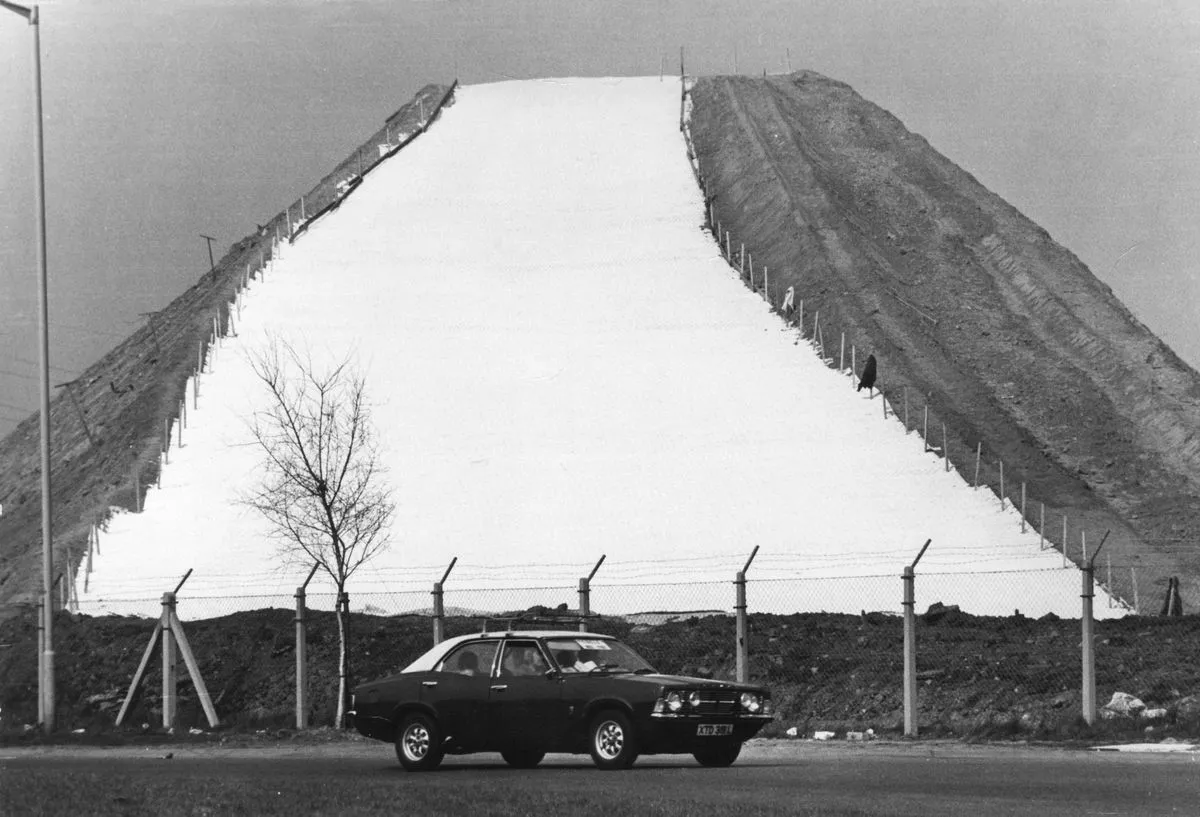
Dominating the Kirkby skyline, the new artificial ski slope in Bewley Road, Friday 5th April 1974.(Image: Mirrorpix)
According a detailed investigation by the Liverpool Free Press (LFP) at the time, the problem was the money had to be spent quickly, and there was no time for a bricks-and-mortar building project. The LFP said someone had the idea of constructing an artificial ski slope, which they thought would be both quick and simple. All it needed was a gigantic heap of earth, topped off with a new surface.
Responsibility for the project lay with the council’s architect department, headed by Eric Spencer Stevenson, after it was approved unilaterally by Dave Tempest. Furthermore, the main contract for the work was awarded to local builder George Leatherbarrow without inviting formal, competitive tenders.
Part of the contract was for Leatherbarrow to supply the earth for the slope, but in December 1973, he paid for an advertisement in the Liverpool ECHO offering the site as a ‘free tip’ to building contractors.
Peter Eric Land said: “Hundreds of vans and lorries brought their rubbish, unloaded to the point where they couldn’t actually back up any further to unload it, because the mound was that high. It really was a mixed bag of fairly hazardous materials.
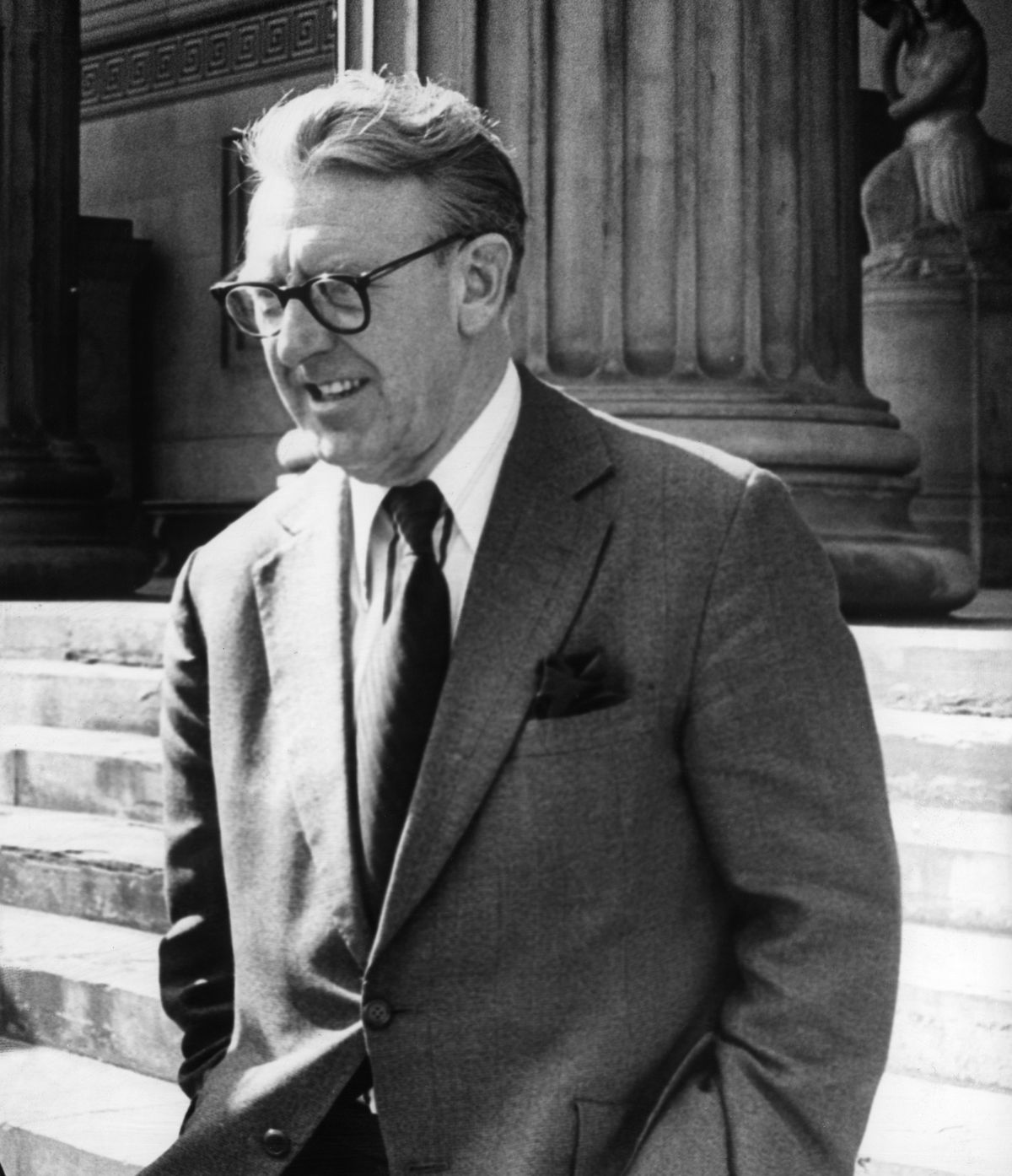
Former Kirkby Council architect Eric Spencer Stevenson. He is accused of being involved in the Kirkby corruption scandal. Circa 1978.(Image: Mirrorpix)
“After a year, the questions were being asked about what was going on? The slope was very bumpy, and they spent thousands of pounds trying to smooth them out, and the reason it was bumpy was because it was built out of rubbish.”
Investigations by the LFP would also uncover the slope was built on land the council did not own and over a mains water pipe. Knowsley Council later had to buy the land off Liverpool council.
Peter added: “Only one person ever actually skied on it, and it was a BBC journalist, to test how plausible it was for other people to use. It turned out it wasn’t.
“There was this huge, towering mound of waste, and there were barriers around the edge, and the reason they had to have fairly high barriers was because it was built right next to the M57.
“From the top, if you built up too much momentum, you’d be at risk of flying over the edge of the slope and into the motorway itself, and that’s what led one journalist thinking this had been built the wrong way round.”
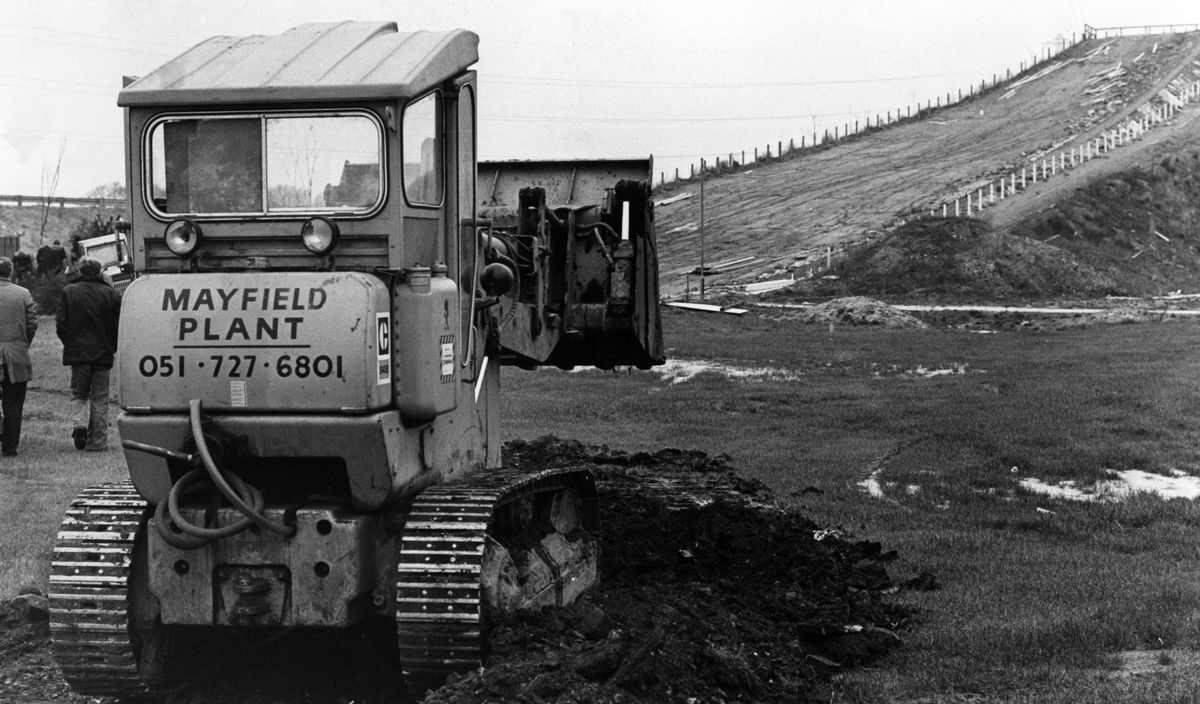
Kirkby Ski Slope, 10th June 1975.(Image: Mirrorpix)
Predicted to open to the public in 1974, the project stumbled on for two years before finally being shelved. According to reports at the time, the decision was made amid fears the slope was unsafe, but not before the cost of construction had mounted to £150,000, almost £1.2m in today’s money.
On August 12, 1975, the ECHO reported: “Three years ago, the Kirkby ski slope was planned as the centerpiece of the town’s sport complex – a tribute to forward thinking councillors. Today, it stands unloved and unwanted, weeds already showing through the plastic surface. It is a huge embarrassment and […] a distinct liability.”
In terms of the main protagonists involved in the Kirkby ski slope project, Dave Tempest, George Stevenson and David Leatherbarrow, all three ended the decade in disgrace after being convicted on fraud charges and jailed in 1978.
According to reports by the Liverpool ECHO in 1978, the trial was the culmination of a two-year investigation by the Fraud Squad, which had prepared one of the biggest files of documents ever seen in a Crown Court case in Liverpool. The court heard stories of alleged bribes involving sports cars, first class trip away and home improvement projects, all to secure lucrative building contracts.
Builder George Leatherbarrow was eventually sentenced to four years, former Kirkby Council architect Eric Spencer Stevenson received three years, whilst ex-Kirkby Council leader David Tempest, got 12 months.
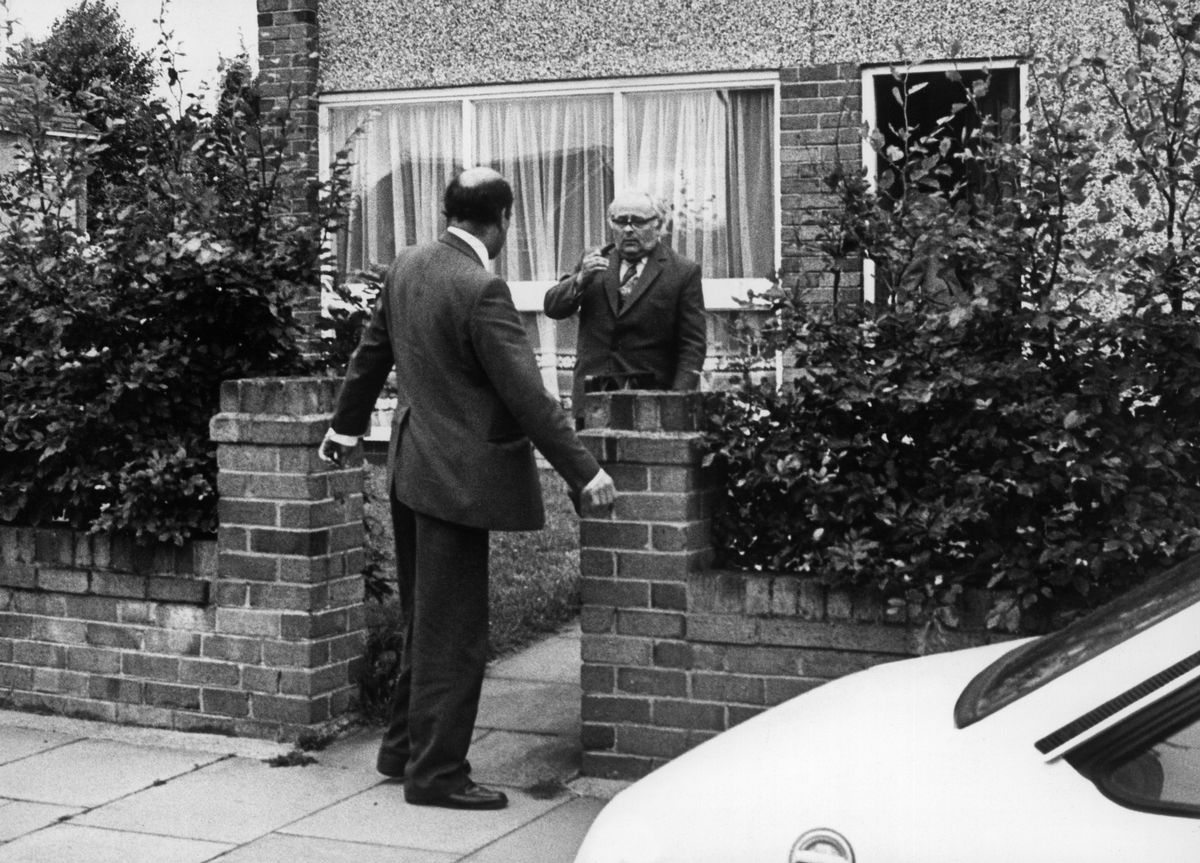
Former Kirkby Council leader David Tempest leaving his home, he is met by a police officer. He is accused of being involved in the Kirkby corruption scandal. Circa 1977.(Image: Mirrorpix)
The court was told Leatherbarrow’s building company had been awarded contracts worth £10 million, because of his bribes to Stevenson and Tempest. The judge, Mr. Justice Mars Jones, told Leatherbarrow: “You were at heart of this conspiracy, and you were its chief beneficiary.”
He continued: “Precisely how much you gained will never be known. But the corruption enabled you to get contracts worth millions, which you would never have got. Worse was the fact that you certainly corrupted one other man.”
Turning to Stevenson, Mr. Justice Mars Jones said: “You were a senior technical officer in the service of Kirkby Council. You were a trusted and respected servant. You betrayed that trust.”
Tempest’s counsel, Mr Michael Maguire told the judge that his client had thrown his good name away “for a few bricks and mortar.”
The Kirkby ski slope saga remains of of Merseyside’s most fantastical tales, and many still struggle to believe it actually happened. The story will be revisited in a major production at the Royal Court later this year, but what about the real world legacy of the project.
To many Kirkby residents we spoke to, the ski slope is looked at wryly, but more than this, there is genuine frustration about a missed opportunity. It’s a credible argument to say that the money wasted on the slope could have been better used trying to support Kirkby’s residents, struggling under the weight of chronic under investment and failing infrastructure.
What’s certain is the money squandered by the likes of Dave Tempest, set the town back, and local officials have been working to regenerate the area ever since.
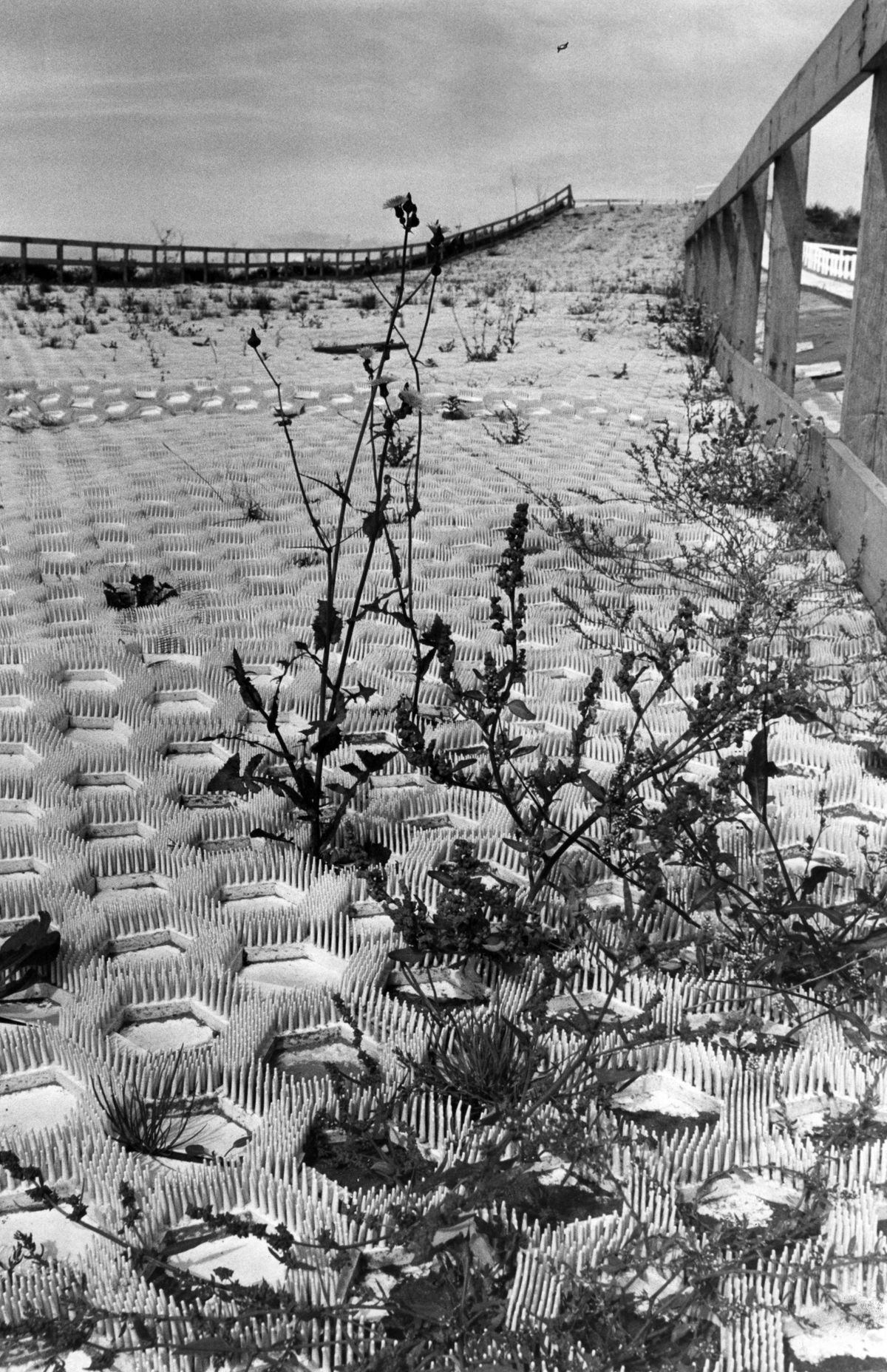
The overgrown ski slope at Kirkby, 11 September 1975.(Image: Mirrorpix)
In 2006, the ski slope site was proposed as the location for a new stadium for Everton FC, known as The Kirkby Project, which subsequently came to nothing. Later on, the land was used to build affordable homes.
The ECHO approached Knowsley Council to ask for a comment on the history of the ski slope scheme and the wider regeneration of Kirkby going forward.
Cllr Tony Brennan Cabinet Member for Regeneration and Economic Development, said it’s important to clarify that the ski slope was a project led by Kirkby Urban District Council, prior to the formation of Knowsley Council, but confirmed the land was used to build affordable housing.
He said the current local authority remains committed to Kirkby’s ongoing regeneration. This includes progressing with the phase 2 retail development scheme, with Lidl recently submitting plans for its first ever store in Kirkby, and delivering the £19.5m Pride in Place programme, which will see investment in local community initiatives.
Cllr Brennan added: “I’m incredibly proud of what we’ve delivered to date and I look forward to sharing further updates as we progress our next phase.”