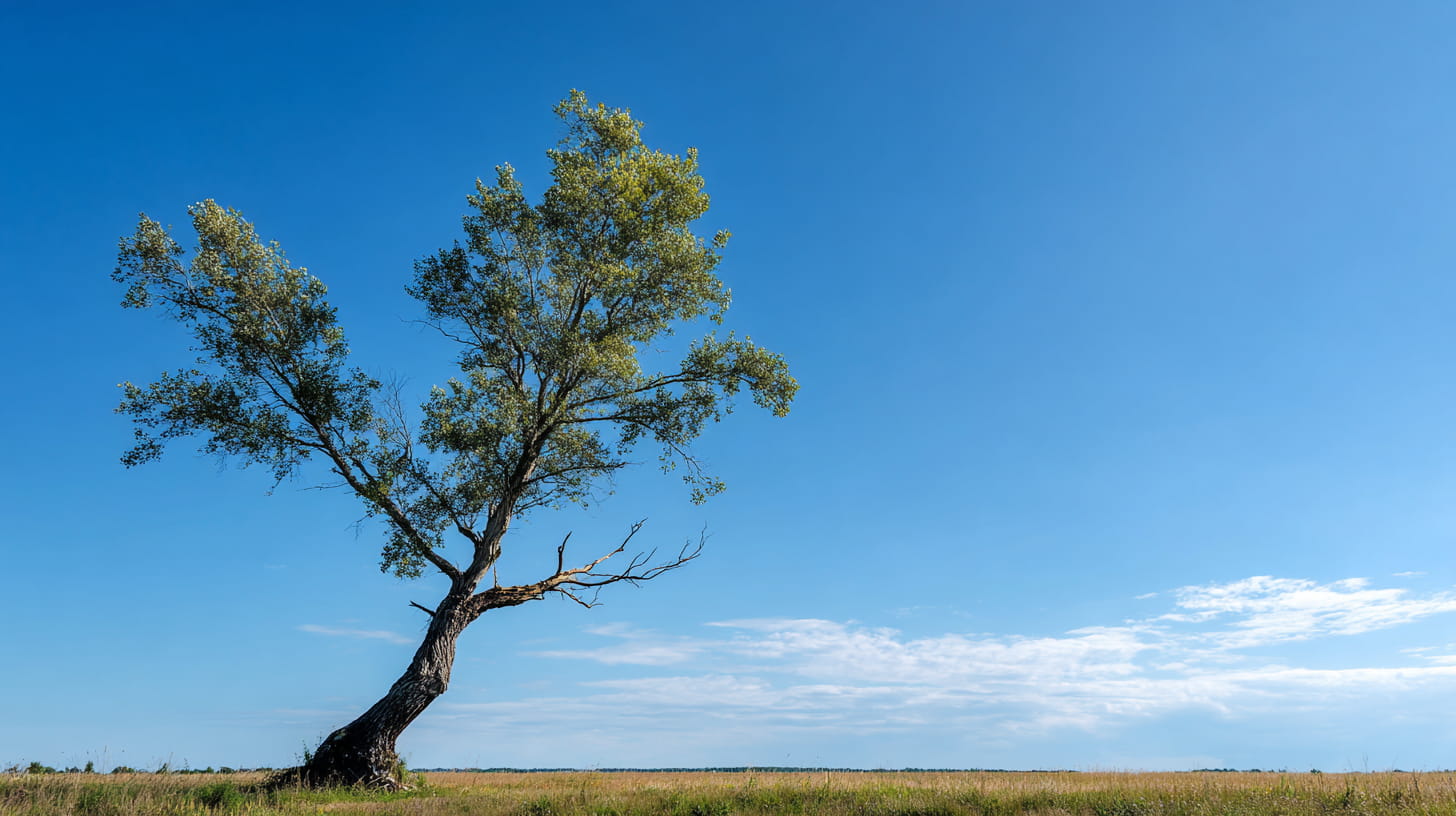
Ten young Black Poplar Betulifolia have been placed in carefully selected locations within St Andrews Parish.
Records held by Wiltshire Wildlife Trust suggest these are almost certainly the only trees of their kind in the parish, and possibly across North Swindon.
Fewer than seven thousand true Black Poplars are thought to remain across Britain. The species was once widespread along rivers and wetlands, but numbers have collapsed over the last few centuries.
The planting is significant not only because of rarity, but because of uncertainty. Black Poplars are either male or female, and only female trees can produce seed.
Of the already small national population, only a few hundred are believed to be female.
There is no way to identify the sex of a Black Poplar until it matures and produces catkins, which can take many years.
Councillor Jake Chandler, from St Andrews Ward said: “This is very much a long term project. We will not know for years whether any of these trees are female, but that uncertainty is part of the point.
“If even one of them is, it could make a real difference locally. If not, we have still protected rare native genetics and given the species a fighting chance.”
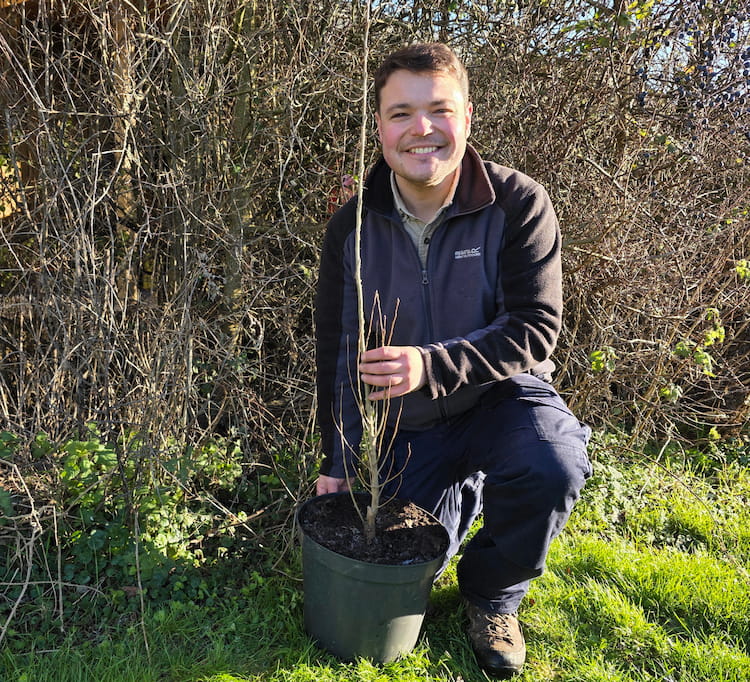 Councillor Jake Chandler, St Andrews Ward
This means the small group of trees represents an ecological gamble that may take decades to resolve.
If one tree proves to be female, it could allow natural regeneration in the area. If none do, the planting still preserves rare native genetics and strengthens local biodiversity.
The project was planned carefully rather than carried out as a casual planting.
The trees were grown specifically for conservation and planted following consultation and permission from St Andrews Parish Council.
Wiltshire Wildlife Trust was also involved to ensure the correct species was placed in suitable environments.
For conservation reasons, the exact planting locations are not being made public.
This is intended to reduce disturbance and give the trees the best possible chance of becoming established.
Black Poplars declined rapidly due to river drainage, development and hybridisation with non-native poplar species.
Once native genetics are lost, they cannot be recreated.
As a result, the St Andrews planting is less about immediate results and more about long term stewardship.
There are no guarantees, and the outcome may not be known for a decade or more.
Supporters say that uncertainty is precisely what makes the project important.
In a time of short funding cycles and quick outcomes, the planting is a reminder that some environmental decisions are slow, local and patient.
A handful of trees in North Swindon may ultimately change very little. Or they may become the quiet beginning of a native species re-establishing itself in the area. For now, the experiment is under way, and nature will decide the result in its own time.