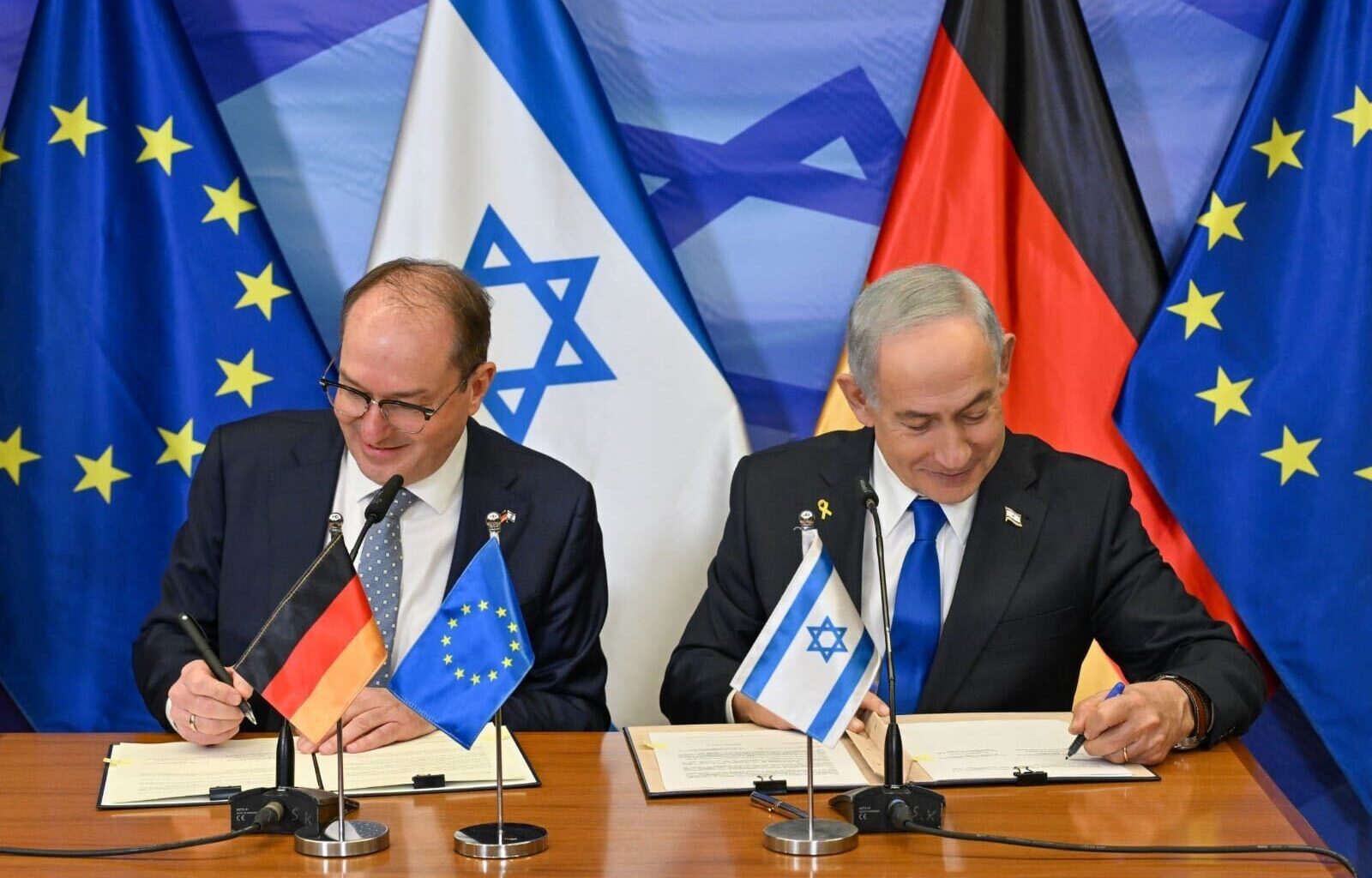
Israel and Germany signed a security pact Sunday to expand cooperation on counterterrorism and cyber defense, Prime Minister Benjamin Netanyahu’s office said, citing threats posed by Iran and its allies.
“Iran and its proxies — Hezbollah, Hamas and the Houthis — threaten not only Israel but also regional stability and international security,” a statement from Netanyahu’s office said.
“The declaration signed today anchors deep cooperation with Germany in the fields of cyber security, counterterrorism and advanced technologies.
“Israel’s enemies should know: our eyes are on them at all times and everywhere,” the statement added.
The declaration was signed by Netanyahu and visiting German Interior Minister Alexander Dobrindt.
Get The Times of Israel’s Daily Edition
by email and never miss our top stories
By signing up, you agree to the terms
“I think Germany and Israel are natural partners. We’ve cooperated on the Arrow III, we’ve cooperated in many areas,” Netanyahu said in a separate statement.
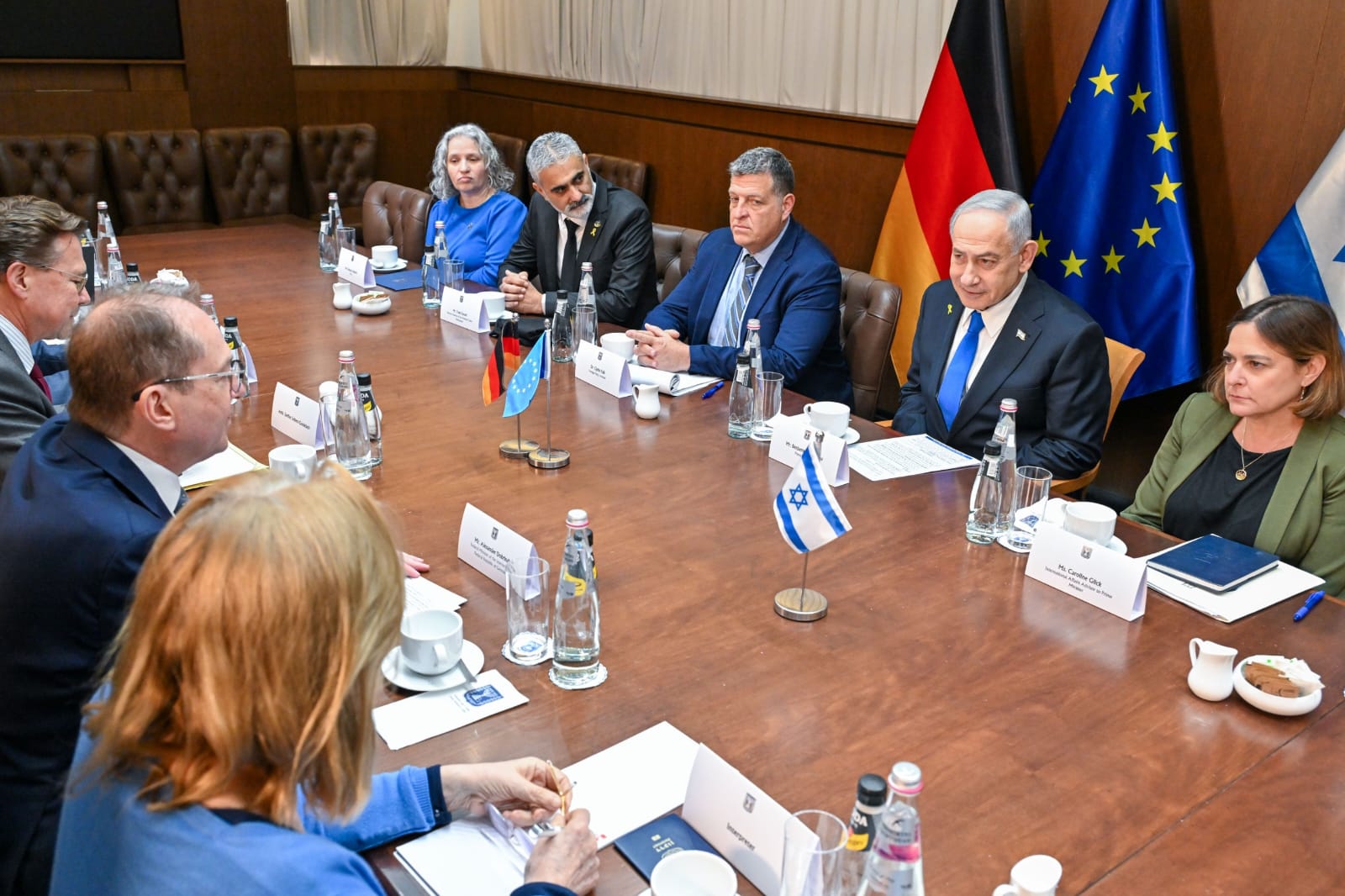
Prime Minister Benjamin Netanyahu and visiting German Interior Minister Alexander Dobrindt hold a meeting with their aides at the premier’s office in Jerusalem on January 11, 2026.(Kobi Gideon/GPO)
The initiative formalizes a broad security partnership between the security apparatuses of both countries, the statement said.
Last month, Germany approved a $3.1 billion expansion of a contract for the Arrow 3 anti-ballistic missile defense system, which is Israeli-made and developed with US support.
The deal, originally signed in 2023, is now worth approximately $6.5 billion. Israel says it is the country’s largest-ever military export contract.
Earlier on Sunday, Foreign Minister Gideon Saar held talks with Dobrindt, during which he urged the European Union to designate Iran’s Islamic Revolutionary Guard Corps as a “terrorist organization.”
The call came as Iran has been rocked by deadly protests, initially sparked by anger over the rising cost of living but quickly evolving into a broader movement challenging the theocratic government that has ruled the country since the 1979 revolution.
The meetings came two days after Germany called on Israel to halt its controversial E1 settlement project, warning that its construction carries the risk of creating more instability in the West Bank and the region.
Is accurate Israel coverage important to you?
If so, we have a request.
Every day during the past two years of war and rising global anti-Zionism and antisemitism, our journalists kept you abreast of the most important developments that merit your attention. Millions of people rely on ToI for fact-based coverage of Israel and the Jewish world.
We care about Israel – and we know you do too. So we have an ask for this new year of 2026: express your values by joining The Times of Israel Community, an exclusive group for readers like you who appreciate and financially support our work.
Already a member? Sign in to stop seeing this
You appreciate our journalism

You clearly find our careful reporting valuable, in a time when facts are often distorted and news coverage often lacks context.
Your support is essential to continue our work. We want to continue delivering the professional journalism you value, even as the demands on our newsroom have grown dramatically since October 7.
So today, please consider joining our reader support group, The Times of Israel Community. For as little as $6 a month you’ll become our partners while enjoying The Times of Israel AD-FREE, as well as accessing exclusive content available only to Times of Israel Community members.
Thank you,
David Horovitz, Founding Editor of The Times of Israel
Already a member? Sign in to stop seeing this