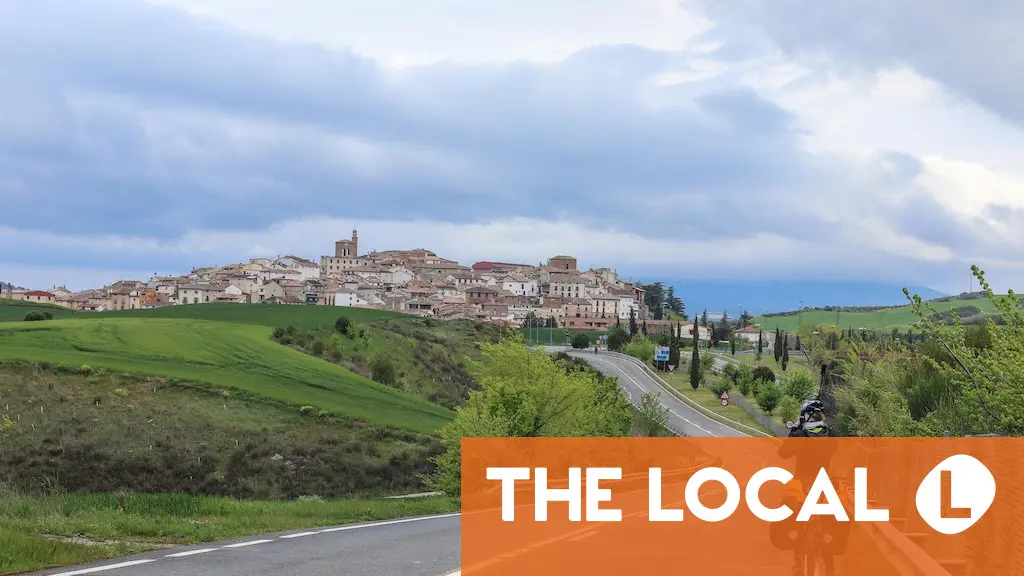
Holiday let platform Airbnb has announced a €42.8 million investment to attract tourists to rural Spain, much of it in places affected by depopulation known as ‘La España Vaciada’ (Empty Spain).
The investment is part of Airbnb’s new Rural Commitment Plan, which aims to promote tourism decentralisation in Spain.
The programme seeks to capitalise on Airbnb’s potential to spread tourists out, boost economic development of local communities, reduce the seasonality of tourism, and revitalise rural areas.
“The growing demand for less crowded destinations, close to nature, authentic local experiences, and greater awareness of the impact of travel, are making Spanish villages highly desirable destinations,” Airbnb said in a statement.
Major cities and popular holiday destinations such as Madrid, Barcelona, Málaga, Valencia and Seville are currently trying to crack down on the number of Airbnbs in their cities due to rising rental costs and backlash from locals, but it’s a different story in some of the most depopulated areas of the country such as places in Castilla y León, Castilla-La Mancha, Extremadura and Aragón.
These areas are suffering from depopulation and don’t get much tourism at all. In fact, they are actively trying to attract visitors instead of protesting and telling them not to come, like what is happening in the most popular destinations.
Rural tourism in Spain is a lot less developed than in some other European countries such as France for example, which means there’s a lot more potential too.
READ ALSO: Why is mass tourism such a problem in Spain but not in France?
According to the booking platform, rural destinations in Spain attracted fewer visitors than those in France and Britain, and only half as many as Italy.
“This gap highlights the immense potential to transform the Spanish tourism model: opening the doors to tourism in non-urban and rural areas would generate a boom in growth and dispersion of activity that would benefit the economies of depopulated Spain, while at the same time decongesting the most saturated destinations,” explained Jaime Rodríguez de Santiago, general manager of Airbnb Marketing Services for Spain and Portugal.
Advertisement
The company will invest a total €32.6 million in rural action with revitalisation projects in rural localities through tourism activity.
This will include financing home renovations in rural areas and creating a fund for the rehabilitation of empty houses, preserving local architectural heritage.
They also aim to support local business development projects and provide financial support to small businesses to create a diversified economic ecosystem.
The plan also seeks to create centres of cultural and natural value, to promote local attractions.
To do this Airbnb is encouraging proposals from entrepreneurs and local residents for innovative tourism projects, including new accommodations and experiences.
A further €10.2 million will be allocated to promotion to encourage the arrival of national and international visitors, focusing on areas such as astrotourism and ecotourism for example.
Advertisement
READ ALSO: Airbnb demands Spain adopt different rules for tourist rentals in rural areas
Just a couple of months ago, Airbnb demanded that Spain should adopt different rules for tourist rentals in rural areas.
Airbnb was forced to take down 65,000 listings by the Spanish government, and Madrid flagged a further 55,000 tourist lets which have not been properly registered.
The company, however, claimed that some areas of Spain could benefit from deregulation on tourist rentals.
According to data compiled by Airbnb, less than 1 percent of Spanish municipalities have more than 100,000 inhabitants.
Around three-quarters of municipalities with less than 10,000 inhabitants have no traditional accommodation but there are private homes that remain empty for a good part of the year and could be converted into tourist accommodation.