In the first week of 2026, the Chinese Communist Party rehearsed a new blockade of Taiwan, including several hours of live-fire exercises targeting both the northern and southern approaches to the island. Many attributed these war games to the recently announced $11.1 billion arms package for Taiwan approved by the Trump administration, but considering that the drills came 11 days after the announcement, this explanation alone might be insufficient.
Recent U.S. actions far beyond East Asia suggest that the competition shaping Taiwan’s future is global in scope, and that what is unfolding in both in the Indo-Pacific and Latin America is not a series of disconnected crises, but a coordinated effort by Washington to constrain China’s political, economic, and strategic reach across multiple regions simultaneously.
Understanding this broader pattern matters for Taipei, as Taiwan is not merely responding to developments in the Indo-Pacific, but is sitting at the focal point of a global realignment in which Latin America, supply chains, and diplomatic recognition increasingly function as parallel instruments of deterrence.
Venezuela and the Shift from Containment to Enforcement
That global dimension became clearer following the United States’ military operation in Venezuela that resulted in the capture of President Nicolás Maduro and his wife, Cilia Flores. The former presidential couple was transferred to the United States on narco-terrorism and drug trafficking charges. While the legality of the operation has been widely debated, its strategic significance lies in the precedent it sets rather than the domestic politics of Venezuela itself.
For years, Washington relied on sanctions, asset freezes, and visa cancellations to pressure Caracas’ leadership. Venezuela has been ruled by a left-wing government for three decades since Hugo Chavez’s inauguration in 1999 until Maduro’s removal from leadership. During that time, Venezuela remained a staunch ally of both China and Russia.
Its relationship with the United States on the other side has been less than friendly, with the U.S. refusing to recognize Maduro as the legitimate president of the nation. But the Trump administration has steadily moved from condemnation to direct action, first by throwing its support behind Edmundo Gonzaléz and Mariana Corina Machado, opposition leaders who demonstrated that Maduro had lost the 2024 election, to sending the biggest military aircraft to attack narco-terrorist vessels on the Venezuelan coasts, until the removal of its leader this past week.
China’s Latin American Depth and Its Strategic Cost
China’s relationship with Venezuela was not incidental. Over the past two decades, Beijing invested heavily in Caracas, providing Venezuela with development loans and gaining access to its oil reserves, which China was buying at a deeply discounted price due to the competition of oil coming from both Iran and Russia.
Besides the economic benefits, China also benefited from the anti-American rhetoric coming from Venezuela that reverberated throughout the Latin American region. In addition, Venezuela also provided support to other China-friendly governments like Cuba, Nicaragua, and Honduras during the tenure of left-wing governments.
The removal of such a partner weakens Beijing’s position well beyond Latin America, as it reinforces the broader message that alignment with China does not guarantee insulation from U.S. pressure, even far from Asia. For Taiwan, which has faced sustained Chinese efforts to limit its diplomatic space, this signal carries direct relevance.
Diplomatic Recognition and Taiwan’s Shrinking Space
This logic extends directly to Central America and the Caribbean, where diplomatic recognition has long served as a battleground between Beijing and Taipei. Honduras’s 2023 decision to sever ties with Taiwan in favor of China reflected Beijing’s strategy of using economic inducements to isolate the island.
Subsequent U.S. political engagement in the region, specifically the endorsement by President Donald Trump of the Taipei-friendly candidate Nasry Asfura, has reopened questions about that decision, underscoring how Taiwan’s remaining diplomatic partnerships are increasingly shaped by the competition between the world’s biggest economy. Recognition is no longer merely symbolic. It is part of a broader contest over alignment, legitimacy, and strategic signaling.
Resources, Supply Chains, and Strategic Leverage
Economic leverage is a central component of this global contest. In addition to oil, Venezuela has significant reserves of gold, iron ore, and untapped rare earth minerals that carry strategic significance at a time when supply chains have become instruments of national power. China’s dominance over rare earth processing has already been used as leverage during trade disputes, highlighting the vulnerability of concentrated supply chains.
Limiting Beijing’s access to critical resources in Latin America complements U.S. efforts in Asia to reduce China’s technological and military advantages. These measures link economic pressure to deterrence, forming a single strategic framework rather than separate regional policies.
Taiwan and the Credibility of Deterrence
This global approach intersects directly with Taiwan policy. The aforementioned approval of the $11.1 billion arms package for Taiwan was not simply a continuation of routine arms sales. It was a credibility signal. U.S. officials framed the package as defensive, focused on deterrence and Taiwan’s ability to withstand coercion, particularly blockade scenarios.
Its timing, amid heightened Chinese military activity around the island, underscored Washington’s willingness to reinforce commitments despite predictable retaliation from Beijing. China’s subsequent military exercises simulating a blockade reinforced concerns in Taipei that coercive pressure will remain central to Beijing’s strategy.
For Taiwan’s leadership, the lesson is not simply that arms sales continue, but that deterrence is something that the U.S. is willing to spend political capital to achieve beyond the Indo-Pacific.
A Single Strategic Arc
Viewed together, U.S. actions in Venezuela, Central America, and the Indo-Pacific form a coherent strategic arc. Diplomatic pressure, economic leverage, and military signaling are being applied across regions to limit China’s influence and to demonstrate that alignment with Beijing carries tangible risks.
For Taiwan, that means developments in Latin America are no longer peripheral. They are part of the same strategic ecosystem shaping the island’s diplomatic space, security environment, and long-term resilience. As U.S.–China competition intensifies, Taiwan occupies not the margins of a regional dispute, but a central position within a global contest whose consequences extend far beyond the Taiwan Strait.
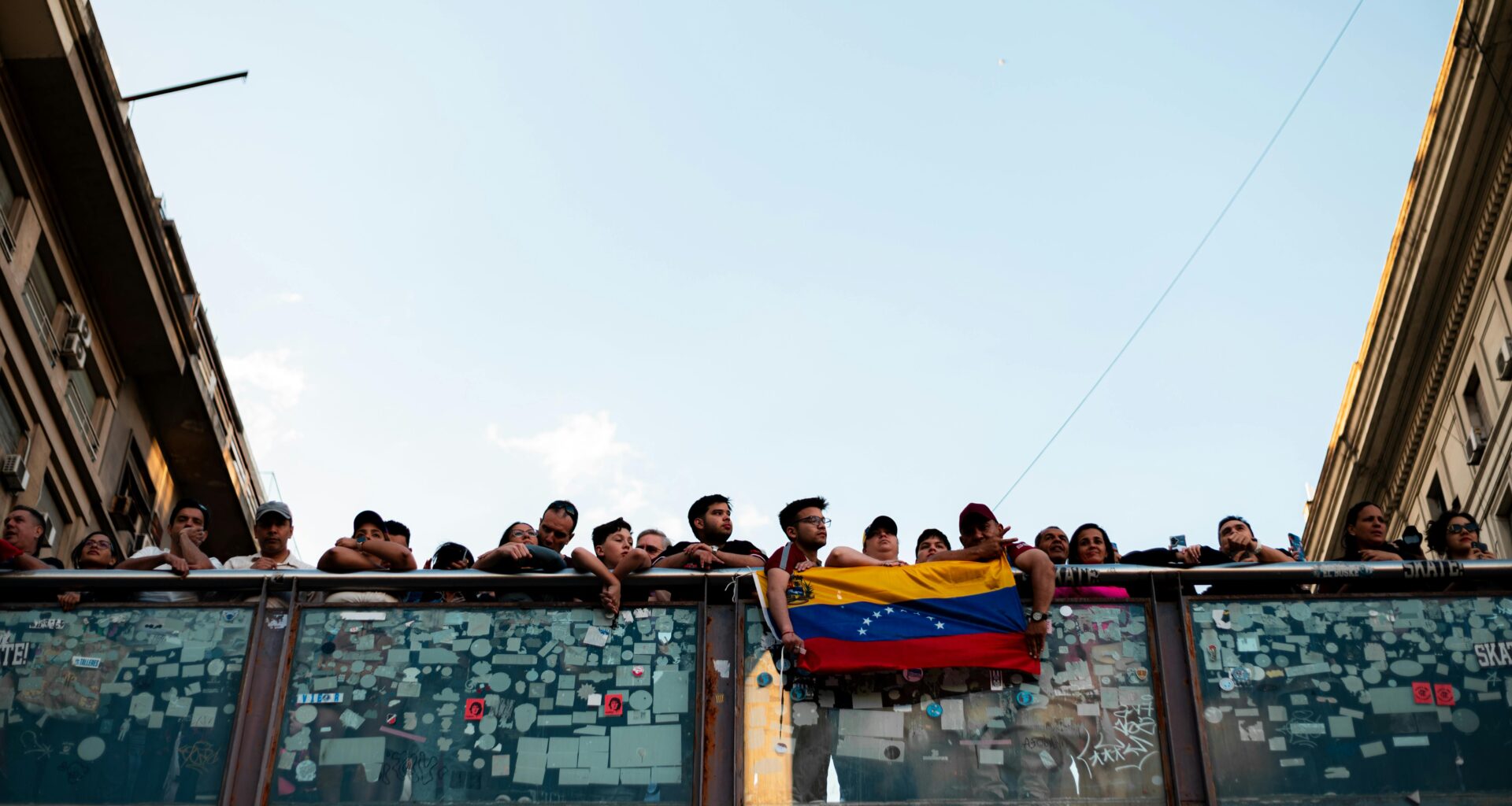
(Featured photo by Alex Dos Santos on Pexels)