A pretty major historical discovery was made in the UK last week – archaeologists revealed the largest Roman villa to have ever been found in Wales.
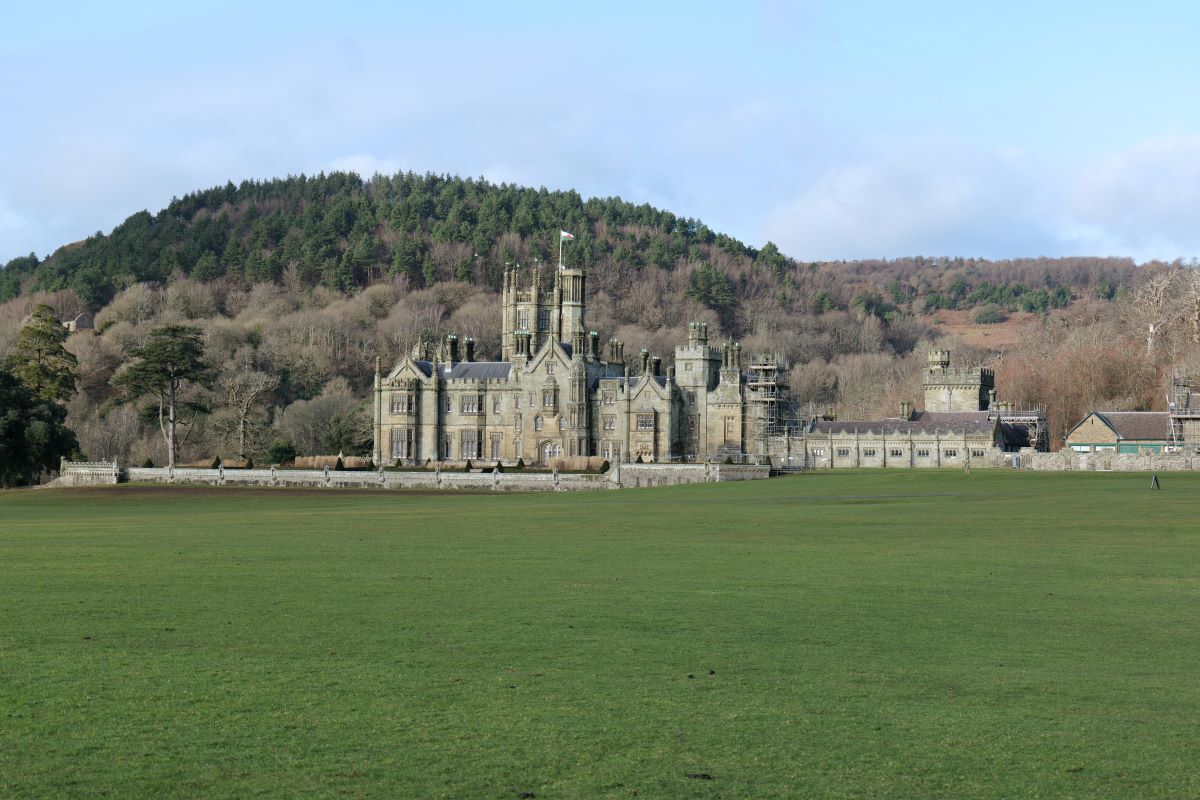
The villa was found at Margam Country Park in Port Talbot as part of a collaborative project between Swansea University, Neath Port Talbot Council and Margam Abbey Church. It was discovered with the help of sophisticated scanning equipment that can detect archaeological features hidden underground. Those involved say the discovery will ‘offer unparalleled information about Wales’s national story’.
Margam Park’s land has never been ploughed or built on, meaning that the remains of the ancient villa have been largely undisturbed over the centuries and appear fairly well preserved. Measuring 572 square metres, archaeologists even (playfully) told the BBC that it has the potential to be the Port Talbot’s answer to Pompeii.
So far, the experts involved in the research have surmised that the building is a corridor villa with two wings – one at the front with six rooms and another at the back with eight rooms – and a veranda, and is surrounded by fortifications. They also say that it was likely to have been ornately decorated with statues and mosaic floors.
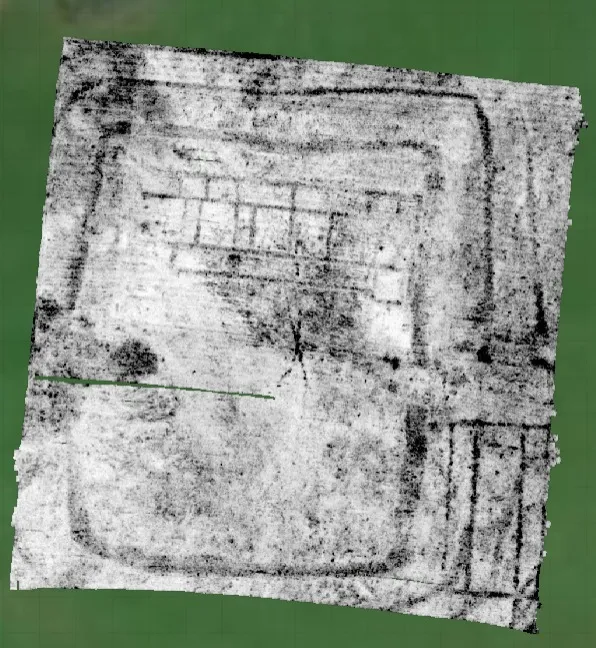
Image: TerradatFootprint of the Roman villa discovered at Margam Country Park
Dr Alex Langlands, co-director of Swansea University’s Centre for Heritage Research and Training, said: ‘This is an amazing discovery. We always thought that we’d find something dating to the Romano- British period, but we never dreamed it would be so clearly articulated and with so much potential in terms of what it can tell us about the elusive first millennium AD here in South Wales.’
‘It is too early to speculate about the date range of the building, its architectural features, who constructed it, and how it fell out of use. But from the geophysical survey alone we can start to build hypotheses about how important this site could be and what it can tell us about Margam’s long-term role in the social, cultural, and economic developments across the first millennium in Wales.’
For now, the priority is to conserve the site. Its exact location is being kept a secret to avoid it being disturbed by rogue metal detectorists. More survey work will be carried out and the organisations involved will work to secure funding for future excavation. The findings of the project so far will be shared with the public in detail at an open day at Margam Abbey Church on Sunday January 17.
The best places to visit in the UK in 2026.
ICYMI: The longest ski slope in Britain is officially being built in Wales for £300 million.
Plus: You can stay in the actual house from ‘Gavin and Stacey’.
Stay in the loop: sign up to our free Time Out UK newsletter for the latest UK news and the best stuff happening across the country.