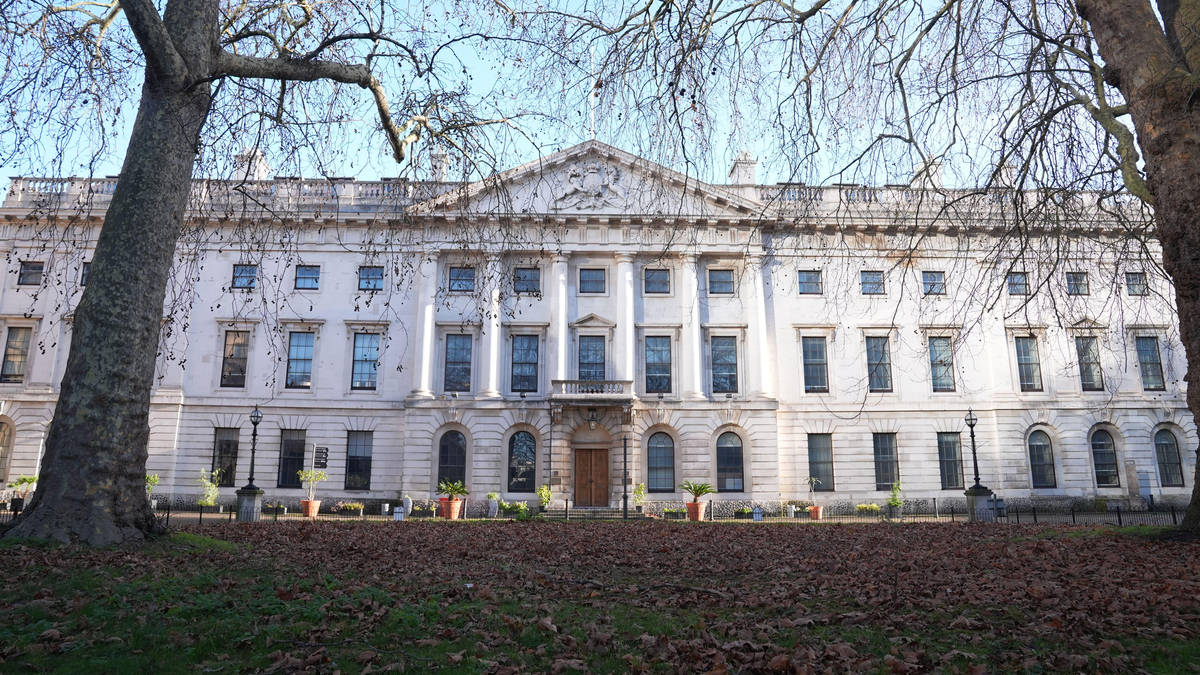
Downing Street believes housing China’s premises on a single site has security advantages, with MI5 and MI6 not having raised any formal objections to the plans.
However, Labour backbenchers fear the embassy will put the UK at risk, with the site sitting alongside some of the country’s most sensitive communications cables, responsible for transmitting financial data to the City of London.
Unredacted plans for the embassy, obtained by the Telegraph, show that a chamber that will sit directly alongside the fibre-optic cables.
A group of MPs have written to Steve Reed, the environment and housing secretary who is expected to approve the move before the Prime Minister’s trip to Beijing , urging him not to do so.
They say “significant and unresolved” concerns remain about the site, which highlight “the fact that this embassy would sit above sensitive infrastructure critical to both the UK’s economic and national security”.
The signatories include Sarah Champion, a member of the joint committee on national security strategy, along with other MPs – including Emily Darlington, James Naish and Mark Sewards.
“Should this application be approved, we would feel unable to reassure our constituents that we are doing everything possible to protect them on British soil,” they say in a letter seen by the Times.
Sir Keir Starmer’s trip to meet Chinese president Xi Jinping this month will be the first trip to Beijing by a British prime minister in eight years.
If the embassy is approved, China has agreed to close more than half a dozen sites it currently used as diplomatic premises in London.
At the same time, the UK is waiting for the Chinese authorities to approve its own £100 million plans to redevelop the British embassy in Beijing.
The new embassy approval comes after MI5 issued a “high alert” warning to MPs towards the end of last year that Westminster staff were being targeted by spies acting for China.
Security minister Dan Jarvis said he had been warned that Chinese agents, often masked through cover companies and head-hunters, had been attempting to “recruit and cultivate” individuals with access to sensitive information.
Those approached included advisers to former Conservative ministers, including an ex-chancellor, advisers to Labour ministers and officials and researchers at several think tanks, among them the Tony Blair Institute.