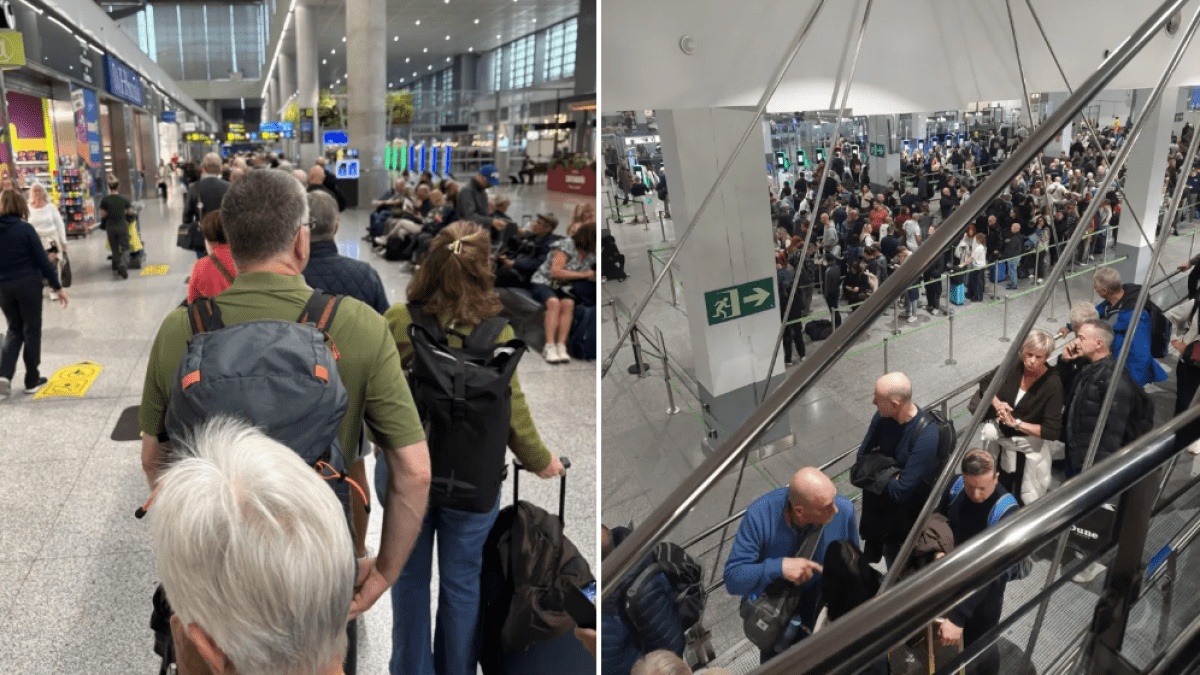
Spain’s hotel body CEHAT is pressing the government for urgent action to tackle gridlock at airports serving popular holiday resorts
British passengers arriving in Spain face long airport queues due to EU biometrics check systems showing “serious deficiencies”, hotel bosses have warned.
The Spanish Confederation of Hotels and Tourist Accommodation (CEHAT) called for extra police to bolster border posts and urged Spain’s government to take urgent action over gridlock at popular holiday resorts like Málaga, Lanzarote and Tenerife.
Since its rollout in October, the entry/exit system (EES) has required non-EU nationals travelling to Schengen Area countries to have photos and fingerprint scans.
New FeatureIn ShortQuick Stories. Same trusted journalism.
But there are mounting concerns about border delays from the new system, with Portugal suspending checks at Lisbon after weeks of chaos.
Last month, Europe’s airport body warned that raising the threshold of passengers checked from 10 per cent to 35 per cent from 9 January could lead to “serious safety hazards”.
ACI Europe said processing times had already increased by up to 70 per cent, with three-hour queues reported before this month’s hike.
CEHAT, Spain’s largest hotel association, blamed congestion at Spanish airports on biometric and technological control systems not operating at full capacity and showing “serious deficiencies” in response times.
Jorge Marichal, president of CEHAT, said: “We are facing a common situation at many international airports in Spain that requires an immediate and coordinated response from the state.
“It is unreasonable that, after a journey of several hours, tourists face waits of an hour or more to enter the country.”
He added: “Spain cannot afford for the first contact of millions of visitors with our country to have endless queues at passport control.”
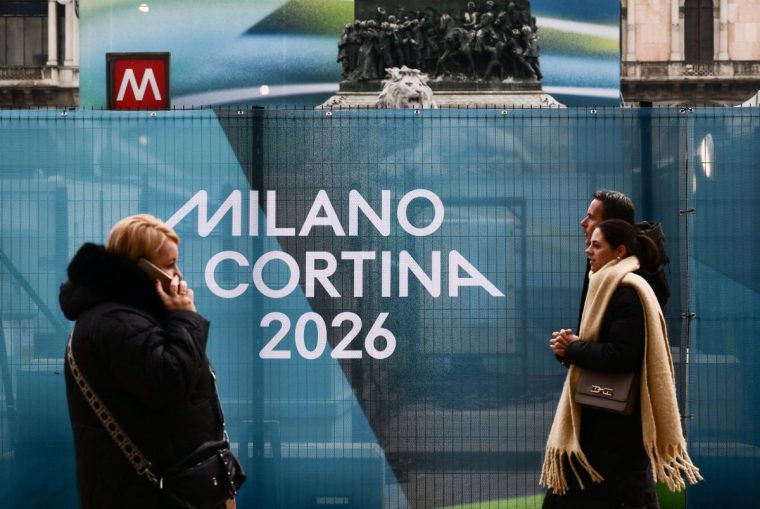 EES checks have been suspended at Milan Airport for athletes and officials heading to next month’s Winter Olympics in Milan (Photo: Stefano Rellandini/AFP)
Meanwhile, fears over airport congestion at next month’s Winter Olympics in Milan have led Italy to consider suspending EES checks for athletes and officials.
According to reports in the Italian press, the airports where checks would be stopped are Milan Malpensa, Milan Linate, Venice, and Verona.
The i Paper understands the suspension has not been confirmed, but that it is one option being discussed to mitigate delays from the games, which take place from February 6 to 22 and are due to attract up to two million visitors.
The busiest airport, Malpensa, is expecting more than 150,000 fans and 15,500 Olympics participants and officials in the week before the opening ceremony , bringing a substantial increase in traffic from non-Schengen countries.
Olivier Jankovec, director general of Airports Council International (ACI) Europe, told The i Paper: “There are legitimate concerns about the capacity of border-control processes to absorb this demand smoothly.
“With the threshold of required registrations in the EES now pushed to 35 per cent, both the airport operations and the passenger experience are at risk.”
Milan airports operator SEA said October’s initial launch of EES had already led to a “significant” increase in border control processing times at Malpensa, with the Italian Government deploying additional officers for the Winter Olympics.
It comes after Portugal’s government suspended EES checks over Christmas for three months at Lisbon’s Humberto Delgado airport following weeks of chaos that left passengers facing queues of up to seven hours.
Soldiers have been drafted in to reinforce border posts at the airport, one of Europe’s busiest.
Around 2.3 million British tourists travel to Portugal each year, with Spain, the most popular holiday destination for Britons, welcoming around 18 million.
In Spain, CEHAT demanded permanent reinforcement of police at airports with the most international traffic and full operability of biometric border control systems to tackle delays causing “serious damage” to travellers and tourism.
 Travels must now register their fingerprints when they enter the EU (Photo: Gareth Fuller/PA)
An influx of non-EU passengers, especially from the UK, was generating “recurring bottlenecks”, CEHAT said, which were especially serious for families with young children, elderly people, or those with special needs.
The confederation said problems were compounded by insufficient police personnel to meet the demand in passenger numbers.
Spain’s Interior Ministry said that since October’s launch, EES had been tested at ports, airports, and land borders “without any queues or significant incidents occurring to date”.
Last month, passengers told The i Paper they waited in “horrific” EES queues of almost two hours at Málaga Airport, with kiosks for facial and fingerprint scans not working.
They warned of potential safety issues due to overcrowding in peak travel periods this year, once all non-EU nationals are required to undergo EES scanning.
Despite ACI Europe warning of the impact from increasing checks to 35 per cent of all passengers, the European Commission insists EES has operated “largely without issues” or “significant queues”.
Brussels claimed that concerns about the 35 per cent registration threshold had been “disproven”.
Your next read

However, Jankovec responded: “Our airport members are on the frontline of the rollout and are therefore well placed to assess its operational impact”.
Airports were already sharing visual evidence of queues since 9 January, which was “clearly a cause for concern”, he said, but added it is still too early to draw firm conclusions on the full impact of the increased threshold.
However, the Portuguese government’s suspension of EES at Lisbon showed “the very real operational pressures being experienced on the ground”.