WILMINGTON, N.C. (WECT) – North Carolina hospitals and sheriffs are at odds over a new law regarding mental health evaluations for alleged criminals.
Iryna’s Law, passed last year, allows a violent offender to undergo a mental health evaluation. But the question of where the evaluation takes place is causing uncertainty.
The law requires evaluations to be conducted at a hospital or crisis facility, but this is causing a rift between healthcare facilities and law enforcement.
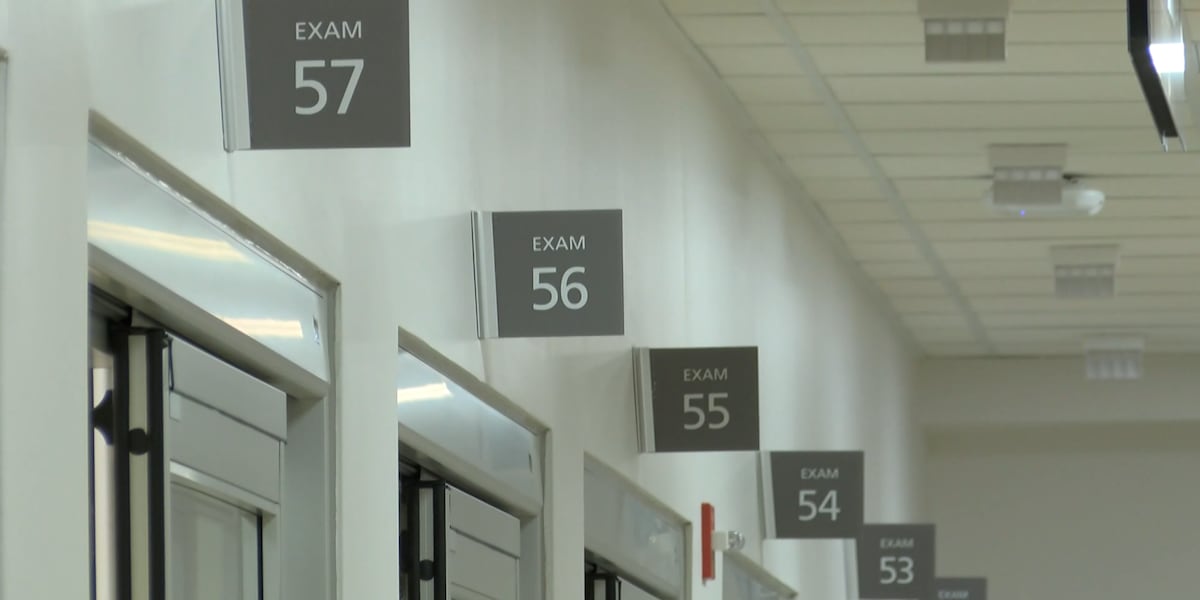
Some officials argue that these evaluations should occur in jails, citing safety concerns for both patients and staff in emergency rooms.
However, the Sheriff’s Association disagrees, stating hospitals are better equipped to handle both the mental and physical aspects of these evaluations.
Eddie Caldwell is the executive vice president and general counsel of the Sheriff’s Association. He says subjecting someone to jail for a mental health evaluation could exacerbate the initial problem.
“Taking someone with mental health needs and putting them in jail is probably going to make their mental health problems even worse,” said Caldwell.
Rep. Timothy Reeder, co-chair of the committee tasked with finding a solution to the question at hand, says it could take months.
“I definitely have a bias and perspective working in the emergency department all the time. And so I see the repercussions and ramifications if the emergency departments or hospitals become part of this continuum,” said Reeder.
But the committee in Raleigh is looking at all the factors at play and wants to hear everyone’s perspective.
“What I don’t want, what I’m not going to accept, is for people to come to our committee to come to the legislature and say ‘It’s not my problem, it’s someone else’s,’” Reeder said. “This is a complicated problem with multiple stakeholders. What I’m looking for, what the committee is looking for, is for people to come together to say ‘this is how I can address this part of the issue,’” Reeder said.
Reeder says every opinion is valued.
“What I say on the committee is ‘open yourself up to the possibility of other viewpoints.’ So that we can come up with a good solution,” Reeder said. “I think that too often when we problem solve, we get in our own camp and we have difficulty looking at the problem and brainstorming solutions from a different perspective.”
According to Reeder, developing a solution can be difficult when mental health is not properly addressed.
“There are a lot of problems in the existing mental health system. And this population we’re talking about is a subset of the general population, but they’re more complicated,” said Reeder. “When you have someone who has an allegation or an arrest or charges for violent behavior, the resources needed to take care of that person are not as easily available…If I put my medical model hat on, it’s difficult to develop treatment if you don’t have a good diagnosis, and the first step of diagnosis is that initial assessment. So we need to think about and look at our original workforce.”
But Caldwell stands firm that jails are not equipped with the proper resources to address someone’s mental health needs.
“The Association says the patient can get a good mental health evaluation at the hospital, and a good physical health evaluation to determine if their mental health problems are being caused by their physical health problems,” said Caldwell. “And we believe the best place to do that is in a medical facility. Whether that’s the emergency department or some other kind of medical facility.”
Reeder says the committee also wants to speak with patients who have undergone those evaluations to get their input as well.
Copyright 2026 WECT. All rights reserved.