
The United States is the center of warplane manufacturing in the world, and some of the most legendary aircraft manufacturers in the world proudly wave the stars and stripes. In 2025, the biggest players in the fighter jet business are  Boeing and Lockheed Martin, and the F-16, F-15, F/A-18, F-22, F-35 and future F-47 are all made by these two juggernauts of defense technology.
It’s also well known, and sometimes controversial, that the aircraft in the US Armed Forces and its allies have grown enormously complex and intensive to construct. Lockheed Martin’s F-22 Raptor plant shuttered in 2011, and Boeing’s F/A-18 Super Hornet assembly will follow suit in 2027, but the others are going strong, with US assembly lines currently cranking out over 300 fighter jets per year!
By The Numbers
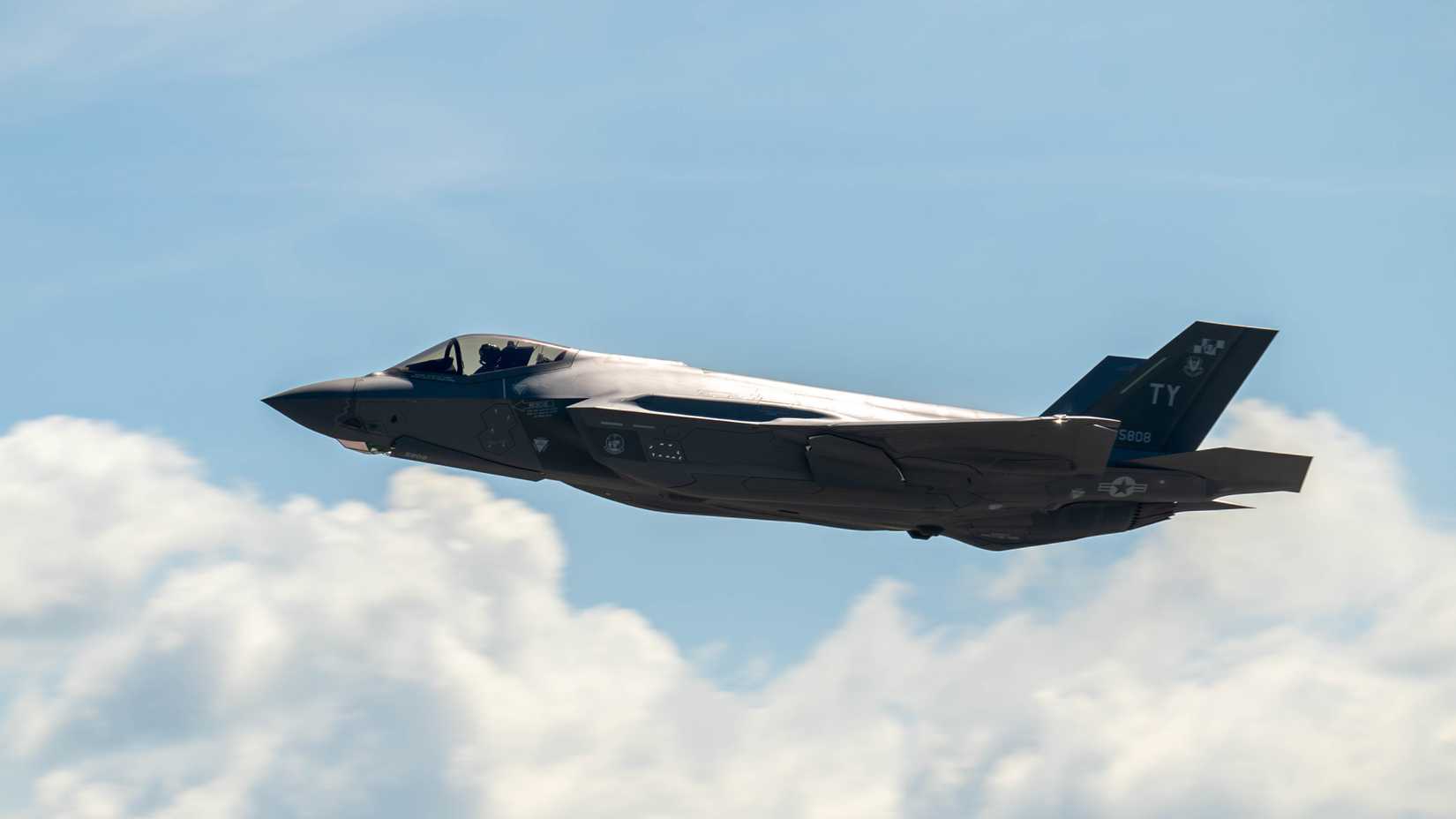
Credit: Photo: US Air Force
The US military is slowly shifting to a predominantly fifth-generation fleet, with any fourth-gen or ‘4.5’ fighters undergoing retrofits to recapitalize the airframes and modernize the fleet. The Super Hornet is projected to sunset by the end of 2027, and Boeing is balancing the final deliveries against its steadily ramping-up Eagle II production with the two models at roughly the same output rate now.
On the other side of the house, Lockheed Martin is in overdrive thanks to hundreds of orders for its stealth F-35A/B/C Joint Strike Fighter (JSF), the Lightning II. This may not be a completely fair comparison as the F-35 supply chain is global with contributions from both Europe and Japan, and the jet also has three variants to pump up its numbers. The F-16 Fighting Falcon is also still going strong, despite nearly five decades passing since its debut.
Model
Monthly Deliveries
Lockheed Martin F-35 Lightning II
20 to 23
Lockheed Martin F-16
3.5 to 4
Boeing F/A-18E/F Super Hornet
1.5 to 2
Boeing F-15EX Eagle II
1.5 to 2
MONTHLY TOTAL
26.5 to 31
ANNUAL TOTAL
318 to 372
The venerable Super Hornet may be on its last hurrah, but the other frontline fighters produced by America’s top aerospace builders are still in demand, with potential future orders of the F-15EX and F-35. The recently awarded Next Generation Air Dominance (NGAD) to Boeing will see the first sixth-gen fighter jet get underway in the near future as the F-47 begins development.
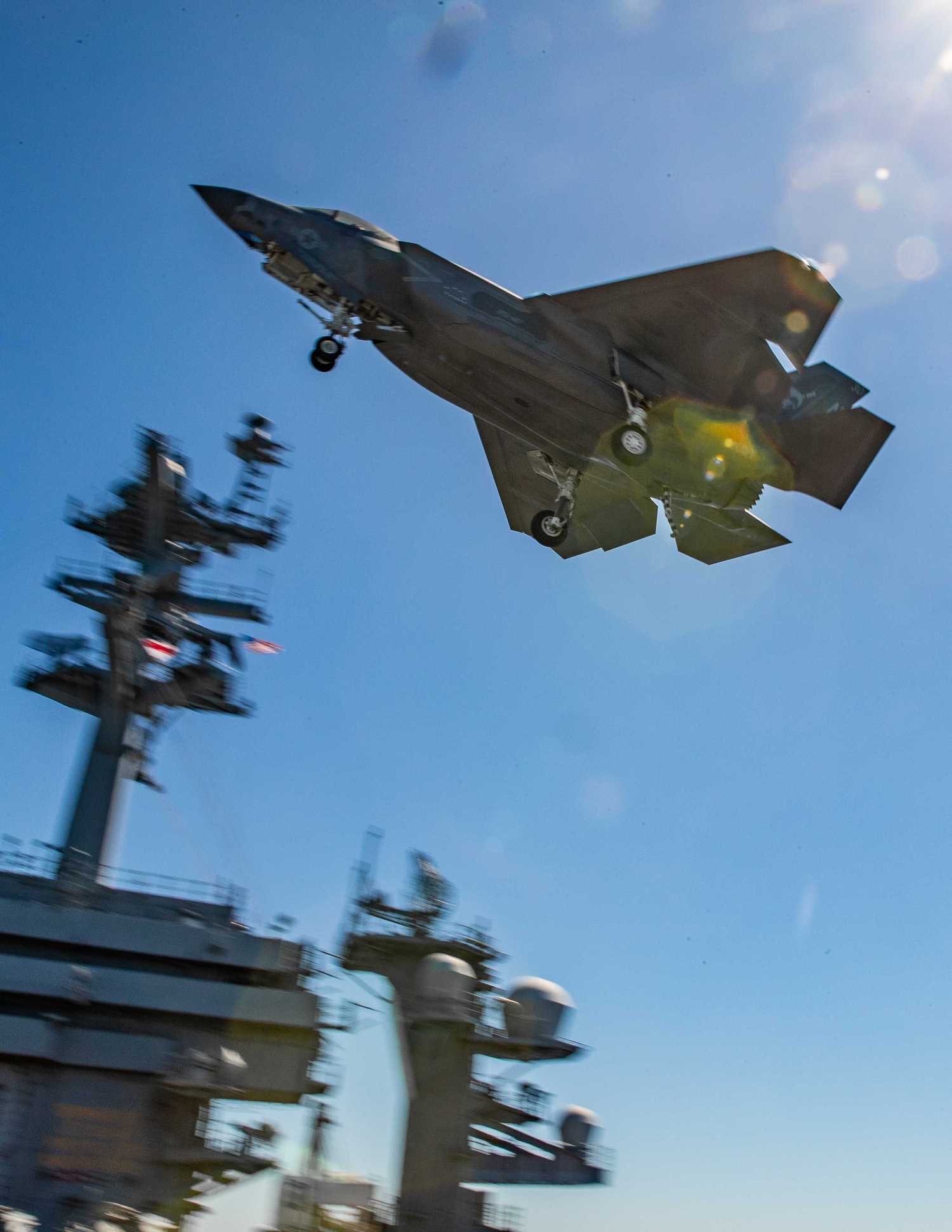
Lockheed Martin F-35A/B/C Lightning II
Credit: US Navy
Not the star of this story is the JSF, which has been in incredibly high demand by the US Air Force, US Navy, and US Marines as well as allies in NATO and Japan. The three variants of the jet, along with the commonality, make production stronger and more streamlined. All three share the fundamental features of stealth, high performance, and advanced sensor capabilities. These baseline attributes make it a game-changer for the other services of the US military, which are getting their first stealth aircraft.
The US Navy is the only operator of the C-model so far, which only differs from the most popular A-model in having larger wings and beefier landing gear. The B-model, however, which directly replaced the Boeing AV-8B Harrier II for the US Marines, has been exported too. Indeed, Italy, Japan, Singapore, and the United Kingdom have all opted for at least a small number of stealthy jump-jets to upgrade their naval air arms.
The F-35A is the mainline model and accounts for about 90% of the 1,200+ units delivered so far. Lockheed successfully delivered its highest monthly amount of 23 jets in April 2025, with the aim of beating its previous annual record of 156 of the fifth-gen fighters.
Following a string of blunders and delays resulting from challenges integrating the Technology Refresh 3 (TR-3) package, Lockheed Martin is currently shipping a mix of newly manufactured and previously completed aircraft from storage. Defense and Security Monitor reports that roughly 18% of this year’s deliveries will originate from previously constructed units.
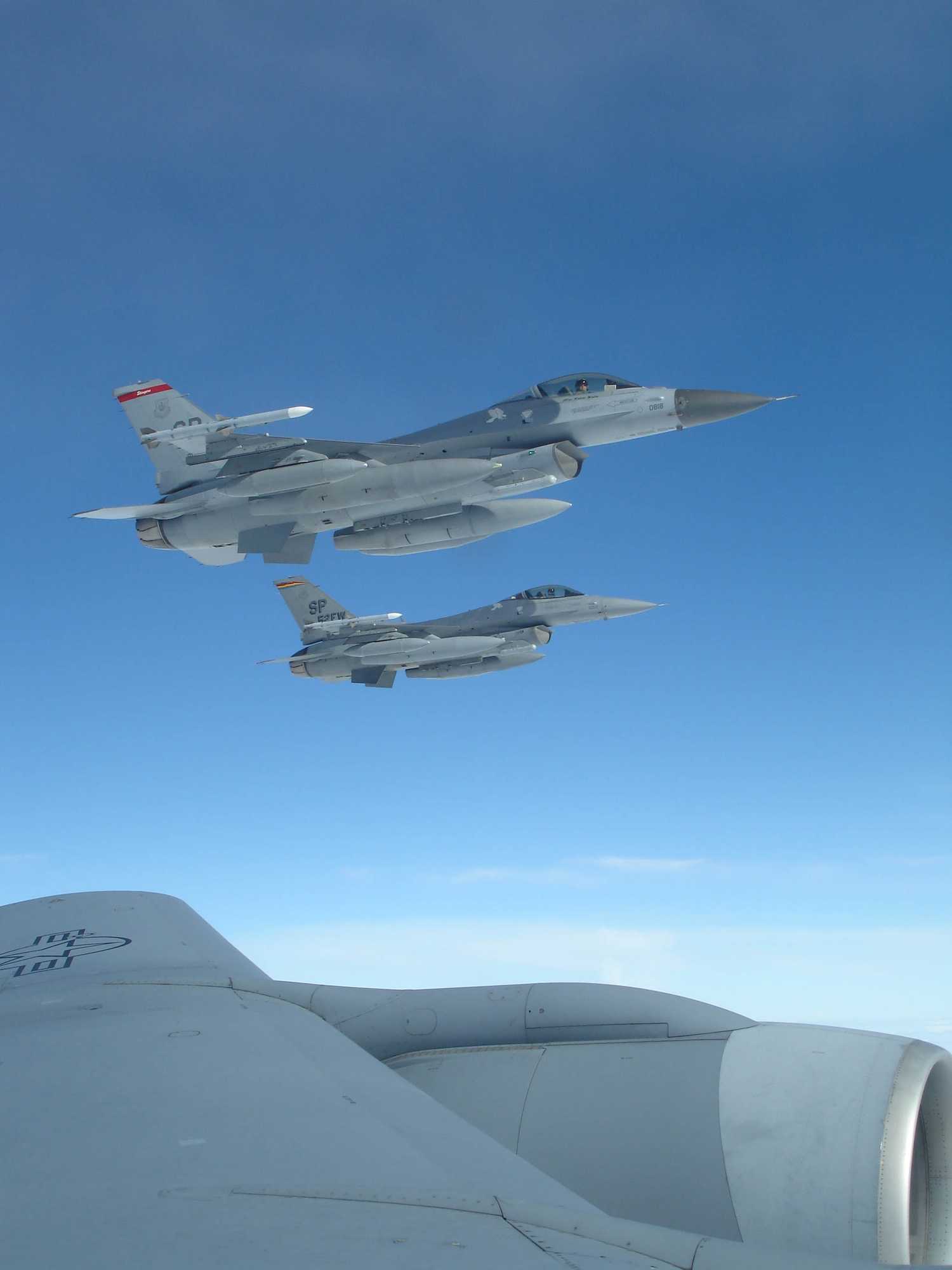
Lockheed Martin F-16 Fighting Falcon
Credit: Photo: US Air Force
Lockheed Martin anticipates that the F-16 will continue to increase steadily due to demand from throughout the world for many years to come. In addition to holding 140 solid orders from Bahrain, Bulgaria, Jordan, Slovakia, Taiwan, and others, there are 117 Block 70 planes in backlog, and Lockheed has already delivered 23 of them.
Turkey has also decided to purchase the same aircraft independently. There is space for about 300 more sales, according to managers, and, with a longer-term objective of surpassing 30 aircraft annually, output increased from five in 2023 to sixteen in 2024 and is anticipated to achieve 23 to 26 in 2025.
The fighter’s significance in the worldwide fourth-generation market is further reinforced by the approximately $25 billion in new manufacturing and upgrade contracts. Mike Shoemaker, the VP and General Manager of the Integrated Fighter Group at Lockheed Martin, told Shephard Media:
“I’m very bullish on the programme [and] of its bright future. We’re committed, from a Lockheed perspective, to be a life cycle partner with all of these customers coming on. And for them, it’s an opportunity to really join a growing, already mature ecosystem, from both the operations perspective, but also the sustainment in country.”
The plant in Greenville, South Carolina, currently has 16 hangars and 1.2 million square feet. More than 700 old F-16s are being updated with Block 70/72 capabilities, including hundreds of new hardware improvements and regular software releases, in addition to the new builds. Customers include Greece, Singapore, and Poland, and Greece has already received 30 modified Vipers that are expected to be completed in 2027.

more like this
How Many F-35s Are In Service With The US Air Force?
The US Air Force has over 400 and perhaps closer to 500 F-35s in inventory, while Lockheed has delivered over 1,000 F-35s in total.
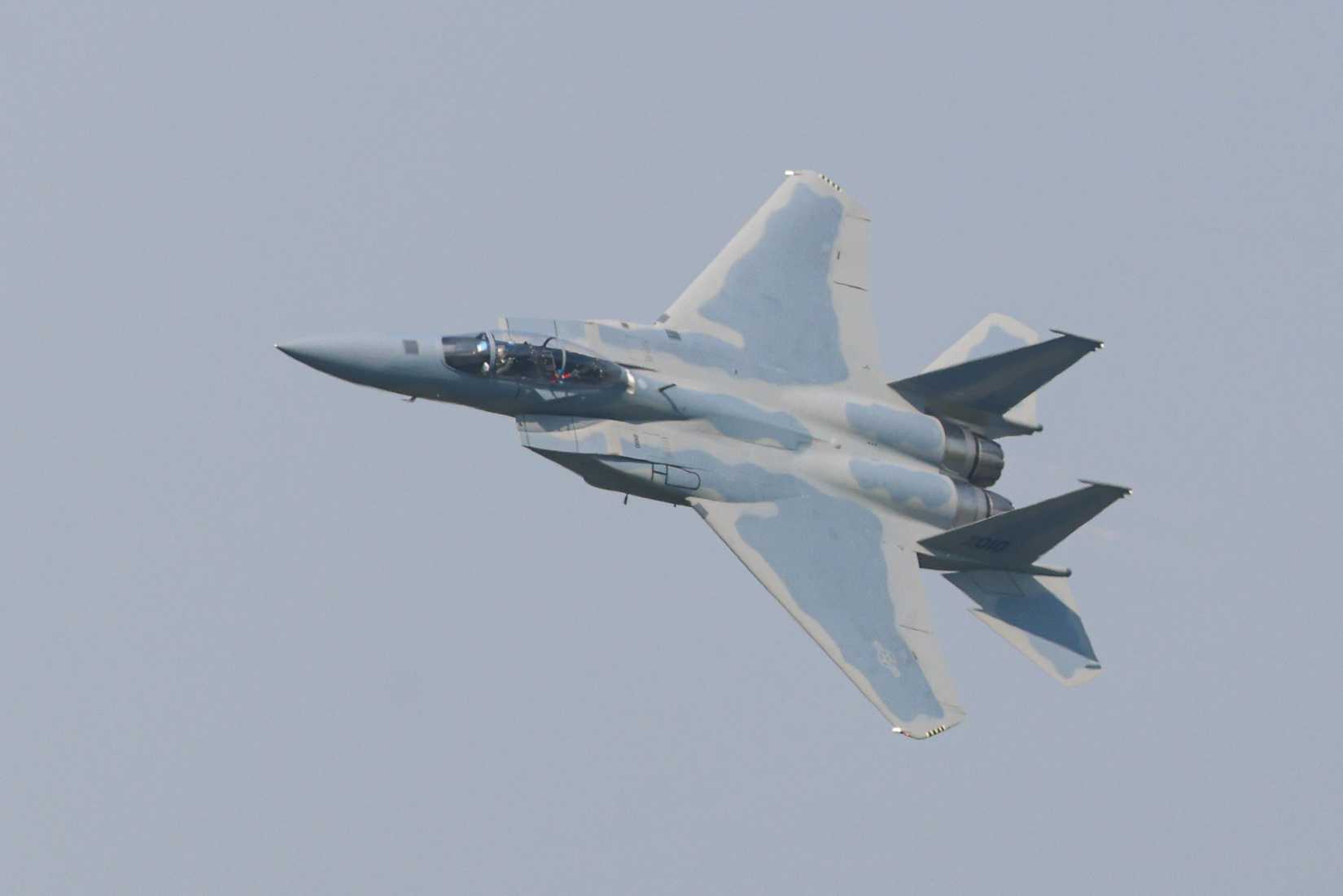
Boeing F-15EX Eagle II
Credit: US Air Force
With 90 planes already ordered and a goal of delivering two aircraft per month by the end of 2026, Boeing is speeding up the production of the F-15EX Eagle II. Recent factory modifications and the ‘Cut the CoRRS’ campaign have increased productivity and stabilized the assembly line. The Eagle II has modern avionics, an open mission-systems architecture, and the capacity to carry up to a dozen AIM-120s in addition to future hypersonic weapons.
Maintaining combat readiness against near-peer threats, Pentagon planners see the jet’s endurance, high performance, and heavy arsenal as essential assets. Tom Altamuro, Boeing’s Director of F-15 Manufacturing and Safety, was quoted by Defence Blog as saying:
“Factory performance has been improving in recent months, with rework and traveled work rates decreasing month over month, enhancing workflow productivity and supporting factory stabilization.”
Indonesia may be the first foreign customer of the F-15EX Eagle II, while other possible export markets include Saudi Arabia, Israel, Egypt, Thailand, and Poland. The sale of 36 F-15ID (Indonesian-spec F-15EX), including electronic warfare systems, mission computers, helmets, navigation pods, targeting pods, and other equipment, was approved by the US State Department this year. For others, the exorbitant cost of the F-15EX presents political and financial obstacles to procurement.

you may like
Which Country Has The Most Superior Military Jets In The World?
Discover why the US leads global air power with over 13,000 aircraft, cutting-edge fighters like the F-35, and sixth-gen tech like NGAD and B-21.
Boeing F/A-18E/F Super Hornet

Credit: Shutterstock
Despite a recent $1.3 billion Navy contract for 17 more aircraft, which postponed the line’s shutdown by two years, Boeing still intends to stop producing the F/A-18 Super Hornet in 2027. The St. Louis operation will reduce its output from two planes per month to around one and a half as its staff progressively transitions to programs like the F-15EX, T-7A, and MQ-25.
The intended purchase was cut from 20 to 17 aircraft due to inflation. Breaking Defense quoted Mark Sears, Boeing’s Vice President for Fighters, who said in an interview that:
“We ran a number of international campaigns or competitions that we were unsuccessful in previous years. Those kind of played out and there are no active discussions with the Navy about additional F-18s beyond these.”
In order to retain hundreds of Super Hornets in operation for many years to come, Boeing is also updating the current models to the Block 3 standard. The March contract settled a long-running disagreement over technical data rights and gave the Navy greater latitude in servicing the aircraft without compromising Boeing’s intellectual property.
F-47 Next Generation Air Dominance
Credit: Photo: US Air Force
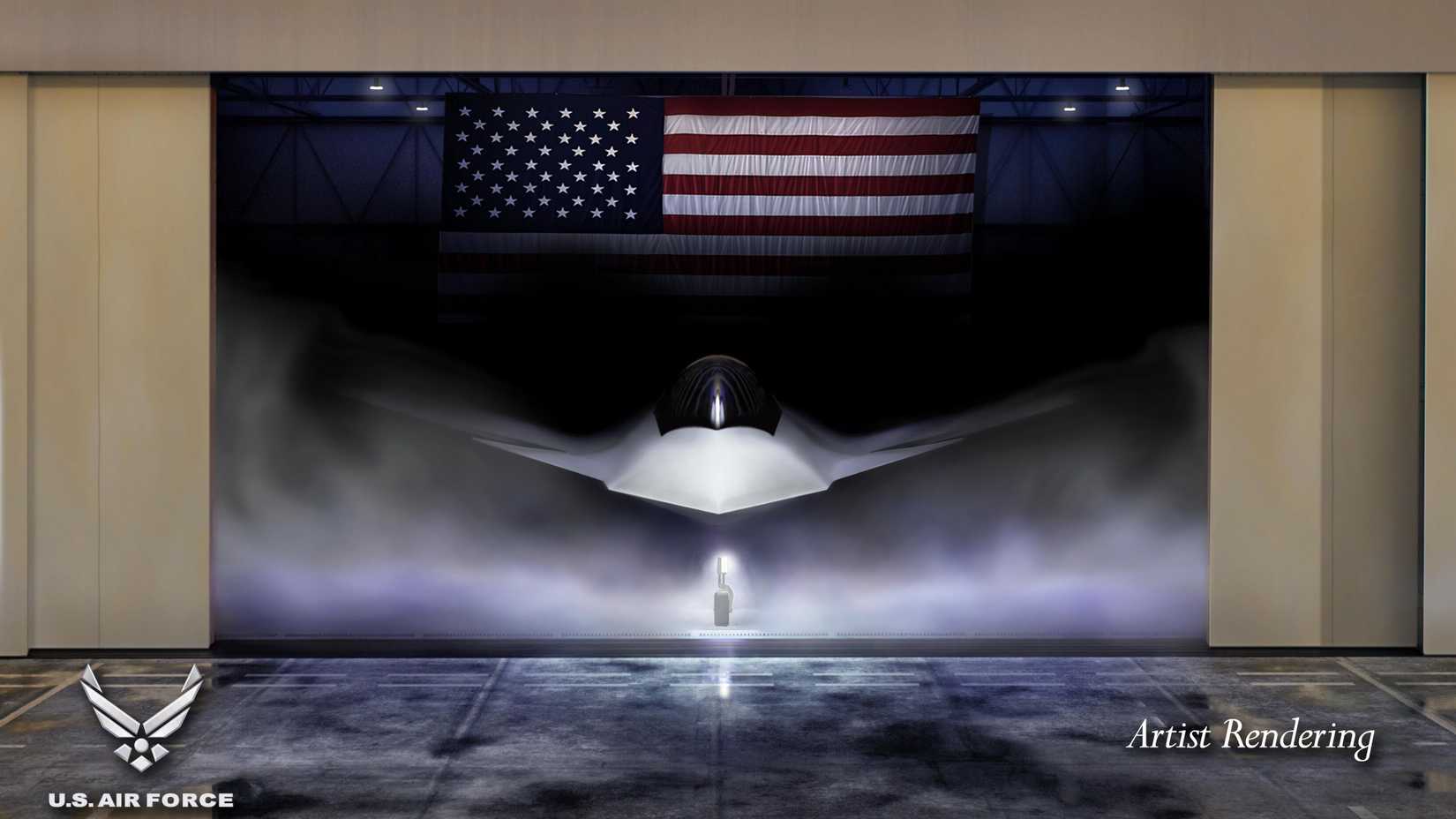
The Pentagon’s proposed Fiscal Year 2026 budget fully commits to the US Air Force’s F-47 sixth-generation stealth fighter, while effectively shelving the US Navy’s plans for a next-generation carrier-based F/A-XX combat jet. The decision is driven by the idea that America’s industrial base cannot develop and produce two advanced stealth fighters simultaneously. Previously planned purchases of stealth F-35 Joint Strike Fighters are set to be slashed by more than half as part of a shift in resources
The Navy’s FA-XX program will maintain minimal development funding to preserve the ability to leverage F-47 work while preventing over-subscription of qualified defense industrial base engineers. The Pentagon is maintaining a request of $74 million for the F/A-XX program in this budget to complete the ongoing development efforts, but there is speculation that a modified F-47 may ultimately become the F/A-XX.
The War Zone reported that US President Donald Trump has proposed selling Boeing’s new F-47 sixth-generation stealth fighter to Japan. During a phone call with Prime Minister Shigeru Ishiba, Trump promoted the ’47’ designation (which mirrors his status as the 47th President) and spoke of strengthening the bilateral defense partnership. He also praised the F-22 and an unconfirmed F-55,’ described as a twin-engine variant of the F-35.
Tokyo has not signaled formal interest in the F-47, but it is reassessing its fighter roadmap as the multinational Global Combat Air Program between Italy, Japan, and the United Kingdom appears to be slipping delivery to the late 2030s or 2040s. To cover a potential capability gap, Japanese officials are also considering more F-35s than the 147 already planned.