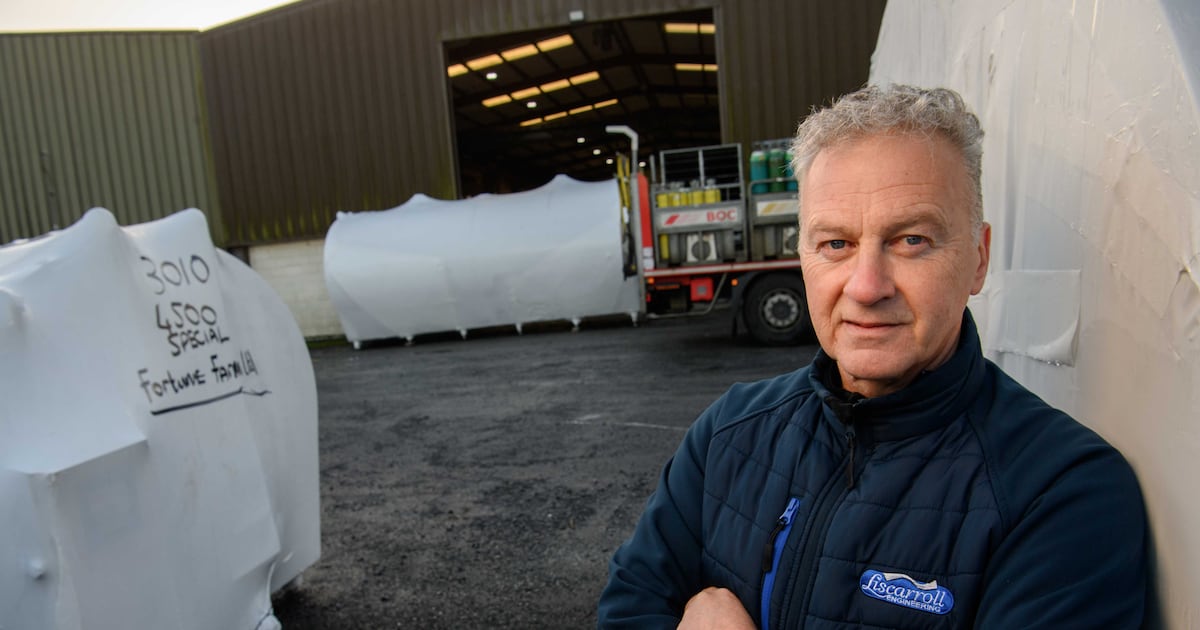
Looking back over the five years since Liscarroll Engineering began selling in Northern Ireland, Sean McGowan reflects on the lessons learned. Most importantly, there is only one language in a dairy farmyard. The language of milk.
Soon after the small but highly specialised north Cork business began selling its milk cooling tanks there, the company was introduced to a Unionist farmer he chooses not to name, whose sibling is “a very famous politician”.
“He comes from an Orange Order perspective, from that culture. There was a certain nervousness of what we would have to talk about, I suppose. We ended up putting in a milk tank for him.
“Dealing with him was a joy. It was a revelation. We just got on with business. We spoke the same language. We talked about cows, about cooling milk, we talked about farming,” McGowan tells The Irish Times.
In five years, Liscarroll Engineering has moved from selling nothing in Northern Ireland to selling a fifth of the tanks and cooling systems made by its 18 staff in the north Cork village of the same name there. “We haven’t had a bad experience, not one.”
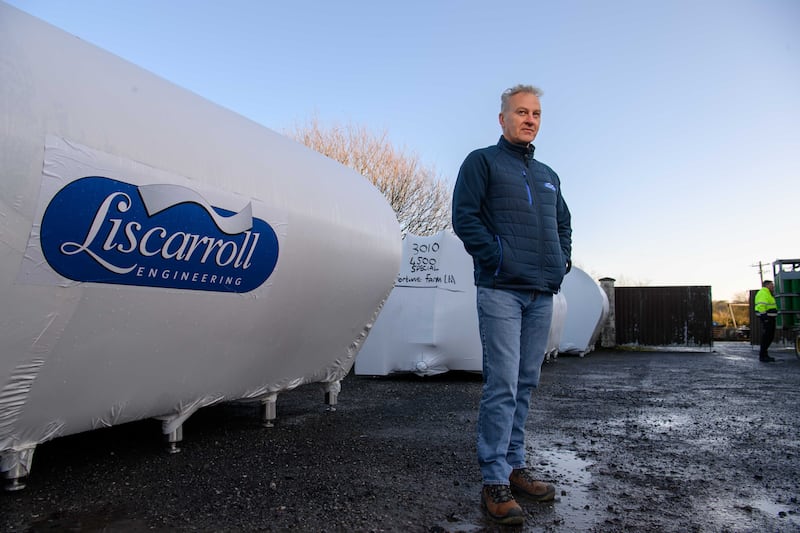 Sean McGowan, director of Liscarroll Engineering: ‘We’re growing. That’s helped us, a small company in Cork, to secure our futures.’ Photograph: Daragh Mc Sweeney/Provision
Such stories are a joy to the ears of Colin McCabrey of the Newry-based, but all-island InterTradeIreland, whose job it is to encourage businesses North and South to look at the Border as an opportunity, not an obstacle.
Companies such as Liscarroll Engineering are far from being alone, but, equally, they are not the norm, even if North-South trade has risen more than seven-fold since the Belfast Agreement in 1998.
For McCabrey, cross-Border trade has become “the very first stepping stone” for companies on the island wanting to move outside their home market: “If it is your first market outside of the South you’re trading in, you’re building relationships.
“Then, you can easily springboard into Britain. If you’re a Northern Ireland business, the same is true. You’re trading in dual currencies and that can be developed into Europe. So, it’s a really important first step,” he says.
He could well have been talking about Liscarroll Engineering. Having built “a really strong partnership” with Belfast-based farmer-owned co-operative Dale Farm on the back of an introduction from InterTrade, it won sales from its farmers.
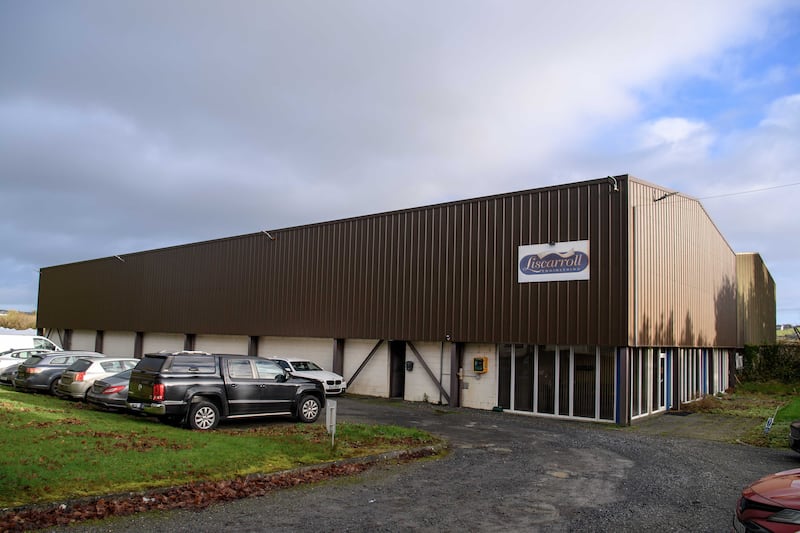 Liscarroll Engineering. Growing sales in Scotland and the north of England now make up 13% of the Co Cork company’s turnover. Photograph: Daragh Mc Sweeney/Provision
“We sat down with them and showed them what we could do. They told us that their farmers were buying tanks from Britain, or they were getting them from France or Belgium. We went from there,” McGowan said.
Early success brought the confidence to start selling into Scotland on the back of the contacts made in Northern Ireland. Soon, they had signed up a distributor and set up a spare parts store there, before turning south to sell to farmers in England.
Trade on the island has been helped by Brexit. The Windsor Framework means that trade in goods remains as seamless as before Brexit, with Northern companies finding suppliers in the Republic for products previously sourced in Britain.
Paperwork issues for North-South trade are essentially non-existent, says McGowan: “It’s been nearly seamless for us. A colleague here does our paperwork. There was a little bit of learning at the start, a few questions, but they were dealt with quickly by InterTrade.
“It’s the fear of the unknown, even though you don’t realise it, probably, that often influences your decisions. The only way to get over it, literally, is to cross the road, and just go. Make the effort.”
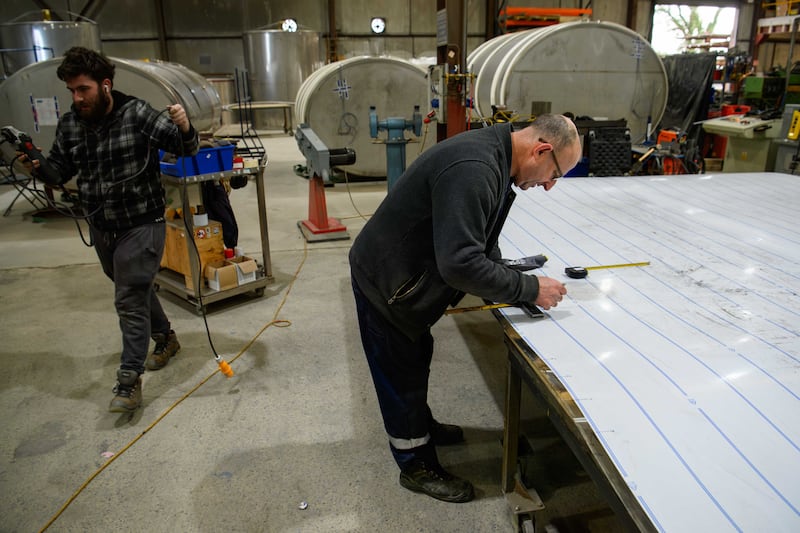 Workers in Liscarroll Engineering, Co Cork.
Photograph: Daragh Mc Sweeney/Provision
Growing sales in Scotland and the north of England – ones that would never have happened had Liscarroll Engineering not sold into Northern Ireland initially – now make up another 13 per cent of the company’s turnover.
“We’re growing. That’s helped us, a small company in Cork, to secure our futures. It genuinely has because farming has its ups and downs and always will. So, it’s helped us through that,” McGowan says.
Trade on the island of Ireland, says McCabrey, has increased for many reasons, including simple, but obvious things such as better roads and better communications.
Just as importantly, if not more so, “the cultural stigmatism” that was such a feature of life during the Troubles has “been neutralised” now.
“Yes, it has taken us 25 years, so you’d like to think it would be gone by now, but there’s a drive to work collaboratively now that wasn’t there in the past,” McCabrey says.
Interestingly, the growth in North-South goods trade – not including services – has happened despite Brexit. Between 2001 and the referendum vote in 2016, North-South trade had stagnated, oscillating between €2 billion and €3 billion a year.
By the end of 2016 – the Brexit referendum was held on June 23rd that year – cross-Border trade in goods had risen to €3.5 billion, before rising sharply to €4.8 billion by the end of 2019.
Then, that number jumped explosively, to €10.2 billion by the end of 2024 – a 276 per cent increase on the pre-Brexit numbers, and a third higher than when the UK formally exited the European Union.
For Colin McCabrey, a slew of crises has “really sharpened the mind of businesses”, faced as they were by the Covid pandemic, the long, drawn-out and continuing fallout of Brexit, higher energy costs and US president Donald Trump’s tariffs.
Set against such a landscape, the opportunities offered by North-South trade – same language, no barriers, similar cultural backgrounds – have become attractive to companies on both sides of the Border which would never have thought of it before.
For that, InterTradeIreland offers a variety of assistance, including its Acumen programme that pays for up to €21,500 of the costs of putting a salesperson on the ground in the other jurisdiction for a year, or half that for a part-time hire.
In addition, InterTradeIreland will help companies make contacts, prepare business plans, mentor and offer guidance on customs questions, VAT requirements, and regulatory and labelling issues. It also helps with the obligations created by having workers on the other side of the Border.
Such help has proven invaluable for Derry firm MFC Sportswear, which had managed to sell kit occasionally to clubs across the Border, but not much more.
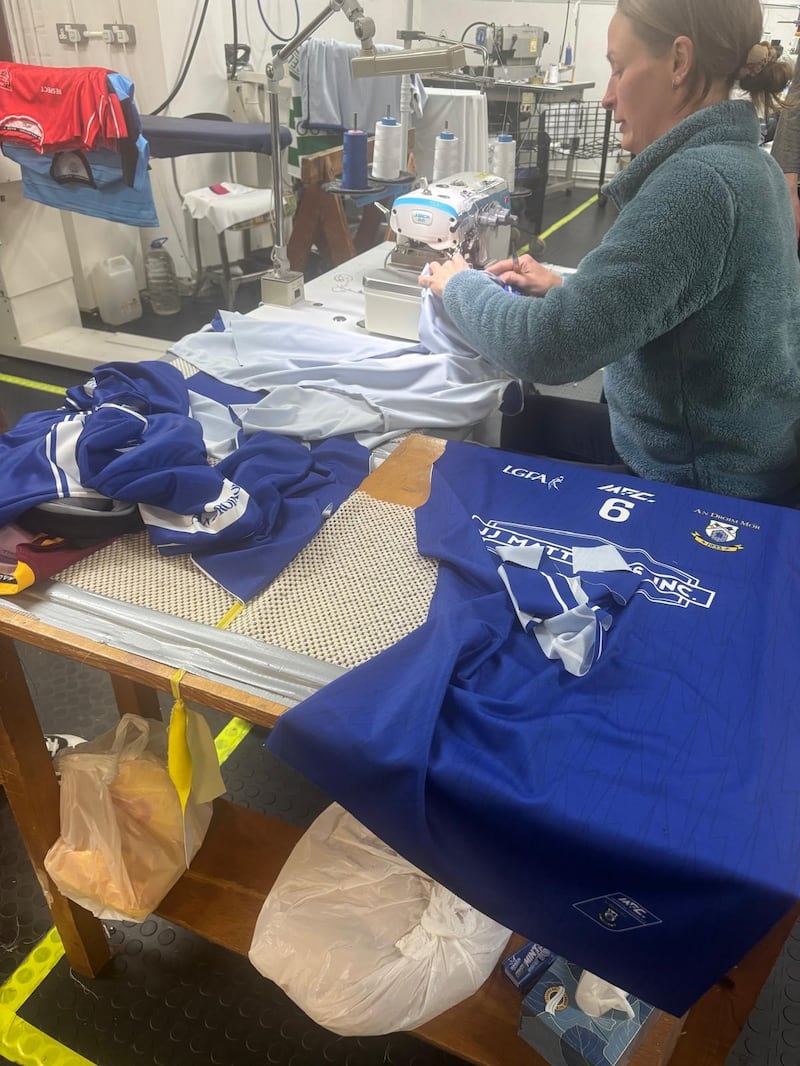 Lisa Leathem making a GAA jersey for the Derry-based sportswear company, MFC Sportsgear
“We had developed a local brand, but we wanted to go South properly,” the company’s founder, Tyrone-born Sean O’Neill, tells The Irish Times.
The help offered by InterTradeIreland’s Acumen programme was decisive, he says. They started off with a sales representative based in Dublin, later moving the individual to Killarney for eight months.
In all, MFC Sports got €35,000 worth of InterTradeIreland supports over six years. The market for sports gear in the Republic dwarfs the one in Northern Ireland: “Clubs like Clanna Gael Fontenoy in Dublin, or the other great clubs there, could spend €100,000 on kits,” he says.
Today, the company has two well-known GAA players working for it in the Republic, five-time All-Ireland winning Dublin player Niall Scully, and the Kerry midfielder, Joe O’Connor, who won his first All-Ireland this summer. He looks after Munster.
The local connections help, though O’Neill says they have found no resistance being a Northern company: “The GAA is the GAA, so people know each other from all over the island,” he says.
Well-known “local” faces help, he says, but “the same goes for any product no matter where you are selling it, whether it is in the North, the South, or across the water. Having well-trusted people will always make life easier”.
[ Cross-Border workers refused mortgages by banksOpens in new window ]
Under GAA licence agreements, MFC Sports currently sells the full jersey, shorts and socks for ladies’ football and camogie. It also sells a full range of leisure wear for clubs, such as coats, hoodies, jumpers, polo shirts, bobble hats and tracksuit bottoms.
It has tendered for a licence from the GAA to sell team-kit for men’s football teams, where it hopes that manufacturing the kit in a factory in Lurgan, rather than importing from Asia, will weigh in its favour.
“That would be a huge thing for us. If we won, then all of our kit would be manufactured in Lurgan in a factory that has decades of experience. That return of manufacturing is really important,” he says.
For the future, Colin McGabrey is optimistic about North-South trade, believing that it can play an ever more significant role – especially for small, Irish-owned firms. He argues the ones that have not done so thus far must seize the opportunity.
“Sometimes, it’s a capacity question. People are busy doing the things they have to do every day, so they don’t have time to look up to see the opportunities that are there. Sometimes, SMEs get to a level and then they plateau.
“They’re happy with the order book that they’ve got, and they maintain that as opposed to continuing to grow and develop. There’s a wee bit of that. On the other side, they see the issues they would have to contend with, if they want to grow.”
Some of those choices require investment, new staff or robotics to ease manufacturing: “So, there are lots of things for SMEs to navigate. There are a few sides of the coin in terms of impediments to growth,” he accepts.
But he says cross-Border trade is growing in every sector. “We see a big growth in food businesses accessing our supports, which echoes the changes taking place in supply chains, where people are looking to ‘nearshore’ the supply of ingredients,” says McCabrey.
The importance of cross-Border trade can be seen at every filling station on the M1 each morning, with builders’ vans from Northern Ireland “stocking up” before a day on construction sites across Dublin, he adds.
Equally, the “pull” of Dublin construction sites is creating an opportunity in reverse for construction firms on the southern side of the Border who are able to bid for business left untouched by northern counterparts.
However, some business is less visible, such as consultancy services, with companies in the Republic able to win higher fees for their work than would be the case in Belfast, which is lacking in such companies.
Seeking business across the Border is good for a company, research published by InterTradeIreland shows, with 50 per cent of respondents saying it has helped develop their confidence, communications, resilience and negotiation skills.
Often, it is a sign of rude health on the bottom line, too. Sixty-eight per cent say they are profitable and 39 per cent of them have increased sales. For companies not selling across the Border, each of those numbers is significantly lower.
Seventy-two per cent of businesses engaged in cross-Border trade would encourage others to follow, though, curiously, few who are doing so ever get asked about it, if Sean McGowan’s experience is anything to go by.
“Honestly, no, nobody has asked us. We just get on with it as if it’s normal. We treat the customers up North as our partners as we would anybody else. There doesn’t seem to be the awareness down here that there should be.
“When it comes to trade, you can cross the road, rather than wading across the river. The North is the equivalent of crossing the road. A lot easier than anything else. Not enough people down here seem to be aware of it,” he says.