Your support helps us to tell the story
From reproductive rights to climate change to Big Tech, The Independent is on the ground when the story is developing. Whether it’s investigating the financials of Elon Musk’s pro-Trump PAC or producing our latest documentary, ‘The A Word’, which shines a light on the American women fighting for reproductive rights, we know how important it is to parse out the facts from the messaging.
At such a critical moment in US history, we need reporters on the ground. Your donation allows us to keep sending journalists to speak to both sides of the story.
The Independent is trusted by Americans across the entire political spectrum. And unlike many other quality news outlets, we choose not to lock Americans out of our reporting and analysis with paywalls. We believe quality journalism should be available to everyone, paid for by those who can afford it.
Your support makes all the difference.Read more
Germany’s troubled economy returned to modest growth last year after two years of falling output, official figures showed, as hopes rise that government spending on bridges, rail lines and defense may help end years of stagnation.
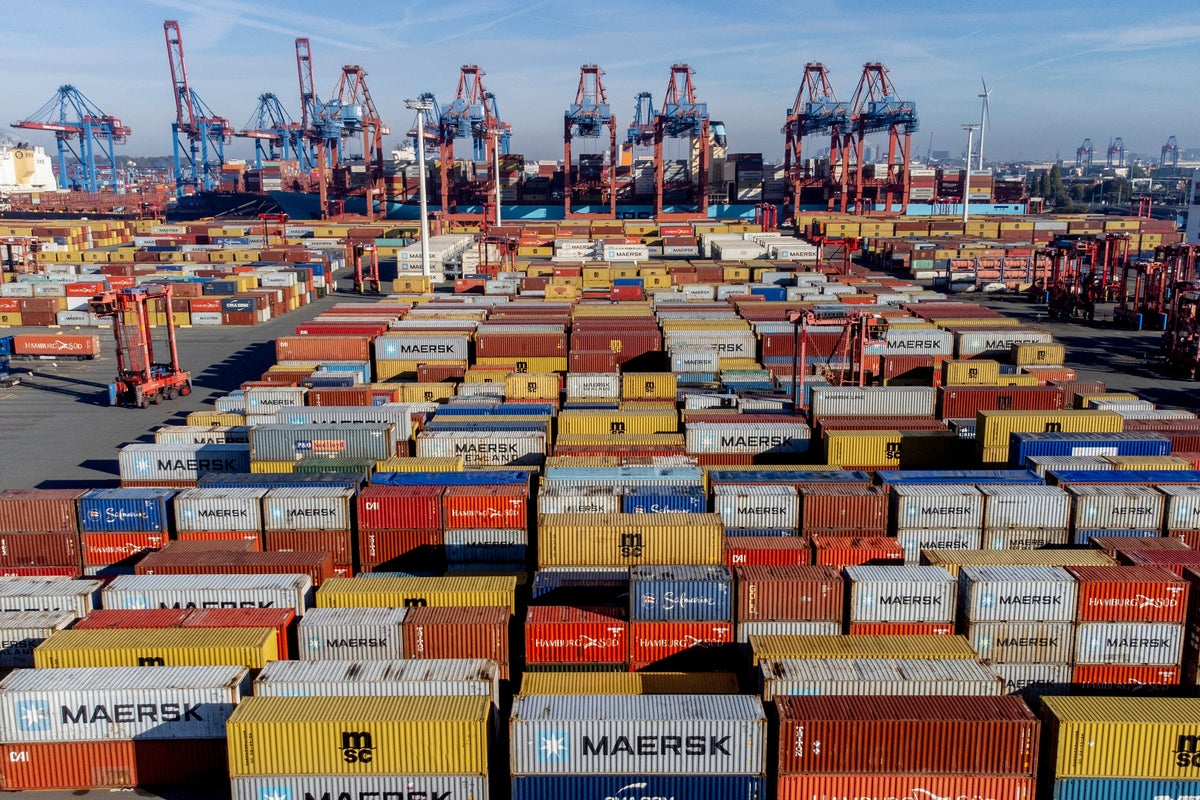
The expansion in gross domestic product of 0.2% for 2025 was fueled by stronger consumer and government spending while exports sagged under the weight of more restrictive U.S. trade policy under President Donald Trump, the German Federal Statistical Office said on Thursday.
That follows shrinkage of 0.5% in 2024 and 0.9% in 2023.
“Germany’s export business faced strong headwinds owing to higher U.S. tariffs, the appreciation of the euro and increased competition from China,” statistical office head Ruth Brand said in a statement accompanying the statistical release.
Expectations have risen for Germany to finally see stronger growth this year as the government under Chancellor Friedrich Merz implements plans to increase spending on infrastructure to make up for years of underinvestment. Meanwhile defense spending is rising due to a perceived higher level of threat from Russia after its invasion of Ukraine.
Germany has endured a period of extended stagnation following the COVID-19 pandemic. Higher energy costs following the war in Ukraine and increasing competition from China in key German specialties such as autos and industrial machinery have held back an economy that is heavily focused on exports. Then came Trump’s imposition of higher tariffs, or import taxes, on goods from the European Union. The slow growth has also exposed long-term structural issues such as excessive bureaucracy and lack of skilled labor. A stronger euro has also made exports less competitive on price.
A group of leading economists has predicted 0.9% growth for this year but said that forecast could be at risk if the increase in government spending is unleashed more slowly than expected.
The German economy grew 0.2% in the last three months of 2025, according to available preliminary data.